 【專題評論】日本第82回「現展」台灣藝術家群像
蔡梅芳 Tsai Mei-Fang
從《戀戀紫藤》觀看彩墨風暴、動態崇高與情感錨點
撰文:王穆提(WANG MUTI)
一、藝術家位置:從參展者到現展會友的制度意義
在第82回日本「現展」台灣藝術家群像之中,蔡梅芳的位置具有明確的制度意義。她為「現展會友,2025年推舉」,這表示其作品並非僅止於單次入選或偶然展出,而已進入日本現代美術家協會的推舉階梯之中。對一位來自台灣的藝術家而言,「會友」身分不只是行政分類,更是一種在日本公募展場域中取得持續性認可的象徵。
若從展覽制度角度觀察,現展的價值不只在於提供展示牆面,而在於它具有審查、入選、受賞、推舉與巡迴展等完整機制。藝術家在此制度中所獲得的身分,會轉化為其跨國藝術履歷的一部分。蔡梅芳於2025年獲推舉為現展會友,意味著她的創作語言已在日本現代美術場域中建立一定辨識度,也顯示其作品能夠跨越台日之間的語言、媒材與觀看差異,被納入現展的評價系統之中。
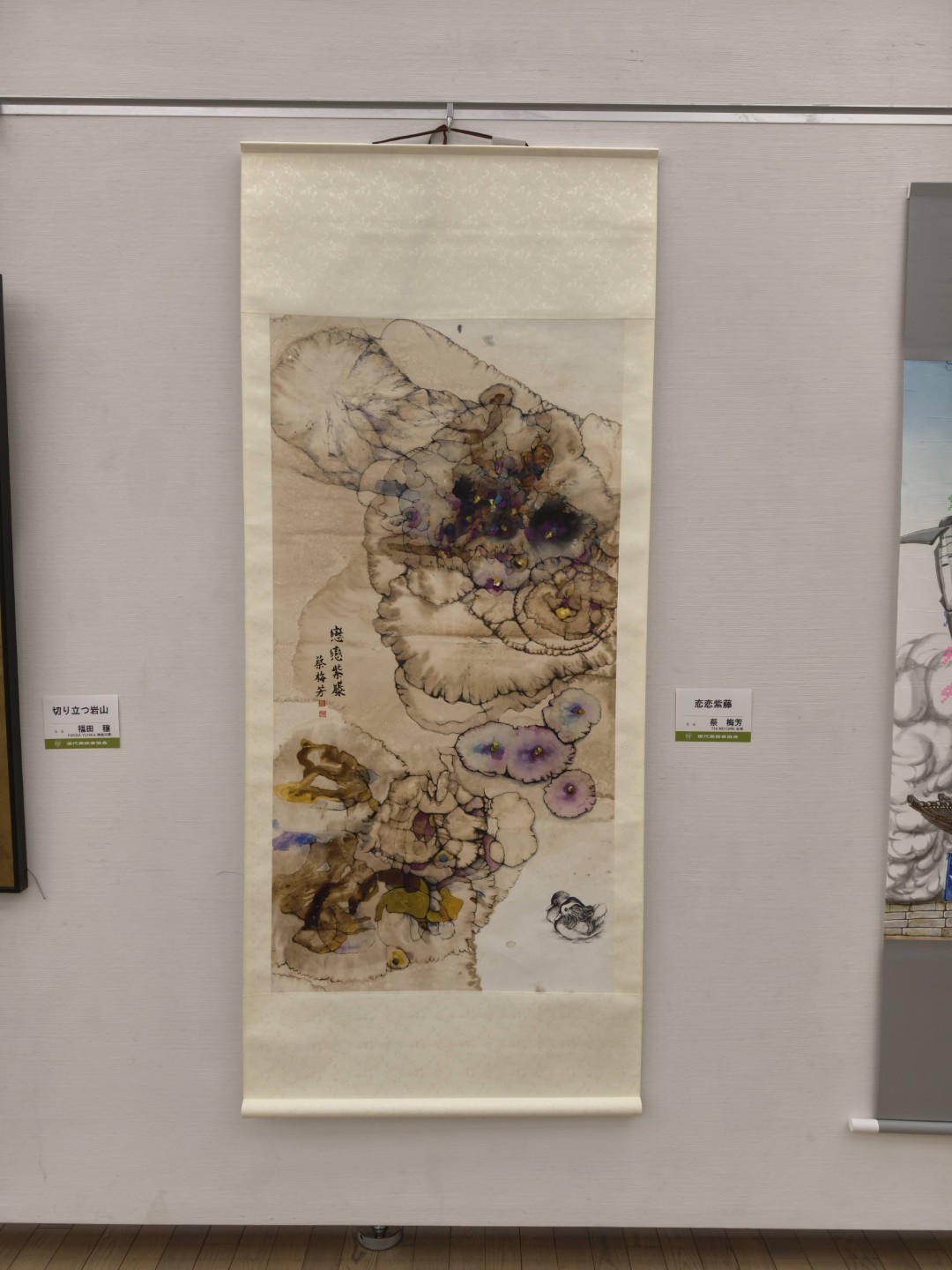
這一制度背景,是理解《戀戀紫藤》的重要前提。因為《戀戀紫藤》並非單純作為一件花卉題材作品出現,而是以彩墨、自然意象、抽象流動與具象生命的並置,進入一個強調現代性、多媒材開放與公共審查的日本展覽制度。換言之,蔡梅芳所面對的不只是「如何畫紫藤」,而是如何讓紫藤這一傳統自然題材,在現代美術公募展中重新獲得當代性。
二、《戀戀紫藤》的題名結構:從植物意象到情感命題
《戀戀紫藤》這一題名,表面上指向紫藤花的自然景象,但其中的「戀戀」二字,使作品從單純植物描寫轉入情感與存在的層面。「戀戀」包含眷戀、依依不捨、反覆回望與情感牽繫等語義。它使紫藤不再只是花卉,而成為一種與時間、記憶、親密關係相關的象徵物。
在東亞繪畫傳統中,花卉經常承載品格、季節、情緒與文人寄託。梅、蘭、竹、菊各有其文化寓意;荷花可指涉潔淨與出塵;牡丹象徵富貴;紫藤則常與垂掛、繁盛、柔韌、季節流轉與庭園記憶相連。然而,蔡梅芳並未將紫藤處理為溫婉抒情的庭園花卉,而是將它推入一個更劇烈、更接近宇宙性流動的彩墨場域。《戀戀紫藤》顛覆了傳統花鳥畫「狀物寫形、溫婉內斂」的格局,強調水、墨與顏料在紙張纖維中的自然流動、排斥與融合。
因此,題名中的「紫藤」提供的是自然入口,而「戀戀」則開啟情感維度。作品真正要處理的,並不是紫藤的植物學形貌,而是人在面對自然、時間與無常時,如何仍然維持情感的依附與生命的連結。
三、彩墨語言:自動性技法與物質流動
蔡梅芳《戀戀紫藤》最具視覺衝擊力之處,在於畫面並不依賴傳統工筆花鳥的精密勾勒,而是大量運用彩墨的流動性、暈染性與不可完全控制的物質反應。這種方法稱為「自動性技法」,並指出畫面中巨大茶褐色區塊並非由畫筆刻意描摹,而是依賴水、墨與顏料在紙張纖維上的自然滲透、排斥與融合而生成。
這種創作方法使作品具有強烈的物質性。所謂物質性,並非只指作品由顏料、紙張與墨構成,而是指材料本身在畫面中具有主動性。水會滲開,墨會沉澱,顏料會在纖維中留下邊界、痕跡與層次。藝術家並非完全支配材料,而是在控制與失控之間,與材料共同完成畫面。
這一點對《戀戀紫藤》尤其重要。若紫藤被完全以工筆方式描繪,它將主要呈現植物的形貌;但當紫藤被置入彩墨流動之中,它便不再只是可辨識的花,而是自然能量、時間沉積與情感波動的綜合體。畫面中的茶褐色、紫色、黃色與墨色不是單純填色,而是彼此碰撞、覆蓋、滲透與沉積,形成一種接近地質、雲氣或宇宙星雲般的視覺效果。
因此,《戀戀紫藤》的當代性不在於題材新穎,而在於它讓傳統花卉題材脫離「再現自然」的框架,轉而進入「生成自然」的狀態。畫面不是描繪一株紫藤,而是讓紫藤在水、墨、紙與顏料的相互作用中重新生成。
四、從花鳥畫到當代抽象:傳統題材的重構
若將《戀戀紫藤》放回東亞花鳥畫的脈絡中觀察,便能看見蔡梅芳的轉化策略。傳統花鳥畫重視物象的姿態、線條、筆墨節奏與象徵寓意。花與鳥常被置於可辨識的自然環境中,並透過構圖安排呈現季節感、情緒與品格。
然而,《戀戀紫藤》雖保留花鳥畫元素,卻不服從傳統花鳥畫的空間秩序。畫面中,紫藤不再是被清楚安排於枝葉之間的花串,而是被拆解為色彩、光點與流動痕跡。自然不再是安靜的庭園,而像是一個正在劇烈變動的能量場。這使作品從傳統花鳥畫的「狀物」轉向當代繪畫的「造境」。
所謂「造境」,並不是簡單地創造背景,而是建立一種觀看者可以進入的心理與感官場域。《戀戀紫藤》的背景並非中性的襯托,而是作品最主要的力量來源。茶褐色的大片流動區域構成一種壓迫性的空間;紫與黃則如光斑、花影或記憶碎片,在其中閃爍。這種空間關係,使觀者不再只是站在花前觀看花,而是被帶入一個正在變動、吞吐、擴張的自然內部。
因此,蔡梅芳對花鳥畫的重構,不是完全拋棄傳統,而是將傳統花鳥題材推向當代抽象。她仍然保留紫藤與鴛鴦等可辨識元素,但將其置於高度流動、近乎抽象表現的彩墨環境中,使具象與抽象形成張力。
五、動態崇高:自然力量的壓迫與震撼
我們可以用康德美學中的「動態崇高」來理解《戀戀紫藤》。所謂動態崇高,指的是人面對龐大、強烈、不可完全掌控的自然力量時,所產生的震撼、敬畏與自我意識提升。蔡梅芳剝除田園濾鏡,使紫藤被還原為幽紫與明黃色彩符號,並鑲嵌在狂暴的茶褐色底色中,如同宇宙深淵中的光斑。
這一解讀相當適合《戀戀紫藤》。因為作品並未以柔美、抒情、雅緻的方式處理紫藤,而是讓紫藤出現在一個巨大而不穩定的視覺場中。觀者面對的不是一片安靜花景,而是一個接近風暴、深淵、雲層或時間沉積的彩墨場域。花朵在其中既美麗又脆弱,既明亮又被包圍,既是生命的證明,也像是即將被吞沒的短暫光點。
這種美感不同於傳統花卉畫的優雅,而更接近崇高經驗。優美使人感到和諧、親近、可把握;崇高則使人感到震撼、超越、不可完全掌控。《戀戀紫藤》中的紫藤之所以動人,正是因為它不在安穩的庭園中開放,而是在龐大的彩墨風暴中浮現。它的美,不是安靜的美,而是與混沌對抗之後仍然顯現的美。
因此,蔡梅芳的紫藤不只是植物,而是一種生命在無常與壓力中仍然開放的象徵。它面對的是巨大背景、流動物質與不可預測的色墨反應;但正是在這樣的背景中,它的存在才更顯珍貴。
六、鴛鴦意象:微小生命的情感錨點
如果說彩墨背景構成《戀戀紫藤》的宏觀力量,那麼畫面中的鴛鴦則提供了微觀的情感焦點。在充滿壓迫感的宏大混沌邊緣,蔡梅芳安置了一對以極度寫實工筆繪製的鴛鴦;這種宏大抽象風暴與微觀具象描繪形成極端並置,並可被理解為「我與你」關係的視覺化。
這一對鴛鴦在作品中具有關鍵作用。若沒有牠們,畫面可能主要被理解為自然能量或彩墨抽象;但有了鴛鴦,作品便被引入親密關係、陪伴與存在依附的層面。鴛鴦在東亞文化中常被視為伴侶、忠貞與成雙成對的象徵。蔡梅芳在此使用這一意象,並非流於民俗吉祥圖式,而是將其置於強烈的視覺壓力之下,使其成為面對巨大世界時的情感支點。
畫面中的鴛鴦與背景形成鮮明對比。背景是流動、混沌、不可控的;鴛鴦則是具象、細緻、可辨識的。背景代表自然力量、時間流變與存在不確定性;鴛鴦代表親密、依偎與生命之間的相互確認。這種對比使作品具有存在主義式的深度:人在龐大世界中或許無法掌控命運,但仍能透過與他者的關係,建立自身存在的重量。
因此,鴛鴦不是裝飾性元素,而是整件作品的情感核心。它們讓《戀戀紫藤》不只是自然崇高的畫面,而成為一件關於「在無常中如何相依」的作品。
七、「戀戀」的深層意義:眷戀不是軟弱,而是抵抗虛無
《戀戀紫藤》的題名若與鴛鴦意象相互對照,便能看出蔡梅芳對「戀」的理解並非單純浪漫。此處的「戀戀」不是輕盈的愛情修辭,而是面對龐大世界時,人與人、生命與生命之間仍然不願斷裂的情感韌性。
在現代社會中,個體常被置於快速變動、關係不穩、價值流動的處境。我們分析其他藝術家時多次提到「液態現代性」與失去確定性的現代經驗;若將此背景帶回蔡梅芳作品,便可理解《戀戀紫藤》中的「戀戀」不是逃避現代不安,而是在不安之中建立連結。
畫面中的鴛鴦並不位於安穩中心,而在混沌邊緣相依。這使牠們的存在更具張力。牠們不是在太平世界中象徵幸福,而是在不確定、壓迫與流動的視覺場中,仍然維持彼此的靠近。於是,「戀戀」成為一種抵抗虛無的方式:不是用宏大的宣言對抗世界,而是用微小而堅定的陪伴,抵抗孤立與消散。
從這個角度看,《戀戀紫藤》真正動人的地方,不在於紫藤開得如何美,而在於作品讓觀者看見:美與愛都不是存在於無風無浪的環境中,而是在混沌、壓力與無常之中被重新確認。
八、色彩結構:茶褐、幽紫與明黃的心理張力
《戀戀紫藤》的色彩結構可分為三個主要層次:茶褐色背景、幽紫色花影與明黃色光點。這三種色彩並非平面地並置,而是在彩墨流動中形成深淺、濃淡、聚散與滲透的關係。
茶褐色佔據畫面主導位置,帶有泥土、枯葉、時間沉積與深層記憶的意味。它不是明亮的背景,而像是經歷沉澱後的厚重場域。這種茶褐色使作品具有某種時間性:觀者彷彿看見顏料一層層滲入紙中,留下水痕、邊界與斑駁痕跡。它既像土地,也像風暴過後的殘雲;既有自然感,也有歷史感。
幽紫色則直接連接紫藤意象。紫色在此不是甜美或裝飾性的,而是在茶褐色壓力中浮現的冷光。它使紫藤帶有一種不穩定的幽微感,好像花朵不是被照亮,而是自己從陰影中發光。明黃色則提供視覺跳動,如同花蕊、光斑或瞬間記憶,使畫面在厚重中仍有亮點。
這種色彩關係使《戀戀紫藤》不陷入單純沉重。茶褐色提供壓力,幽紫色提供深情,明黃色提供生命亮度。三者交錯,使作品在沉鬱與明亮、混沌與溫柔、壓迫與希望之間取得平衡。
九、構圖邏輯:宏觀背景與微觀敘事的並置
《戀戀紫藤》的構圖可被理解為宏觀與微觀的雙重結構。宏觀層次由大面積彩墨流動構成,形成壓倒性的視覺場;微觀層次則由紫藤與鴛鴦構成,提供具體的觀看焦點。這種結構使作品同時具有抽象性與敘事性。
抽象性來自背景。觀者一開始可能被大片色墨吸引,感受到流動、暈染、壓迫與空間深度。這一部分不提供明確故事,而是先讓身體感受到畫面的重量。敘事性則來自鴛鴦。當觀者發現畫面中的生命形象,作品便從純粹視覺經驗轉入情感閱讀。
這種構圖策略使觀者的觀看路徑具有層次:先被整體氣氛包圍,再尋找到具體生命;先感受到自然與時間的巨大,再看見微小生命的相依。也正因如此,鴛鴦雖小,卻能成為畫面的重心。它們不是靠尺寸取得重要性,而是靠情感密度取得視覺重量。
十、媒材與精神性:彩墨作為現代情感的載體
蔡梅芳使用彩墨,並非只是延續傳統水墨媒材,而是將彩墨轉化為現代情感的載體。水墨具有滲透、暈染、不可逆與時間沉澱的特質;彩墨則加入更強烈的色彩能量,使傳統墨韻不再侷限於黑白灰的文人雅趣,而能表現更高強度的心理與感官經驗。
《戀戀紫藤》中,彩墨不是為了裝飾自然,而是為了表現自然與情感的內部壓力。顏料的流動像情緒的擴散,墨色的沉澱像記憶的累積,水痕的邊界像時間留下的不可逆痕跡。這些物質效果共同構成作品的精神性。
所謂精神性,在此並非宗教圖像或明確信仰,而是作品讓觀者感受到某種超越日常表象的深層經驗。當紫藤、鴛鴦、彩墨與流動背景結合時,畫面不只是再現自然,而是在提示生命如何在巨大時間與無常之中尋找依靠。這正是《戀戀紫藤》作為藝術評論對象的重要性:它以花鳥題材為入口,實際處理的是現代人面對不確定世界時的情感存在問題。
 【專題評論】日本第82回「現展」台灣藝術家群像
十一、與國立新美術館場域的關係
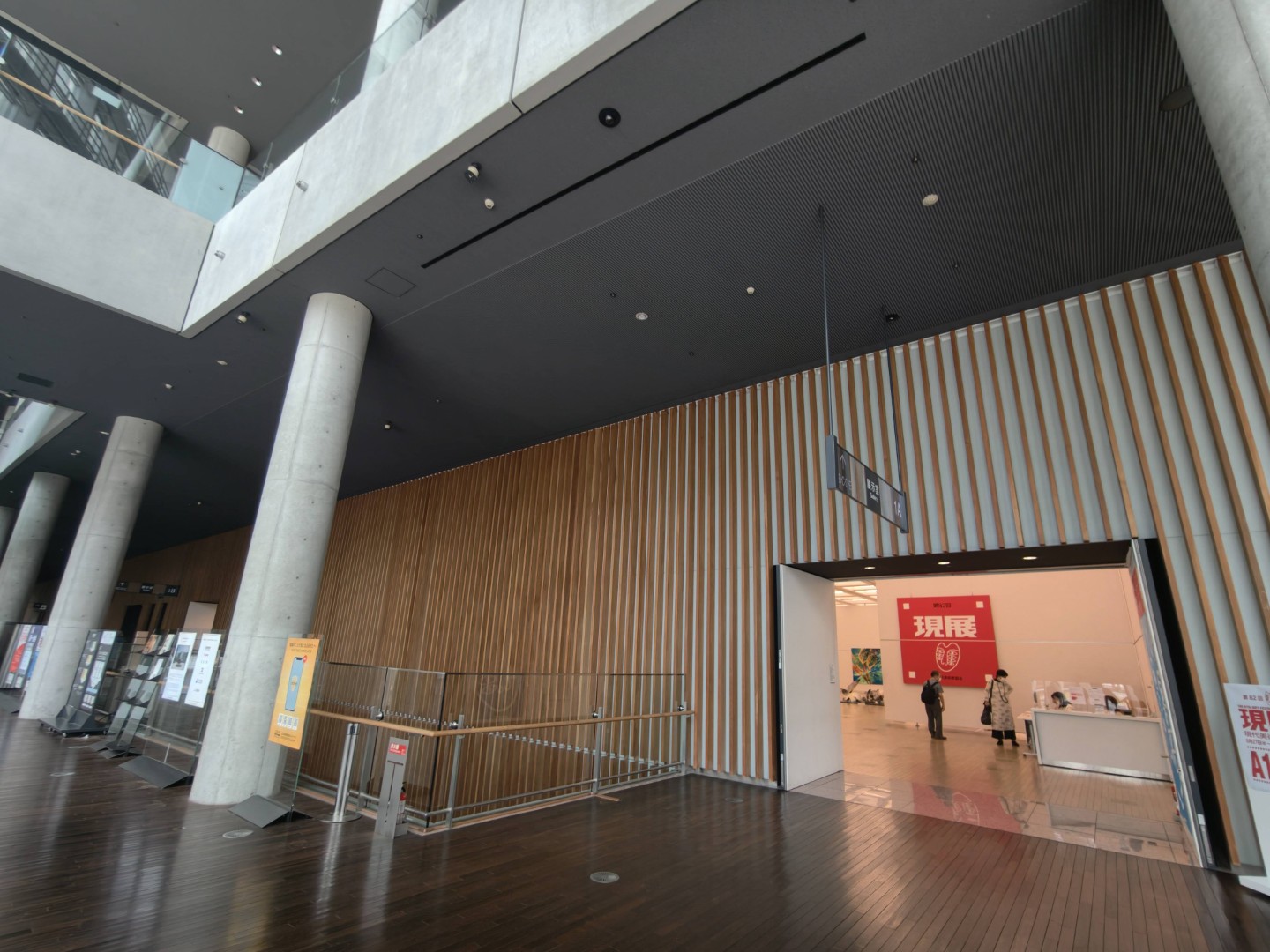
《戀戀紫藤》在第82回現展中的意義,也必須與國立新美術館的展場特質連結。國立新美術館不設常設典藏,以大型展覽空間與多樣展覽為核心,這使作品在展場中必須直接與其他媒材、風格與尺度的作品並置。
在這樣的空間中,《戀戀紫藤》的彩墨風暴具有相當強的視覺辨識度。它既不像純粹西方抽象畫,也不完全服從傳統花鳥畫,而是在東亞媒材與當代抽象之間建立自己的位置。當作品以掛軸形式懸掛於國立新美術館時,其柔性紙本、垂直展開與色墨流動,與美術館的現代展場形成對比:一方面是白盒子空間的理性與中性,另一方面是彩墨在紙上滲透出的情感與物質痕跡。
這種對比使《戀戀紫藤》在展場中不只是單件作品,而成為台灣藝術家如何將東方媒材帶入日本現代美術平台的具體案例。它不以傳統符號取悅觀眾,也不完全模仿西方當代藝術語彙,而是透過彩墨的物質性與情感性,建立一種具有台灣當代特質的視覺表述。
十二、與台灣當代藝術語境的關係
從台灣當代藝術角度看,蔡梅芳《戀戀紫藤》具有一種介於傳統與當代之間的過渡性。台灣藝術長期處於多重文化交會之中:一方面承接水墨、膠彩、書畫與民間視覺傳統;另一方面也受到西方現代主義、抽象表現、當代媒材實驗與全球展覽制度的影響。《戀戀紫藤》正是在這些脈絡中形成。
作品的題材與媒材連接東亞傳統,但其畫面處理則明顯具有當代意識。它不以再現準確性為目標,而以材料流動、心理張力與視覺能量為核心。這使它不同於傳統花鳥,也不同於純粹裝飾性的彩墨作品。它所呈現的是台灣當代彩墨的一種可能方向:不再將水墨視為單純古典媒材,而是讓水墨與色彩共同承載當代人的情緒、記憶與存在不安。
此外,《戀戀紫藤》中對親密關係的強調,也可視為對現代個體孤立處境的回應。當代藝術常處理斷裂、異化、身體、記憶與身份問題;蔡梅芳並不以激烈政治符號進入這些議題,而是透過自然與情感意象,以較含蓄但有力的方式回應現代人的精神困境。
十三、專業評論觀點:蔡梅芳作品的三重價值
綜合而言,蔡梅芳《戀戀紫藤》在本專題報告中可被歸納為三重價值。
第一,媒材價值
作品展現彩墨在當代語境中的開放性。水、墨、顏料與紙張並非被動媒材,而是共同參與畫面生成。蔡梅芳讓材料的流動性成為作品核心,使彩墨不只是傳統技法,而是具有當代抽象表現力的媒介。
第二,圖像價值
作品重構了花鳥畫語言。紫藤與鴛鴦仍具有可辨識性,但它們不再服務於傳統祥瑞或抒情圖式,而是進入自然崇高、情感依附與存在焦慮的場域。這使作品在具象與抽象之間取得平衡。
第三,情感價值
作品將「戀戀」轉化為一種精神命題。在巨大、混沌、不可掌控的彩墨背景中,鴛鴦的相依象徵生命之間的連結。這種連結不是逃避現實,而是在無常中建立抵抗虛無的力量。
十四、本章小結:在彩墨風暴中確認生命的相依
蔡梅芳《戀戀紫藤》之所以能在第82回現展台灣藝術家群像中具有代表性,正在於它成功把一個看似傳統的花鳥題材,轉化為具有當代精神深度的藝術命題。作品中的紫藤不只是花,彩墨不只是技法,鴛鴦也不只是象徵愛情的圖像。它們共同構成一個關於自然、時間、無常與親密關係的視覺場。
在形式上,作品以彩墨自動性與物質流動建立強烈視覺張力;在美學上,它從優美轉向崇高,使自然不再只是可賞玩的景物,而是充滿壓迫與震撼的存在力量;在情感上,它以鴛鴦的微小相依,回答人在巨大世界中如何尋找精神錨點的問題。
因此,《戀戀紫藤》不是一件單純描繪紫藤與鴛鴦的作品,而是一件關於「如何在不可掌控的世界中維持眷戀」的當代彩墨作品。它以柔軟的花卉題材進入強烈的存在命題,以東方媒材進入現代展場,以個人情感回應跨國藝術制度。這也使蔡梅芳的會友身分不只是制度標籤,而與其作品本身的成熟度、辨識度與跨文化可讀性相互呼應。
相關內容:
蔡梅芳《戀戀紫藤》登上日本第82回現展,以彩墨風暴凝聚花卉記憶與情感張力
82回現展 2026日本國立新美術館展「日本第82回現代美術家展」
【Special Review】Portraits of Taiwanese Artists at the 82nd Japan “Genten” Exhibition
Tsai Mei-Fang
Viewing Color-Ink Storms, Dynamic Sublimity, and Emotional Anchors through Lingering Wisteria
Written by WANG MUTI
I. The Artist’s Position: The Institutional Significance from Participant to Genten Associate Friend
Among the portraits of Taiwanese artists in the 82nd Japan “Genten” Exhibition, Tsai Mei-Fang’s position carries clear institutional significance. She is a “Genten associate friend, recommended in 2025,” which means that her work is not limited to a single selection or an occasional exhibition appearance, but has already entered the recommendation ladder of the Modern Art Association of Japan. For an artist from Taiwan, the status of “associate friend” is not merely an administrative category, but also a symbol of sustained recognition within the field of Japanese public-entry exhibitions.
From the perspective of the exhibition system, the value of Genten lies not only in providing exhibition walls, but in its complete mechanisms of review, selection, awards, recommendations, and traveling exhibitions. The status obtained by an artist within this system is transformed into part of the artist’s transnational artistic résumé. Tsai Mei-Fang’s recommendation as a Genten associate friend in 2025 means that her creative language has established a certain recognizability within the field of Japanese modern art, and also shows that her work can cross the linguistic, material, and viewing differences between Taiwan and Japan and be incorporated into Genten’s evaluative system.
This institutional background is an important premise for understanding Lingering Wisteria. For Lingering Wisteria does not appear simply as a floral-themed work, but enters a Japanese exhibition system that emphasizes modernity, openness to multiple media, and public review through the juxtaposition of color ink, natural imagery, abstract flow, and figurative life. In other words, what Tsai Mei-Fang faces is not only “how to paint wisteria,” but how to allow wisteria, a traditional natural subject, to regain contemporaneity within a modern art public-entry exhibition.
II. The Titular Structure of Lingering Wisteria: From Plant Imagery to an Emotional Proposition
The title Lingering Wisteria appears on the surface to point toward the natural scene of wisteria blossoms, yet the word “lingering” shifts the work from simple botanical depiction into the realm of emotion and existence. “Lingering” contains semantic implications of attachment, reluctance to part, repeated looking back, and emotional bonds. It makes wisteria no longer merely a flower, but a symbol related to time, memory, and intimate relationships.
In the East Asian painting tradition, flowers often carry character, seasonality, emotion, and literati projection. Plum, orchid, bamboo, and chrysanthemum each have their cultural meanings; lotus may refer to purity and transcendence; peony symbolizes wealth and honor; wisteria is often connected with hanging forms, abundance, resilience, seasonal cycles, and garden memory. However, Tsai Mei-Fang does not treat wisteria as a gentle and lyrical garden flower, but pushes it into a more intense color-ink field closer to cosmic flow. Lingering Wisteria overturns the traditional bird-and-flower painting structure of “depicting objects and forms with gentle restraint,” emphasizing instead the natural flow, repulsion, and fusion of water, ink, and pigment within the fibers of paper.
Therefore, the “wisteria” in the title provides a natural entry point, while “lingering” opens an emotional dimension. What the work truly addresses is not the botanical form of wisteria, but how human beings, when facing nature, time, and impermanence, still maintain emotional attachment and connections of life.
III. The Language of Color Ink: Automatic Technique and Material Flow
The most visually impactful aspect of Tsai Mei-Fang’s Lingering Wisteria lies in the fact that the picture does not rely on the precise outlining of traditional fine-line bird-and-flower painting, but extensively employs the fluidity, diffusion, and not fully controllable material reactions of color ink. This method may be called an “automatic technique,” indicating that the large tea-brown area in the picture is not deliberately depicted by the brush, but generated through the natural penetration, repulsion, and fusion of water, ink, and pigment on paper fibers.
This creative method gives the work a strong materiality. Materiality here does not merely mean that the work is composed of pigment, paper, and ink; rather, it means that the materials themselves possess agency within the image. Water spreads, ink settles, and pigment leaves boundaries, traces, and layers within the fibers. The artist does not completely dominate the materials, but completes the image together with them between control and loss of control.
This point is especially important for Lingering Wisteria. If wisteria were depicted entirely through fine-line technique, it would primarily present the form of the plant; but when wisteria is placed within the flow of color ink, it is no longer merely an identifiable flower, but a composite of natural energy, temporal sedimentation, and emotional fluctuation. The tea-brown, purple, yellow, and ink tones in the picture are not simply filled-in colors, but collide, cover, penetrate, and settle into one another, forming a visual effect close to geology, cloud vapor, or a cosmic nebula.
Therefore, the contemporaneity of Lingering Wisteria does not lie in the novelty of its subject, but in the way it allows a traditional floral subject to break away from the framework of “representing nature” and enter a state of “generating nature.” The image does not depict a single wisteria plant; rather, it lets wisteria be regenerated through the interaction of water, ink, paper, and pigment.
IV. From Bird-and-Flower Painting to Contemporary Abstraction: The Reconstruction of Traditional Subject Matter
If Lingering Wisteria is placed back into the context of East Asian bird-and-flower painting, Tsai Mei-Fang’s strategy of transformation becomes visible. Traditional bird-and-flower painting emphasizes the posture of objects, line, brush-and-ink rhythm, and symbolic meaning. Flowers and birds are often placed within recognizable natural environments and convey seasonality, emotion, and character through compositional arrangement.
However, although Lingering Wisteria retains elements of bird-and-flower painting, it does not obey the spatial order of traditional bird-and-flower painting. In the picture, wisteria is no longer a clearly arranged cluster of flowers among branches and leaves, but is dismantled into color, points of light, and traces of flow. Nature is no longer a quiet garden, but seems like an energy field undergoing violent transformation. This shifts the work from the traditional bird-and-flower painting mode of “depicting objects” toward the contemporary painting mode of “creating a realm.”
“Creating a realm” does not simply mean creating a background, but establishing a psychological and sensory field into which the viewer may enter. The background of Lingering Wisteria is not a neutral support, but the primary source of the work’s power. The large flowing tea-brown area forms an oppressive space; the purple and yellow appear like light spots, floral shadows, or fragments of memory flickering within it. This spatial relationship means that the viewer is no longer merely standing before flowers to look at them, but is drawn into the interior of a nature that is transforming, breathing, and expanding.
Therefore, Tsai Mei-Fang’s reconstruction of bird-and-flower painting is not a complete abandonment of tradition, but a pushing of traditional bird-and-flower subjects toward contemporary abstraction. She still retains identifiable elements such as wisteria and mandarin ducks, but places them within a highly fluid, almost abstract-expressionist color-ink environment, creating tension between figuration and abstraction.
V. Dynamic Sublimity: The Oppression and Shock of Natural Forces
We may use the “dynamic sublime” in Kantian aesthetics to understand Lingering Wisteria. The dynamic sublime refers to the shock, awe, and elevation of self-consciousness produced when human beings face vast, powerful, and not fully controllable forces of nature. Tsai Mei-Fang removes the pastoral filter, reducing wisteria to symbols of deep purple and bright yellow, embedding them within a violent tea-brown ground like points of light in a cosmic abyss.
This interpretation is highly suitable for Lingering Wisteria. The work does not treat wisteria in a soft, lyrical, or refined manner, but allows wisteria to appear within a huge and unstable visual field. What the viewer faces is not a quiet floral scene, but a color-ink field close to a storm, abyss, cloud layer, or temporal sedimentation. The flowers within it are both beautiful and fragile, both bright and surrounded, both proof of life and brief points of light that seem about to be engulfed.
This aesthetic differs from the elegance of traditional flower painting and is closer to the experience of the sublime. Beauty makes one feel harmony, intimacy, and graspability; the sublime makes one feel shock, transcendence, and what cannot be fully controlled. The reason the wisteria in Lingering Wisteria is moving is precisely that it does not bloom in a stable garden, but emerges within a vast color-ink storm. Its beauty is not a quiet beauty, but a beauty that still appears after confronting chaos.
Therefore, Tsai Mei-Fang’s wisteria is not merely a plant, but a symbol of life still blooming amid impermanence and pressure. It faces a vast background, flowing matter, and unpredictable reactions of color and ink; yet precisely within such a background, its existence becomes all the more precious.
VI. The Mandarin Duck Image: The Emotional Anchor of Small Lives
If the color-ink background constitutes the macrocosmic force of Lingering Wisteria, then the mandarin ducks in the picture provide a microcosmic emotional focus. At the edge of a grand chaos full of oppressive force, Tsai Mei-Fang places a pair of mandarin ducks painted in extremely realistic fine-line technique; this extreme juxtaposition of a grand abstract storm and microscopic figurative depiction may be understood as the visualization of an “I and you” relationship.
This pair of mandarin ducks plays a crucial role in the work. Without them, the image might mainly be understood as natural energy or color-ink abstraction; with the mandarin ducks, however, the work is brought into the realm of intimate relationship, companionship, and existential attachment. In East Asian culture, mandarin ducks are often regarded as symbols of partners, fidelity, and paired existence. Tsai Mei-Fang’s use of this image here does not fall into a folkloric auspicious formula, but places it under strong visual pressure, making it an emotional support when facing a vast world.
The mandarin ducks in the picture form a sharp contrast with the background. The background is flowing, chaotic, and uncontrollable; the mandarin ducks are figurative, delicate, and recognizable. The background represents natural force, temporal change, and existential uncertainty; the mandarin ducks represent intimacy, leaning together, and mutual confirmation between lives. This contrast gives the work an existential depth: in a vast world, human beings may not be able to control fate, but they can still establish the weight of their own existence through relationships with others.
Therefore, the mandarin ducks are not decorative elements, but the emotional core of the entire work. They make Lingering Wisteria not merely an image of natural sublimity, but a work about “how to depend on one another amid impermanence.”
VII. The Deeper Meaning of “Lingering”: Attachment Is Not Weakness, but Resistance to Nihility
When the title Lingering Wisteria is read in relation to the image of the mandarin ducks, one can see that Tsai Mei-Fang’s understanding of “love” is not simply romantic. Here, “lingering” is not a light rhetoric of love, but an emotional resilience in which human beings, or life and life, still refuse to break apart when facing a vast world.
In modern society, individuals are often placed in situations of rapid change, unstable relationships, and fluid values. In analyzing other artists, we have repeatedly mentioned “liquid modernity” and the modern experience of losing certainty; if this background is brought back to Tsai Mei-Fang’s work, we can understand that the “lingering” in Lingering Wisteria is not an escape from modern unease, but the establishment of connection within unease.
The mandarin ducks in the image are not located at a stable center, but depend on one another at the edge of chaos. This gives their existence greater tension. They do not symbolize happiness in a peaceful world, but still maintain closeness to each other within a visual field of uncertainty, oppression, and flow. Thus, “lingering” becomes a way of resisting nihility: not by opposing the world with grand declarations, but by resisting isolation and dispersal through small yet firm companionship.
From this perspective, what is truly moving about Lingering Wisteria is not how beautifully the wisteria blooms, but the way the work allows viewers to see that beauty and love do not exist in an environment free from wind and waves, but are reaffirmed amid chaos, pressure, and impermanence.
VIII. Color Structure: The Psychological Tension of Tea-Brown, Deep Purple, and Bright Yellow
The color structure of Lingering Wisteria may be divided into three main levels: the tea-brown background, the deep purple floral shadows, and the bright yellow points of light. These three colors are not arranged flatly side by side, but form relationships of depth, density, gathering, dispersal, and penetration within the flow of color ink.
The tea-brown occupies the dominant position in the picture and carries connotations of soil, withered leaves, temporal sedimentation, and deep memory. It is not a bright background, but resembles a heavy field formed after sedimentation. This tea-brown gives the work a certain temporality: the viewer seems to see pigment penetrating layer by layer into the paper, leaving water marks, boundaries, and mottled traces. It resembles both earth and the remaining clouds after a storm; it has both a natural feeling and a historical feeling.
The deep purple directly connects to the wisteria image. Purple here is not sweet or decorative, but a cold light emerging under the pressure of tea-brown. It gives the wisteria an unstable, subtle quality, as if the flowers were not illuminated from outside but glowing from within the shadows. The bright yellow provides visual pulsation, like stamens, light spots, or instantaneous memories, allowing the image to retain points of brightness within its heaviness.
This color relationship prevents Lingering Wisteria from falling into mere heaviness. Tea-brown provides pressure, deep purple provides depth of feeling, and bright yellow provides the brightness of life. The interweaving of the three allows the work to find balance between gloom and brightness, chaos and tenderness, oppression and hope.
IX. Compositional Logic: The Juxtaposition of Macrocosmic Background and Microcosmic Narrative
The composition of Lingering Wisteria may be understood as a dual structure of macrocosm and microcosm. The macrocosmic level is formed by large areas of flowing color ink, creating an overwhelming visual field; the microcosmic level is formed by the wisteria and mandarin ducks, providing specific focal points of viewing. This structure gives the work both abstraction and narrativity.
The abstraction comes from the background. At first, the viewer may be drawn by the large fields of color and ink, sensing flow, diffusion, pressure, and spatial depth. This part does not provide a clear story, but first allows the body to feel the weight of the image. The narrativity comes from the mandarin ducks. When the viewer discovers the living forms in the picture, the work shifts from pure visual experience into emotional reading.
This compositional strategy gives the viewer’s path of viewing a layered structure: first being surrounded by the overall atmosphere, then finding concrete life; first sensing the vastness of nature and time, then seeing the mutual dependence of small lives. Precisely for this reason, although the mandarin ducks are small, they can become the center of gravity in the image. They gain importance not through size, but through emotional density.
X. Medium and Spirituality: Color Ink as a Vehicle of Modern Emotion
Tsai Mei-Fang’s use of color ink is not merely a continuation of traditional ink-wash media, but a transformation of color ink into a vehicle of modern emotion. Ink wash possesses characteristics of penetration, diffusion, irreversibility, and temporal sedimentation; color ink adds stronger chromatic energy, allowing traditional ink resonance to move beyond the literati elegance of black, white, and gray and express psychological and sensory experiences of greater intensity.
In Lingering Wisteria, color ink is not used to decorate nature, but to express the internal pressure of nature and emotion. The flow of pigment resembles the diffusion of feeling, the sedimentation of ink resembles the accumulation of memory, and the boundaries of water marks resemble irreversible traces left by time. These material effects together constitute the spirituality of the work.
Spirituality here does not refer to religious imagery or explicit faith, but to the work’s ability to make the viewer feel a deep experience that transcends everyday appearances. When wisteria, mandarin ducks, color ink, and the flowing background come together, the image no longer merely represents nature, but suggests how life seeks reliance within vast time and impermanence. This is precisely the importance of Lingering Wisteria as an object of art criticism: it takes the bird-and-flower subject as an entry point, but what it truly addresses is the emotional-existential problem of modern people facing an uncertain world.
【Special Review】Portraits of Taiwanese Artists at the 82nd Japan “Genten” Exhibition
XI. Relationship with the Field of The National Art Center, Tokyo
The significance of Lingering Wisteria in the 82nd Genten Exhibition must also be connected to the exhibition-site characteristics of The National Art Center, Tokyo. The National Art Center, Tokyo has no permanent collection and centers on large-scale exhibition spaces and diverse exhibitions, which means that the work must be directly juxtaposed in the exhibition site with works of other media, styles, and scales.
Within such a space, the color-ink storm of Lingering Wisteria possesses considerable visual recognizability. It is neither purely Western abstract painting nor entirely obedient to traditional bird-and-flower painting, but establishes its own position between East Asian media and contemporary abstraction. When the work is hung in hanging-scroll form at The National Art Center, Tokyo, its flexible paper support, vertical unfolding, and flow of color and ink form a contrast with the museum’s modern exhibition space: on the one hand, the rationality and neutrality of the white-cube space; on the other, the emotional and material traces of color ink penetrating paper.
This contrast makes Lingering Wisteria more than a single work within the exhibition site; it becomes a concrete case of how a Taiwanese artist brings Eastern media into a Japanese modern art platform. It does not please viewers through traditional symbols, nor does it completely imitate Western contemporary art vocabulary. Instead, through the materiality and emotionality of color ink, it establishes a visual expression with Taiwanese contemporary characteristics.
XII. Relationship with the Context of Taiwanese Contemporary Art
From the perspective of Taiwanese contemporary art, Tsai Mei-Fang’s Lingering Wisteria possesses a transitional quality between tradition and contemporaneity. Taiwanese art has long been situated at the intersection of multiple cultures: on the one hand, it inherits ink wash, glue-color painting, calligraphy and painting, and folk visual traditions; on the other hand, it has also been influenced by Western modernism, abstract expression, contemporary media experimentation, and global exhibition systems. Lingering Wisteria is formed precisely within these contexts.
The subject and medium of the work connect with East Asian tradition, yet its pictorial treatment clearly possesses contemporary consciousness. It does not take accuracy of representation as its goal, but centers on material flow, psychological tension, and visual energy. This makes it different from traditional bird-and-flower painting and also different from purely decorative color-ink works. What it presents is a possible direction for Taiwanese contemporary color ink: no longer treating ink wash as merely a classical medium, but allowing ink and color together to carry contemporary emotions, memories, and existential unease.
In addition, the emphasis on intimate relationships in Lingering Wisteria may also be seen as a response to the isolated condition of the modern individual. Contemporary art often deals with rupture, alienation, the body, memory, and identity. Tsai Mei-Fang does not enter these issues through intense political symbols, but responds to the spiritual predicament of modern people through natural and emotional imagery in a more implicit yet powerful way.
XIII. Professional Critical Perspective: The Threefold Value of Tsai Mei-Fang’s Work
In summary, Tsai Mei-Fang’s Lingering Wisteria may be understood in this special report as possessing threefold value.
First, Material Value
The work demonstrates the openness of color ink in a contemporary context. Water, ink, pigment, and paper are not passive media, but jointly participate in the generation of the image. Tsai Mei-Fang makes material fluidity the core of the work, allowing color ink to become not merely a traditional technique, but a medium with contemporary abstract expressive power.
Second, Iconic Value
The work reconstructs the language of bird-and-flower painting. Wisteria and mandarin ducks remain recognizable, but they no longer serve traditional auspicious or lyrical formulas. Instead, they enter a field of natural sublimity, emotional attachment, and existential anxiety. This allows the work to achieve balance between figuration and abstraction.
Third, Emotional Value
The work transforms “lingering” into a spiritual proposition. Within the vast, chaotic, and uncontrollable color-ink background, the mutual dependence of the mandarin ducks symbolizes connection between lives. This connection is not an escape from reality, but a force that resists nihility amid impermanence.
XIV. Chapter Summary: Confirming the Mutual Dependence of Life within a Color-Ink Storm
The reason Tsai Mei-Fang’s Lingering Wisteria can be representative within the portraits of Taiwanese artists in the 82nd Genten Exhibition lies precisely in its successful transformation of an apparently traditional bird-and-flower subject into an artistic proposition with contemporary spiritual depth. The wisteria in the work is not merely a flower, color ink is not merely a technique, and the mandarin ducks are not merely images symbolizing love. Together, they constitute a visual field concerning nature, time, impermanence, and intimate relationship.
Formally, the work establishes strong visual tension through color-ink automatism and material flow; aesthetically, it shifts from beauty toward sublimity, making nature no longer merely a view to be appreciated, but a force of existence filled with oppression and shock; emotionally, it uses the small mutual dependence of mandarin ducks to answer the question of how human beings seek spiritual anchors within a vast world.
Therefore, Lingering Wisteria is not a work that simply depicts wisteria and mandarin ducks, but a contemporary color-ink work about “how to maintain attachment within an uncontrollable world.” It enters an intense existential proposition through a soft floral subject, enters the modern exhibition site through Eastern media, and responds to a transnational art institution through personal emotion. This also means that Tsai Mei-Fang’s associate-friend status is not merely an institutional label, but corresponds with the maturity, recognizability, and cross-cultural readability of the work itself.
【特集評論】日本第82回「現展」台湾芸術家群像
蔡梅芳 Tsai Mei-Fang
《恋恋紫藤》から見る彩墨の嵐、動的崇高、感情の錨点
執筆:王穆提(WANG MUTI)
一、芸術家の位置:出展者から現展会友へという制度的意義
第82回日本「現展」の台湾芸術家群像の中で、蔡梅芳の位置は明確な制度的意義を持っている。彼女は「現展会友、2025年推挙」であり、これはその作品が一回限りの入選や偶然の展示にとどまらず、日本現代美術家協会の推挙階梯の中へすでに入っていることを意味する。台湾出身の芸術家にとって、「会友」という身分は単なる行政上の分類ではなく、日本の公募展場域において継続的な認可を獲得した象徴でもある。
展覧会制度の角度から見るなら、現展の価値は展示壁面を提供することだけにあるのではなく、審査、入選、受賞、推挙、巡回展といった完全な仕組みを備えている点にある。芸術家がこの制度の中で得る身分は、越境的な芸術履歴の一部へと転化される。蔡梅芳が2025年に現展会友として推挙されたことは、彼女の創作言語が日本の現代美術場域において一定の識別性を確立したことを意味し、またその作品が台日間の言語、メディア、鑑賞上の差異を越え、現展の評価システムに組み込まれうることを示している。
この制度的背景は、《恋恋紫藤》を理解するための重要な前提である。なぜなら《恋恋紫藤》は、単なる花卉題材の作品として現れるのではなく、彩墨、自然イメージ、抽象的流動、具象的生命の並置によって、現代性、多メディアへの開放性、公共的審査を重視する日本の展覧会制度の中へ入っているからである。言い換えれば、蔡梅芳が向き合っているのは「どのように藤を描くか」だけではなく、藤という伝統的な自然題材を、現代美術公募展の中でいかに再び現代性を獲得させるかなのである。
二、《恋恋紫藤》の題名構造:植物イメージから感情的命題へ
《恋恋紫藤》という題名は、表面的には藤の花の自然景観を指している。しかし「恋恋」という二字によって、作品は単なる植物描写から感情と存在の次元へと移行する。「恋恋」には、愛着、名残惜しさ、何度も振り返ること、感情的なつながりといった意味が含まれる。それは藤を単なる花ではなく、時間、記憶、親密な関係に関わる象徴物へと変える。
東アジア絵画の伝統において、花卉はしばしば品格、季節、感情、文人の託した思いを担ってきた。梅、蘭、竹、菊にはそれぞれ文化的寓意があり、蓮は清浄と超俗を指し、牡丹は富貴を象徴し、藤は垂れ下がる形、繁茂、柔韌さ、季節の巡り、庭園の記憶と結びつくことが多い。しかし蔡梅芳は藤を穏やかで抒情的な庭園の花として処理せず、それをより激しく、より宇宙的な流動に近い彩墨の場へと押し出している。《恋恋紫藤》は、伝統的花鳥画の「物を写し形を描く、穏やかで内向的な」構図を覆し、水、墨、顔料が紙の繊維の中で自然に流動し、反発し、融合することを強調する。
したがって、題名の中の「紫藤」は自然への入口を提供し、「恋恋」は感情の次元を開く。作品が本当に扱おうとしているのは、藤の植物学的形態ではなく、人が自然、時間、無常に向き合う時、いかにしてなお感情的な依存と生命のつながりを維持するかという問題である。
三、彩墨言語:自動性技法と物質的流動
蔡梅芳《恋恋紫藤》において最も視覚的衝撃力を持つ点は、画面が伝統的な工筆花鳥の精密な輪郭描写に依存せず、彩墨の流動性、にじみ、完全には制御できない物質反応を大量に用いていることである。この方法は「自動性技法」と呼ぶことができ、画面中の巨大な茶褐色の領域は、筆によって意図的に描かれたものではなく、水、墨、顔料が紙繊維上で自然に浸透し、反発し、融合することによって生成されたものだと指摘できる。
この創作方法は作品に強い物質性を与える。ここでいう物質性とは、作品が顔料、紙、墨によって構成されているということだけを指すのではない。むしろ、素材そのものが画面の中で能動性を持つことを指す。水は広がり、墨は沈殿し、顔料は繊維の中に境界、痕跡、層を残す。芸術家は素材を完全に支配しているのではなく、制御と失控の間で、素材と共に画面を完成させている。
この点は《恋恋紫藤》にとって特に重要である。もし藤が完全に工筆の方法で描かれていたなら、それは主に植物の形態を示すことになるだろう。しかし藤が彩墨の流動の中に置かれる時、それはもはや識別可能な花にとどまらず、自然エネルギー、時間の沈積、感情の波動の複合体となる。画面中の茶褐色、紫色、黄色、墨色は単なる塗色ではなく、互いに衝突し、覆い、浸透し、沈積し、地質、雲気、あるいは宇宙の星雲に近い視覚効果を形成する。
したがって、《恋恋紫藤》の現代性は題材の新しさにあるのではなく、伝統的な花卉題材を「自然の再現」という枠組みから離脱させ、「自然の生成」という状態へ移行させる点にある。画面は一本の藤を描いているのではなく、水、墨、紙、顔料の相互作用の中で藤を改めて生成させているのである。
四、花鳥画から現代抽象へ:伝統題材の再構築
《恋恋紫藤》を東アジア花鳥画の文脈に戻して見るなら、蔡梅芳の変換戦略が見えてくる。伝統的花鳥画は物象の姿態、線、筆墨のリズム、象徴的寓意を重視する。花と鳥はしばしば識別可能な自然環境の中に置かれ、構図の配置によって季節感、感情、品格を表現する。
しかし《恋恋紫藤》は花鳥画の要素を保持しているものの、伝統的花鳥画の空間秩序には従わない。画面の中で、藤は枝葉の間に明確に配置された花房ではなく、色彩、光点、流動の痕跡へと分解されている。自然はもはや静かな庭園ではなく、激しく変動しているエネルギー場のようである。これにより作品は伝統的花鳥画の「物を写す」ことから、現代絵画の「境を造る」ことへ移行する。
いわゆる「境を造る」とは、単に背景を作ることではなく、鑑賞者が入り込むことのできる心理的・感覚的な場を構築することである。《恋恋紫藤》の背景は中立的な引き立て役ではなく、作品の最も主要な力の源である。茶褐色の大きく流動する領域は圧迫的な空間を構成し、紫と黄は光斑、花影、あるいは記憶の断片のように、その中で瞬く。この空間関係により、鑑賞者は花の前に立って花を見るだけではなく、変動し、呼吸し、拡張する自然の内部へと導かれる。
したがって、蔡梅芳による花鳥画の再構築は、伝統を完全に放棄することではなく、伝統的花鳥題材を現代抽象へと押し出すことである。彼女は藤や鴛鴦などの識別可能な要素を保持しながら、それらを高度に流動的で、ほとんど抽象表現に近い彩墨環境の中に置くことで、具象と抽象の間に緊張を形成している。
五、動的崇高:自然の力による圧迫と震撼
私たちはカント美学における「動的崇高」を用いて《恋恋紫藤》を理解することができる。動的崇高とは、人が巨大で強烈で完全には制御できない自然の力に直面する時に生じる震撼、畏怖、自己意識の高まりを指す。蔡梅芳は田園的なフィルターを取り除き、藤を幽かな紫と明るい黄色の色彩記号へと還元し、それらを荒々しい茶褐色の地の中に埋め込む。それは宇宙の深淵に浮かぶ光斑のようである。
この解釈は《恋恋紫藤》に非常によく適している。なぜなら作品は藤を柔美、抒情、雅致の方法で扱っているのではなく、藤を巨大で不安定な視覚場の中に出現させているからである。鑑賞者が向き合うのは静かな花景色ではなく、嵐、深淵、雲層、あるいは時間の沈積に近い彩墨の場である。花はその中で美しくも脆く、明るくも取り囲まれ、生命の証であると同時に、飲み込まれようとする一瞬の光点のようでもある。
この美感は伝統的花卉画の優雅さとは異なり、むしろ崇高経験に近い。優美は人に調和、親近、把握可能性を感じさせる。崇高は人に震撼、超越、完全には制御できないものを感じさせる。《恋恋紫藤》の藤が人の心を動かすのは、それが安定した庭園の中で咲いているのではなく、巨大な彩墨の嵐の中に浮かび上がるからである。その美は静かな美ではなく、混沌と対峙した後になお現れる美である。
したがって、蔡梅芳の藤は単なる植物ではなく、無常と圧力の中でもなお開花する生命の象徴である。それが向き合うのは巨大な背景、流動する物質、予測できない色墨の反応である。しかしまさにこのような背景の中で、その存在はいっそう貴重なものとなる。
六、鴛鴦のイメージ:小さな生命の感情の錨点
彩墨の背景が《恋恋紫藤》のマクロな力を構成しているとすれば、画面中の鴛鴦はミクロな感情の焦点を提供している。圧迫感に満ちた壮大な混沌の縁に、蔡梅芳は極めて写実的な工筆で描かれた一対の鴛鴦を配置している。この壮大な抽象的嵐と微視的な具象描写の極端な並置は、「私とあなた」という関係の視覚化として理解できる。
この一対の鴛鴦は作品の中で決定的な役割を果たす。もしそれらがなければ、画面は主に自然エネルギーや彩墨抽象として理解されるかもしれない。しかし鴛鴦があることで、作品は親密な関係、伴侶性、存在への依拠の次元へ導かれる。鴛鴦は東アジア文化においてしばしば伴侶、貞節、対としての存在の象徴とされる。蔡梅芳はこのイメージをここで使用しているが、それは民俗的な吉祥図式に流れるものではなく、それを強烈な視覚的圧力の下に置くことで、巨大な世界に向き合う際の感情的支点としている。
画面中の鴛鴦と背景は鮮明な対比を形成する。背景は流動し、混沌とし、制御不能である。鴛鴦は具象的で、繊細で、識別可能である。背景は自然の力、時間の変化、存在の不確定性を表し、鴛鴦は親密さ、寄り添い、生命同士の相互確認を表す。この対比により、作品は実存主義的な深みを持つ。人は巨大な世界の中で運命を支配できないかもしれないが、それでも他者との関係を通じて、自らの存在の重みを築くことができる。
したがって、鴛鴦は装飾的要素ではなく、作品全体の感情的核心である。それらは《恋恋紫藤》を単なる自然崇高の画面ではなく、「無常の中でいかに互いに寄り添うか」についての作品にしている。
七、「恋恋」の深層的意味:愛着は弱さではなく、虚無への抵抗である
《恋恋紫藤》の題名を鴛鴦のイメージと照らし合わせると、蔡梅芳における「恋」の理解が単なるロマンティックなものではないことが分かる。ここでの「恋恋」は軽やかな愛の修辞ではなく、巨大な世界に向き合う時、人と人、生命と生命の間に、なお断絶を拒む感情的な強靭さである。
現代社会において、個体はしばしば急速な変化、不安定な関係、流動する価値の状況に置かれる。他の芸術家を分析する際、私たちは何度も「液状近代性」や確実性を失った近代経験に言及してきた。この背景を蔡梅芳の作品へ戻してみれば、《恋恋紫藤》における「恋恋」は現代的不安からの逃避ではなく、不安の中においてつながりを築くことだと理解できる。
画面中の鴛鴦は安定した中心にいるのではなく、混沌の縁で寄り添っている。これにより、その存在はいっそう緊張を帯びる。彼らは平穏な世界の中で幸福を象徴しているのではなく、不確定で、圧迫され、流動する視覚場の中で、なお互いに近づき続けている。そこで「恋恋」は虚無に抵抗する一つの方法となる。壮大な宣言によって世界に対抗するのではなく、小さくも確かな伴侶性によって、孤立と消散に抵抗するのである。
この角度から見ると、《恋恋紫藤》が本当に人の心を動かすのは、藤がどれほど美しく咲いているかではない。作品が鑑賞者に見せるのは、美と愛が風も波もない環境に存在するものではなく、混沌、圧力、無常の中で改めて確認されるものだということである。
八、色彩構造:茶褐、幽紫、明黄の心理的緊張
《恋恋紫藤》の色彩構造は、三つの主要な層に分けることができる。茶褐色の背景、幽かな紫の花影、そして明るい黄色の光点である。これら三種の色彩は平面的に並置されているのではなく、彩墨の流動の中で深浅、濃淡、集合と拡散、浸透の関係を形成している。
茶褐色は画面の主導的位置を占め、土、枯葉、時間の沈積、深層記憶を思わせる。それは明るい背景ではなく、沈殿を経た重厚な場のようである。この茶褐色は作品にある種の時間性を与える。鑑賞者は顔料が紙の中へ一層また一層と浸透し、水痕、境界、斑状の痕跡を残すのを見ているかのようである。それは土地のようでもあり、嵐の後に残る雲のようでもある。自然感を持つと同時に、歴史感も備えている。
幽紫色は直接的に藤のイメージと結びつく。ここでの紫は甘美なものでも装飾的なものでもなく、茶褐色の圧力の中から浮かび上がる冷たい光である。それは藤に不安定で幽かな感覚を与え、花が照らされているのではなく、影の中から自ら発光しているかのように見せる。明黄色は視覚的な跳躍を提供し、花蕊、光斑、あるいは一瞬の記憶のように、画面の重さの中に明るい点を残す。
この色彩関係により、《恋恋紫藤》は単なる重苦しさに陥らない。茶褐色は圧力を提供し、幽紫色は深情を提供し、明黄色は生命の明るさを提供する。三者が交錯することで、作品は沈鬱と明るさ、混沌と優しさ、圧迫と希望の間に均衡を得ている。
九、構図論理:マクロな背景とミクロな物語の並置
《恋恋紫藤》の構図は、マクロとミクロの二重構造として理解できる。マクロな層は大面積の彩墨の流動によって構成され、圧倒的な視覚場を形成する。ミクロな層は藤と鴛鴦によって構成され、具体的な鑑賞の焦点を提供する。この構造により、作品は抽象性と物語性を同時に持つ。
抽象性は背景から来る。鑑賞者はまず大きな色墨の領域に引きつけられ、流動、にじみ、圧迫、空間の深みを感じるかもしれない。この部分は明確な物語を提供せず、まず身体に画面の重さを感じさせる。物語性は鴛鴦から来る。鑑賞者が画面中の生命像を発見する時、作品は純粋な視覚経験から感情的読解へ移行する。
この構図戦略により、鑑賞者の視線の経路は層を持つ。まず全体の雰囲気に包み込まれ、次に具体的な生命を見つける。まず自然と時間の巨大さを感じ、次に小さな生命の寄り添いを見る。まさにそのため、鴛鴦は小さくても画面の重心となることができる。それらは大きさによって重要性を得るのではなく、感情の密度によって視覚的重みを獲得している。
十、メディアと精神性:現代感情の担い手としての彩墨
蔡梅芳が彩墨を用いることは、単に伝統水墨メディアを継承することではなく、彩墨を現代感情の担い手へと転化することである。水墨には浸透、にじみ、不可逆性、時間の沈殿という特質がある。彩墨はそこにより強烈な色彩エネルギーを加え、伝統的な墨韻を白黒灰の文人趣味に限定せず、より高い強度の心理的・感覚的経験を表現できるようにする。
《恋恋紫藤》において、彩墨は自然を装飾するためではなく、自然と感情の内部圧力を表現するために用いられている。顔料の流動は感情の拡散のようであり、墨色の沈殿は記憶の蓄積のようであり、水痕の境界は時間が残した不可逆の痕跡のようである。これらの物質的効果が共に作品の精神性を構成している。
ここでいう精神性とは、宗教的図像や明確な信仰を指すものではない。むしろ作品が鑑賞者に、日常的表象を超えた深層経験を感じさせることを意味する。藤、鴛鴦、彩墨、流動する背景が結びつく時、画面は単に自然を再現するのではなく、巨大な時間と無常の中で生命がいかに依り所を探すのかを示唆する。これこそが《恋恋紫藤》を芸術評論の対象として重要にしている点である。それは花鳥題材を入口としながら、実際には現代人が不確定な世界に向き合う際の感情的存在の問題を扱っているのである。
【特集評論】日本第82回「現展」台湾芸術家群像
十一、国立新美術館という場との関係
《恋恋紫藤》が第82回現展において持つ意義は、国立新美術館という展示場の特質とも結びつけて考えなければならない。国立新美術館は常設コレクションを持たず、大規模な展示空間と多様な展覧会を中心としている。これにより、作品は展示場の中で、他のメディア、様式、尺度の作品と直接並置されなければならない。
このような空間において、《恋恋紫藤》の彩墨の嵐はかなり強い視覚的識別性を持つ。それは純粋な西洋抽象画のようでもなく、伝統的花鳥画に完全に従うものでもない。東アジアのメディアと現代抽象の間に、自らの位置を築いている。作品が掛軸形式で国立新美術館に掛けられる時、その柔軟な紙本、垂直的な展開、色墨の流動は、美術館の現代的展示空間と対比を形成する。一方にはホワイトキューブ空間の理性と中性性があり、他方には紙上に浸透する彩墨の感情と物質的痕跡がある。
この対比により、《恋恋紫藤》は展示場において単一の作品であるだけでなく、台湾芸術家がいかに東方のメディアを日本現代美術のプラットフォームへ持ち込むかを示す具体的事例となる。それは伝統的記号によって観客に迎合することもなく、西洋現代美術の語彙を完全に模倣することもない。むしろ彩墨の物質性と感情性を通じて、台湾現代的特質を備えた視覚表現を築いている。
十二、台湾現代美術の文脈との関係
台湾現代美術の角度から見ると、蔡梅芳《恋恋紫藤》は伝統と現代の間に位置する過渡的性格を持っている。台湾美術は長く複数の文化が交差する中に置かれてきた。一方では水墨、膠彩、書画、民間視覚伝統を受け継ぎ、他方では西洋モダニズム、抽象表現、現代メディア実験、グローバルな展覧会制度の影響も受けてきた。《恋恋紫藤》はまさにこれらの文脈の中で形成されている。
作品の題材とメディアは東アジアの伝統に接続しているが、その画面処理は明らかに現代的意識を備えている。それは再現の正確さを目的とせず、素材の流動、心理的緊張、視覚エネルギーを核心としている。これにより、それは伝統的花鳥画とも、純粋に装飾的な彩墨作品とも異なるものとなる。そこに示されているのは、台湾現代彩墨の一つの可能な方向である。すなわち、水墨を単なる古典メディアとして見るのではなく、水墨と色彩が共に現代人の感情、記憶、存在不安を担うものにする方向である。
さらに、《恋恋紫藤》における親密な関係の強調は、現代の個人が孤立する状況への応答としても見ることができる。現代美術はしばしば断裂、疎外、身体、記憶、アイデンティティの問題を扱う。蔡梅芳は激しい政治的記号によってこれらの問題に入るのではなく、自然と感情のイメージを通じて、より含蓄的でありながら力強い方法で現代人の精神的困境に応答している。
十三、専門的評論の観点:蔡梅芳作品の三重の価値
総合すると、蔡梅芳《恋恋紫藤》は本特集報告において三重の価値に整理することができる。
第一、メディアの価値
作品は現代的文脈における彩墨の開放性を示している。水、墨、顔料、紙は受動的なメディアではなく、画面生成に共に参与するものである。蔡梅芳は素材の流動性を作品の核心にし、彩墨を単なる伝統技法ではなく、現代抽象の表現力を備えたメディアにしている。
第二、図像の価値
作品は花鳥画の言語を再構築している。藤と鴛鴦はなお識別可能性を持つが、それらはもはや伝統的な吉祥や抒情の図式に奉仕するものではない。むしろ自然崇高、感情的依拠、存在不安の場へと入っている。これにより、作品は具象と抽象の間に均衡を獲得している。
第三、感情の価値
作品は「恋恋」を一つの精神的命題へと転化している。巨大で、混沌とし、制御不能な彩墨の背景の中で、鴛鴦の寄り添いは生命同士のつながりを象徴する。このつながりは現実からの逃避ではなく、無常の中で虚無に抵抗する力を築くものである。
十四、本章小結:彩墨の嵐の中で生命の相依を確認する
蔡梅芳《恋恋紫藤》が第82回現展の台湾芸術家群像において代表性を持つのは、一見伝統的な花鳥題材を、現代的精神の深みを持つ芸術命題へと転化することに成功しているからである。作品中の藤は単なる花ではなく、彩墨は単なる技法ではなく、鴛鴦もまた単に愛情を象徴する図像ではない。それらは共に、自然、時間、無常、親密な関係に関する視覚場を構成している。
形式上、作品は彩墨の自動性と物質的流動によって強い視覚的緊張を築いている。美学上、それは優美から崇高へと移行し、自然を単に鑑賞可能な景物ではなく、圧迫と震撼に満ちた存在の力として提示する。感情上、それは鴛鴦の小さな寄り添いによって、人が巨大な世界の中でいかに精神的な錨点を探すかという問いに答えている。
したがって、《恋恋紫藤》は藤と鴛鴦を単純に描いた作品ではなく、「制御できない世界の中で、いかに愛着を維持するか」についての現代彩墨作品である。それは柔らかな花卉題材を通じて強烈な存在命題へ入り、東方メディアを通じて現代展示場へ入り、個人的感情によって越境的芸術制度に応答している。このことはまた、蔡梅芳の会友という身分が単なる制度上のラベルではなく、その作品自体の成熟度、識別性、異文化における可読性と相互に呼応していることを示している。