 【專題評論】日本第82回「現展」台灣藝術家群像
廖純沂 Liau, Chun-Yi
《未盡・浮境》中的液態現代性、懸浮花卉與心理拓撲
撰文:王穆提(WANG MUTI)
一、藝術家位置:在冷靜與斷裂之間建構心理空間
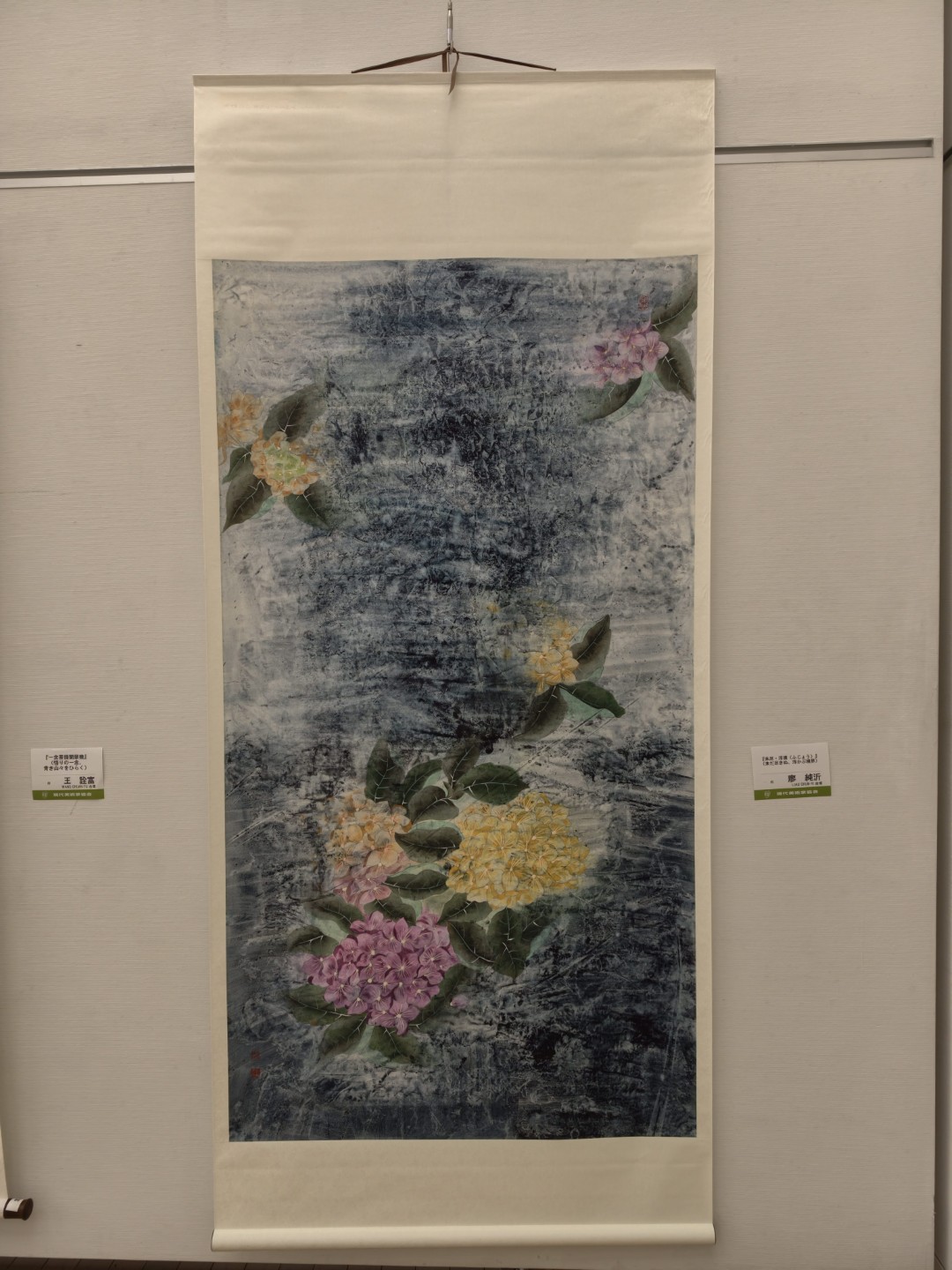
在第82回日本「現展」台灣藝術家群像中,廖純沂的作品提供了一種與蔡梅芳截然不同的觀看經驗。若說蔡梅芳《戀戀紫藤》以彩墨風暴、自然崇高與情感依附形成強烈的視覺張力,那麼廖純沂的《未盡・浮境》則更接近一種冷靜、懸浮、帶有心理斷裂感的內在風景。她的作品並不以劇烈色彩直接壓迫觀者,而是以不穩定的空間、失去重力的花卉與幽微的肌理,將觀者帶入一個介於現實、記憶與意識之間的浮動場域。
廖純沂利用熟宣不吸水的特性,結合重彩、刮擦、拓印與自動性技法,形成一種極具現代主義冷峻感與心理斷裂性的視覺拓撲;其《未盡・浮境》尤其被描述為一個失去地平線與重力座標的畫面,花卉在其中呈現無根而懸浮的狀態。
這樣的作品特質,使廖純沂在本次台灣參展群像中扮演一個重要角色:她並不以外在敘事或明確象徵取勝,而是透過空間感、材質感與心理氣氛,表現當代人內在深處的失重經驗。她的作品看似靜謐,實則充滿不穩定性;看似描繪花卉,實則處理的是現代主體在流動社會中的心理狀態。
二、《未盡・浮境》的題名:尚未完成的邊界與漂浮的場域
《未盡・浮境》這一題名,本身即包含豐富的評論線索。「未盡」意味著尚未結束、尚未抵達、尚未完成;它指向一種開放狀態,也暗示作品中的時間並非封閉、確定或已完成的敘事。作品不是一個已經被整理好的風景,而像是一個仍在生成、仍在流動、仍未落定的心理片段。
「浮境」則更具關鍵性。「浮」包含漂浮、懸浮、浮現、浮動、不穩定等意義;「境」既可指空間,也可指心境、境界或意識狀態。兩字結合後,「浮境」便不只是漂浮的景象,而是一種不穩定的心理空間。它既不是完全真實的自然環境,也不是純粹抽象的精神圖像,而是在兩者之間擺盪。亦即「未曾窮盡、浮動的邊界」。這進一步強化了作品對邊界、未完成與漂浮狀態的關注。
因此,《未盡・浮境》的題名並不是單純描述畫面內容,而是先行建立一種觀看方法:觀者不應把作品看作固定風景,而應理解為一個介於成形與消散、記憶與現實、花卉與抽象、存在與失重之間的心理場域。
三、熟宣與重彩:從水墨流動到表面肌理的控制
廖純沂的作品之所以與傳統水墨或彩墨有所不同,關鍵之一在於其對媒材表面的處理。她利用「熟宣」較不吸水的物理特性,結合「礦物重彩」與多層肌理,建立出具有冷峻感與心理斷裂性的畫面。
熟宣與生宣不同。生宣吸水性強,適合墨色暈染、滲化與氣韻流動;熟宣則因經過加工,吸水性較低,能讓顏料停留於表層,便於反覆堆疊、描繪、刮擦與控制。廖純沂對熟宣的使用,使畫面不像傳統水墨那樣追求一氣呵成的流動,而更像在紙面上建立一種冷靜、密集、反覆加工的表層結構。
這種表層結構使《未盡・浮境》具有特殊的視覺心理效果。畫面不是透明的,也不是一眼可穿透的;它有層次、有覆蓋、有摩擦痕跡,也有近似霧面、砂質或微粒般的肌理。觀者在觀看時,會感受到畫面並非單一空間,而是由多重時間與多重動作累積而成。
重彩的加入,則使作品擺脫水墨單純墨韻的範圍。花卉的色彩在灰藍、幽暗或混沌背景中顯得明亮,卻並非甜美;它們像是被放置在一個不穩定的氣候或心理層中,既浮現又被包圍,既清晰又孤立。這正是廖純沂作品最值得注意的地方:她不是讓媒材服務於花卉再現,而是讓媒材本身成為心理狀態的表面。
四、失去地平線的空間:漂浮感如何被建立
《未盡・浮境》最明顯的空間特徵,是畫面缺乏穩定地平線。傳統風景畫通常透過地平線、前景、中景、遠景等安排,讓觀者知道自己站在哪裡、看向何方。然而在廖純沂的畫面中,這種座標被有意地削弱。《未盡・浮境》創造了一個失去地平線與重力座標的背景,其藍灰色肌理猶如暴風雨下的海面,也像充滿靜電干擾的螢幕。
這種空間處理,使畫面不再是一個可步入的自然場景,而更像一個漂浮中的心理區域。觀者無法判斷花卉是在空中、水面、記憶裡,還是在某種抽象的意識場中。花朵不是長在地上,而像是從畫面深處浮現;它們沒有可見的根系,也沒有明確支撐點。
這種無根感,是作品心理意義的核心。當花卉失去土地,便不再只是自然物,而成為現代主體的象徵:美麗、脆弱、仍然開放,卻無法確定自身所在。這種漂浮不是輕盈的,而帶有焦慮;不是自由飛翔,而是失去依靠後的懸置。
廖純沂並未用激烈姿態表現焦慮,而是以空間的不確定性讓焦慮慢慢浮現。這種處理方式使作品具有一種冷靜而深層的情緒力量。
五、液態現代性:無根花卉與當代人的心理狀態
我們可以用齊格蒙・鮑曼的「液態現代性」來理解《未盡・浮境》。液態現代性指涉當代社會中穩定結構的鬆動:身份、關係、價值、工作與生活形式不再固定,而是在快速流動中持續變化。廖純沂筆下的花卉沒有根系連結大地,精準視覺化了現代人的「無根性焦慮」;然而,這些花卉儘管懸浮,仍然熱烈盛開,呈現一種在絕境中依然優雅的英雄主義。
我們可作為理解《未盡・浮境》的核心。作品中的花卉並非衰敗或枯萎,而是仍然保持色彩與形態。它們沒有穩定位置,卻沒有放棄開放;它們被置於混沌背景之中,卻沒有完全被吞沒。這種狀態與當代人的生命處境極為相似:在失去穩定價值與固定歸屬的時代,人仍然必須生活、感受、創造與維持自我。
因此,《未盡・浮境》並不是單純表現焦慮,而是表現焦慮中的生命姿態。花卉的美並非來自安穩,而是來自其在不安中仍然顯現自身。這種美不是田園式的,也不是裝飾性的,而是一種帶有抵抗意味的存在美學。
廖純沂的作品因此具有重要的當代性。她沒有直接描繪都市、科技或社會景觀,卻透過花卉與空間關係,精準表達了現代人內在深處的流動、不確定與自我維持。
六、花卉意象:從自然物到心理主體
在《未盡・浮境》中,花卉雖然仍可被辨識,但其意義已經超出自然物範圍。它們不再只是植物,而更像心理主體的替身。花卉之所以適合承載這一意義,是因為它本身兼具脆弱與生命力:花容易凋落,卻在開放瞬間呈現極高的視覺強度;它依賴環境,卻又能以顏色與形態宣示自身存在。
廖純沂將花卉置於漂浮狀態,使其脆弱性被放大。沒有土地、沒有花瓶、沒有枝幹支撐,花卉彷彿只剩下自身的形象與色彩。這使它們看起來既孤立又堅定。畫面中的花朵不是被環境供養,而是像在不穩定空間中自行發光。
此處的花卉可被視為當代主體的隱喻。人在現代社會中,也常失去傳統共同體、固定身份或穩定歸屬的支撐;然而,人仍然必須在流動環境中建立自身形式。廖純沂筆下的花卉,正是這種現代主體的視覺化:無根,但仍開放;漂浮,但不消失;孤立,但保有形象。
七、背景肌理:心理噪音與感知屏幕
《未盡・浮境》的背景並非空白,也不是單純襯托花朵的色面。我們將其形容為充滿刮擦、拓印與自動性技法的藍灰色肌理,像暴風雨下的海面,也像佈滿靜電干擾的螢幕。
這一描述非常關鍵,因為它揭示了背景的雙重性。一方面,背景像自然:水面、風暴、雲氣、海潮;另一方面,背景又像媒介:螢幕、訊號、噪音、干擾。自然與科技在此交錯,使作品不再只是自然風景,而更像當代感知狀態的隱喻。
若將背景視為「心理噪音」,則花卉便是從噪音中浮現的意識片段。這些噪音不是明確事件,而是由記憶、焦慮、感覺與外界訊息交織而成。當代人的內在世界並不安靜,而是充滿資訊流、情緒殘響與感知干擾。廖純沂的背景肌理正好捕捉了這種狀態。
若將背景視為「感知屏幕」,則作品也可被理解為數位時代的心理圖像。花朵像是在訊號干擾中顯影,既真實又不穩定。它們可能是記憶中的花,也可能是被媒介化後的自然影像。這使《未盡・浮境》在傳統花卉題材之外,具有一種現代視覺文化的深層意味。
八、冷色調與心理距離:廖純沂的抒情不是溫暖,而是懸置
廖純沂作品中的抒情性,並非溫暖、甜美或感傷,而是一種冷色調中的懸置。相較於姜金玲作品中高飽和度的生命衝動,廖純沂更傾向以灰藍、幽暗、霧化與局部明亮來建立畫面情緒。這種色彩語言使作品具有距離感。
距離感並不意味作品冷漠,而是讓觀者無法立即以情緒消費它。畫面不直接訴說悲傷,也不明確給出慰藉;它只是讓花卉漂浮在不穩定空間中,讓觀者逐漸意識到一種難以命名的失重狀態。
這種抒情方式相當成熟。它避免過度敘事,也避免把花卉變成廉價情緒符號。花朵不是被用來表現「美麗」或「哀愁」的簡單符號,而是透過其位置、色彩與背景關係,構成一種心理事件。
因此,廖純沂的抒情是一種冷抒情。它不靠溫度,而靠距離;不靠直接情節,而靠空間張力;不靠明確象徵,而靠觀看者在畫面中慢慢感受到自身的不安。
九、「未盡」的時間性:作品如何拒絕結論
《未盡・浮境》中的「未盡」也可被理解為一種時間結構。作品沒有明確開始與結束,畫面中的花卉既不像剛剛開放,也不像即將凋謝;它們處在一種被懸置的時間中。背景也不像特定天氣或特定時刻,而像持續流動的時間層。
這使作品拒絕結論。它不告訴觀者這些花從何而來,也不說明它們將往何處去。它只呈現一個中間狀態:尚未完成、尚未落定、尚未消散。
這種時間性非常符合現代人的心理經驗。當代生活中,許多事情並不以明確結局出現,而是長期處於過渡、等待、延宕與不確定之中。個人的身份、關係、職涯與情感常常都處在「未盡」狀態。廖純沂以花卉漂浮的畫面,將這種未完成感轉化為可見形式。
因此,《未盡・浮境》並非描繪某一瞬間,而是描繪一種持續狀態。它的力量不在於戲劇性高潮,而在於讓觀者停留於無法抵達結論的時間之中。
十、與蔡梅芳的對照:從自然崇高到心理懸浮
若將廖純沂《未盡・浮境》與前一回分析的蔡梅芳《戀戀紫藤》並置,可更清楚看見兩位藝術家的差異與互補。
蔡梅芳的畫面具有外向的能量。彩墨流動形成風暴般的視覺場,紫藤與鴛鴦在其中呈現自然崇高與情感相依。她的作品面對的是宏大的自然力量,並以微小生命的相依作為回應。
廖純沂的作品則較為內向。她不以風暴壓迫觀者,而是讓觀者進入一個失去座標的心理空間。花卉沒有與另一個生命相依,而是孤立地漂浮;作品的重點不在情感關係,而在主體如何在無根狀態中維持自身形象。
兩者同樣處理不確定性,但方式不同。蔡梅芳面對的是宇宙式、自然式的不確定;廖純沂面對的是心理式、社會式的不確定。蔡梅芳以「戀戀」回應虛無;廖純沂以「浮境」呈現失重。這也使第82回現展台灣藝術家群像更加多聲部:同樣是花卉題材,卻能展開完全不同的精神向度。
十一、與掛軸展示的關係:垂直性中的失重矛盾
本屆台灣參展作品多採掛軸形式展示,這一點對廖純沂作品同樣重要。掛軸本身具有明確的垂直性:作品由上而下展開,受重力牽引,形成東亞書畫傳統中常見的觀看節奏。
然而,《未盡・浮境》的畫面內容卻是失重的。花卉在畫面中漂浮,缺乏地面與支撐點。於是,展示形式的垂直性與畫面內容的失重感形成矛盾:掛軸提醒觀者重力存在,而畫面卻讓花卉逃離重力。
這種矛盾反而強化了作品張力。觀者站在掛軸前,身體感受到作品的垂直尺度,但眼睛卻進入一個無法定位上下、前後與深淺的空間。這使《未盡・浮境》不只是畫面中的浮動,也成為展場中的浮動經驗。
換言之,掛軸沒有削弱廖純沂作品的當代性,反而讓其失重感更加明顯。當東亞傳統形式承載現代心理空間,作品便在傳統與當代之間形成細緻的張力。
 【專題評論】日本第82回「現展」台灣藝術家群像
十二、與國立新美術館場域的關係:白盒子中的心理防空洞
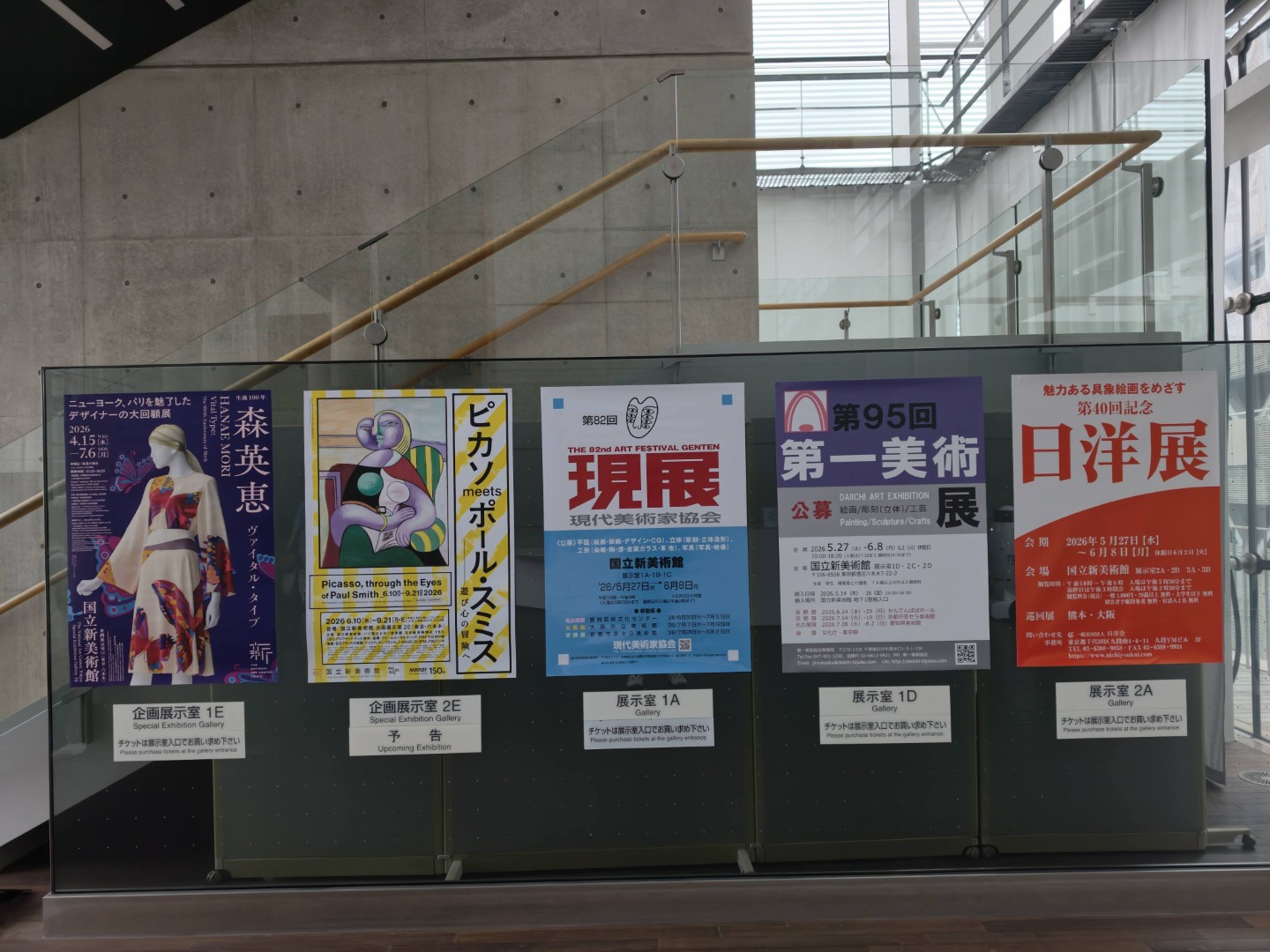
國立新美術館作為大型公募展場,具有開放、明亮、規模宏大與作品眾多的特徵。 在這樣的展場中,廖純沂作品的靜謐與冷調,反而可能形成一種特殊的停頓效果。它不像高飽和作品那樣立即抓住觀者視線,而是以一種較慢的節奏要求觀看。
廖純沂以冰霜般的重彩與深邃肌理,為觀者構築一座不受外界流轉干擾的精神防空洞。 這一說法可轉化為更深一層的語言:廖純沂的作品在展場中提供了一個心理緩衝區。當觀者穿行於大量作品與多種媒材之間,《未盡・浮境》的冷靜、漂浮與未完成感,使觀看節奏被迫放慢。
在公募展的複雜環境中,這樣的作品具有難得的沉思性。它不以強烈敘事要求觀者立即理解,也不以誇張形式追求視覺競爭,而是讓觀者在不確定空間中停留。這正是其專業價值所在:它以安靜方式抵抗展覽現場的資訊過量。
十三、廖純沂作品的當代性:不描繪時代,卻呈現時代感
廖純沂《未盡・浮境》的當代性並不來自明顯的時代符號。作品沒有直接描繪都市、機械、科技、政治或社會事件;它使用的仍是花卉、色彩、紙本與繪畫肌理。然而,它卻非常準確地呈現了當代人的心理狀態。
這說明當代性並不一定依賴題材的現代化。畫一座城市不必然當代,畫一朵花也不必然傳統。關鍵在於藝術家如何處理觀看、空間、主體與時代感。廖純沂以花卉表現無根,以背景肌理表現干擾,以冷色調表現距離,以未完成的漂浮狀態表現現代生活的長期懸置。這些都使作品具有鮮明的當代感。
因此,《未盡・浮境》可被理解為一種「心理當代性」的作品。它不在表面上標示時代,而是在感受結構上回應時代。觀者之所以能與作品產生共鳴,不是因為作品說明了某個社會議題,而是因為它讓人看見自己在流動世界中的不安、孤立與仍然努力盛開的狀態。
十四、專業評論觀點:廖純沂《未盡・浮境》的四重價值
綜合以上分析,廖純沂《未盡・浮境》在第82回現展台灣藝術家群像中具有以下四重評論價值。
第一,媒材價值
作品展現熟宣與重彩在當代繪畫中的表面控制力。廖純沂不追求水墨自然暈染的傳統氣韻,而是透過堆疊、刮擦、拓印與冷色肌理,建立一種具有心理密度的畫面表面。
第二,空間價值
作品創造一個失去地平線與重力座標的空間。這種空間不是自然風景,而是心理場域;它使花卉脫離土地,進入漂浮、懸置與未完成的狀態。
第三,象徵價值
花卉不再只是自然物,而成為現代主體的象徵。它們無根卻仍然開放,孤立卻不消失,正好回應當代人在流動社會中的生存姿態。
第四,展場價值
在國立新美術館的大型公募展場中,《未盡・浮境》以冷靜、緩慢、沉思性的方式,提供一種與視覺過載相反的觀看節奏。它不是大聲宣告,而是讓觀者在漂浮中感受到內在不安。
十五、本章小結:在無根狀態中仍然盛開
廖純沂《未盡・浮境》是一件關於「漂浮」的作品,但它的漂浮並不輕盈。它呈現的是一種無根、未完成、缺乏確定座標的現代心理狀態。畫面中的花卉不再是穩定自然的一部分,而是在藍灰肌理、視覺噪音與失重空間中浮現的生命形象。
這些花卉沒有土地,卻仍然盛開;沒有明確歸屬,卻仍維持形象;沒有穩定背景,卻未被混沌吞沒。正因如此,《未盡・浮境》不只是描繪焦慮,也表現一種在焦慮中仍然維持自身的生命力量。
廖純沂的專業價值,在於她能以冷靜的形式語言,處理極為不穩定的心理經驗。她不是用激烈筆觸喊出焦慮,而是讓焦慮沉入空間、肌理與花卉的懸浮狀態中。這使作品具有一種耐看的深度,也使其在第82回現展台灣藝術家群像中,成為表現現代心理拓撲的重要篇章。
相關內容:
廖純沂《未盡・浮境》參展日本第82回現展,描繪懸浮花卉中的液態心理風景
82回現展 2026日本國立新美術館展「日本第82回現代美術家展」
【Special Review】Portraits of Taiwanese Artists at the 82nd Japan “Genten” Exhibition
Liau Chun-Yi
Liquid Modernity, Suspended Flowers, and Psychological Topology in Unfinished・Floating Realm
Written by WANG MUTI
I. The Artist’s Position: Constructing Psychological Space between Calmness and Rupture
Among the portraits of Taiwanese artists in the 82nd Japan “Genten” Exhibition, Liau Chun-Yi’s work offers a viewing experience completely different from that of Tsai Mei-Fang. If Tsai Mei-Fang’s Lingering Wisteria forms strong visual tension through color-ink storms, natural sublimity, and emotional attachment, then Liau Chun-Yi’s Unfinished・Floating Realm is closer to an inner landscape that is calm, suspended, and marked by psychological rupture. Her work does not directly pressure the viewer with intense color, but uses unstable space, weightless flowers, and subtle textures to bring the viewer into a floating field between reality, memory, and consciousness.
Liau Chun-Yi makes use of the non-absorbent quality of processed xuan paper, combining heavy color, scraping, rubbing, and automatic techniques to form a visual topology with a distinctly modernist coldness and psychological rupture. Her Unfinished・Floating Realm is especially described as an image that has lost its horizon and gravitational coordinates, in which flowers appear rootless and suspended.
These characteristics allow Liau Chun-Yi to play an important role in this Taiwanese participating group: she does not win through external narrative or clear symbolism, but expresses the weightless experience deep within contemporary people through spatiality, materiality, and psychological atmosphere. Her work appears quiet, yet is full of instability; it seems to depict flowers, yet what it actually deals with is the psychological state of the modern subject in a fluid society.
II. The Title of Unfinished・Floating Realm: Unfinished Boundaries and a Floating Field
The title Unfinished・Floating Realm itself contains rich critical clues. “Unfinished” means not yet ended, not yet arrived, not yet completed; it points toward an open state and also suggests that the time within the work is not a closed, definite, or completed narrative. The work is not a landscape that has already been organized, but resembles a psychological fragment still being generated, still flowing, and still unsettled.
“Floating realm” is even more crucial. “Floating” includes meanings of drifting, suspension, emergence, movement, and instability; “realm” may refer to space, but also to state of mind, domain, or condition of consciousness. When the two are combined, “floating realm” is not merely a floating scene, but an unstable psychological space. It is neither a completely real natural environment nor a purely abstract spiritual image, but swings between the two. In other words, it is an “unexhausted, floating boundary.” This further strengthens the work’s concern with boundaries, incompletion, and states of suspension.
Therefore, the title Unfinished・Floating Realm does not merely describe the content of the picture, but first establishes a method of viewing: the viewer should not regard the work as a fixed landscape, but should understand it as a psychological field between formation and dispersal, memory and reality, flowers and abstraction, existence and weightlessness.
III. Processed Xuan Paper and Heavy Color: From Ink-Wash Flow to the Control of Surface Texture
One of the keys to why Liau Chun-Yi’s work differs from traditional ink wash or color ink lies in her treatment of the material surface. She uses the relatively non-absorbent physical quality of “processed xuan paper,” combining it with “mineral heavy color” and multilayered texture to create images with a sense of coldness and psychological rupture.
Processed xuan paper differs from raw xuan paper. Raw xuan is highly absorbent and suitable for ink diffusion, penetration, and the flow of vital resonance; processed xuan, having been treated, is less absorbent and allows pigment to remain on the surface, making repeated layering, depiction, scraping, and control easier. Liau Chun-Yi’s use of processed xuan makes the image less like traditional ink wash, which seeks a single-breath flow, and more like the construction of a calm, dense, repeatedly worked surface structure on paper.
This surface structure gives Unfinished・Floating Realm a special visual and psychological effect. The image is not transparent, nor can it be penetrated at a glance; it has layers, coverings, traces of friction, and textures resembling matte surfaces, sand, or fine particles. When viewing it, one feels that the image is not a single space, but is accumulated from multiple times and multiple actions.
The addition of heavy color allows the work to move beyond the simple ink resonance of ink wash. The colors of the flowers appear bright against a gray-blue, dim, or chaotic background, yet they are not sweet; they seem to be placed within an unstable climate or psychological layer, both emerging and surrounded, both clear and isolated. This is precisely what is most noteworthy about Liau Chun-Yi’s work: she does not let the medium serve floral representation, but makes the medium itself become the surface of a psychological state.
IV. A Space without Horizon: How the Sense of Floating Is Established
The most obvious spatial feature of Unfinished・Floating Realm is the lack of a stable horizon. Traditional landscape painting usually uses horizon lines, foreground, middle ground, and background to let viewers know where they stand and where they are looking. In Liau Chun-Yi’s image, however, such coordinates are deliberately weakened. Unfinished・Floating Realm creates a background that has lost horizon and gravitational coordinates; its blue-gray texture resembles a sea under a storm and also a screen filled with static interference.
This spatial treatment means that the image is no longer a natural scene one can enter, but more like a floating psychological zone. The viewer cannot determine whether the flowers are in the air, on the water, within memory, or in some abstract field of consciousness. The flowers do not grow from the ground, but seem to emerge from deep within the picture; they have no visible roots and no clear support.
This rootlessness is the core of the work’s psychological meaning. When flowers lose the ground, they are no longer merely natural objects, but become symbols of the modern subject: beautiful, fragile, still blooming, yet unable to determine where they are. This floating is not light, but anxious; it is not free flight, but suspension after the loss of support.
Liau Chun-Yi does not express anxiety through violent gestures, but allows anxiety to slowly emerge through spatial uncertainty. This treatment gives the work a calm yet profound emotional force.
V. Liquid Modernity: Rootless Flowers and the Psychological State of Contemporary People
We may use Zygmunt Bauman’s “liquid modernity” to understand Unfinished・Floating Realm. Liquid modernity refers to the loosening of stable structures in contemporary society: identity, relationships, values, work, and forms of life are no longer fixed, but continue to change within rapid flows. The flowers painted by Liau Chun-Yi have no roots connected to the earth, precisely visualizing the modern person’s “anxiety of rootlessness”; nevertheless, although these flowers are suspended, they still bloom passionately, presenting a kind of heroism that remains elegant even in extremity.
This may serve as the core for understanding Unfinished・Floating Realm. The flowers in the work are not decaying or withering, but still maintain their color and form. They have no stable position, yet they do not give up blooming; they are placed within a chaotic background, yet they are not completely swallowed. This state is extremely similar to the life condition of contemporary people: in an era that has lost stable values and fixed belonging, people must still live, feel, create, and maintain the self.
Therefore, Unfinished・Floating Realm does not simply express anxiety, but expresses a posture of life within anxiety. The beauty of the flowers does not come from stability, but from their continued manifestation of themselves within unease. This beauty is neither pastoral nor decorative, but an existential aesthetics with a sense of resistance.
Liau Chun-Yi’s work therefore possesses important contemporaneity. She does not directly depict the city, technology, or social landscape, yet through the relationship between flowers and space, she precisely expresses the flow, uncertainty, and self-maintenance deep within the modern person.
VI. Floral Imagery: From Natural Object to Psychological Subject
In Unfinished・Floating Realm, although the flowers can still be recognized, their meaning has already moved beyond the scope of natural objects. They are no longer merely plants, but more like substitutes for psychological subjects. Flowers are suitable for carrying this meaning because they themselves combine fragility and vitality: flowers wither easily, yet present an extremely high visual intensity at the moment of blooming; they depend on the environment, yet can declare their existence through color and form.
Liau Chun-Yi places flowers in a floating state, thereby amplifying their fragility. Without soil, without a vase, without branches to support them, the flowers seem to be left only with their own image and color. This makes them appear both isolated and firm. The flowers in the picture are not nourished by their environment, but seem to glow by themselves within an unstable space.
The flowers here may be regarded as metaphors for the contemporary subject. In modern society, people often also lose the support of traditional communities, fixed identities, or stable belonging; nevertheless, people must still establish their own forms within fluid environments. The flowers in Liau Chun-Yi’s painting are precisely the visualization of this modern subject: rootless, yet still blooming; floating, yet not disappearing; isolated, yet preserving form.
VII. Background Texture: Psychological Noise and the Screen of Perception
The background of Unfinished・Floating Realm is neither blank nor simply a color plane that sets off the flowers. We describe it as a blue-gray texture filled with scraping, rubbing, and automatic techniques, like the sea under a storm and also like a screen covered with static interference.
This description is crucial because it reveals the background’s dual nature. On the one hand, the background resembles nature: water surface, storm, cloud vapor, sea tides; on the other hand, it also resembles media: screen, signal, noise, interference. Nature and technology intersect here, making the work no longer merely a natural landscape, but more like a metaphor for contemporary states of perception.
If the background is regarded as “psychological noise,” then the flowers are fragments of consciousness emerging from the noise. This noise is not a clear event, but is woven from memory, anxiety, sensation, and external information. The inner world of contemporary people is not quiet, but filled with information flows, emotional residues, and perceptual interference. Liau Chun-Yi’s background texture captures precisely this state.
If the background is regarded as a “screen of perception,” then the work may also be understood as a psychological image of the digital age. The flowers appear as if emerging within signal interference, both real and unstable. They may be flowers in memory, or mediated images of nature. This gives Unfinished・Floating Realm a deep implication of modern visual culture beyond the traditional floral subject.
VIII. Cool Tones and Psychological Distance: Liau Chun-Yi’s Lyricism Is Not Warmth, but Suspension
The lyricism in Liau Chun-Yi’s work is not warm, sweet, or sentimental, but a kind of suspension within cool tones. Compared with the highly saturated life impulse in Jiang Jinling’s works, Liau Chun-Yi tends to establish the mood of the image through gray-blue, darkness, mistiness, and localized brightness. This chromatic language gives the work a sense of distance.
Distance does not mean that the work is indifferent; rather, it prevents the viewer from immediately consuming it emotionally. The image does not directly speak of sadness, nor does it clearly offer consolation; it simply lets flowers float within an unstable space, allowing the viewer gradually to become aware of a difficult-to-name state of weightlessness.
This mode of lyricism is quite mature. It avoids excessive narration and also avoids turning flowers into cheap emotional symbols. Flowers are not simple signs used to express “beauty” or “sorrow,” but constitute a psychological event through their position, color, and relationship with the background.
Therefore, Liau Chun-Yi’s lyricism is a cold lyricism. It relies not on warmth, but on distance; not on direct plot, but on spatial tension; not on clear symbolism, but on the viewer slowly sensing their own unease within the image.
IX. The Temporality of “Unfinished”: How the Work Refuses Conclusion
The “unfinished” in Unfinished・Floating Realm may also be understood as a temporal structure. The work has no clear beginning or ending; the flowers in the image seem neither just blooming nor about to wither. They are in a suspended time. The background also does not resemble a specific weather or a specific moment, but rather a layer of time that continues to flow.
This makes the work refuse conclusion. It does not tell viewers where these flowers come from, nor does it explain where they will go. It presents only an intermediate state: not yet completed, not yet settled, not yet dispersed.
This temporality corresponds very closely to modern psychological experience. In contemporary life, many things do not appear with clear endings, but remain for long periods in transition, waiting, delay, and uncertainty. Personal identity, relationships, careers, and emotions often remain in an “unfinished” state. Liau Chun-Yi transforms this sense of incompletion into visible form through the image of floating flowers.
Therefore, Unfinished・Floating Realm does not depict a single moment, but a continuous state. Its power lies not in dramatic climax, but in allowing the viewer to remain within a time that cannot reach conclusion.
X. Comparison with Tsai Mei-Fang: From Natural Sublimity to Psychological Suspension
If Liau Chun-Yi’s Unfinished・Floating Realm is placed alongside Tsai Mei-Fang’s Lingering Wisteria, analyzed in the previous section, the differences and complementarity between the two artists become clearer.
Tsai Mei-Fang’s image possesses outward energy. The flow of color ink forms a storm-like visual field, within which wisteria and mandarin ducks present natural sublimity and emotional interdependence. Her work faces vast natural forces and responds through the mutual dependence of small lives.
Liau Chun-Yi’s work, by contrast, is more inward. She does not pressure the viewer with a storm, but allows the viewer to enter a psychological space that has lost coordinates. The flowers do not depend on another life, but float in isolation; the focus of the work is not emotional relationship, but how the subject maintains its own form in a rootless state.
Both deal with uncertainty, but in different ways. Tsai Mei-Fang faces a cosmic, natural uncertainty; Liau Chun-Yi faces a psychological, social uncertainty. Tsai Mei-Fang responds to nihility with “lingering”; Liau Chun-Yi presents weightlessness through the “floating realm.” This also makes the portraits of Taiwanese artists in the 82nd Genten Exhibition more polyphonic: the same floral subject can unfold entirely different spiritual dimensions.
XI. Relationship with Hanging-Scroll Display: The Contradiction of Weightlessness within Verticality
Many Taiwanese participating works in this exhibition are displayed in hanging-scroll form, and this is equally important for Liau Chun-Yi’s work. The hanging scroll itself has clear verticality: the work unfolds from top to bottom, is drawn by gravity, and forms a viewing rhythm commonly found in East Asian calligraphy and painting traditions.
However, the content of Unfinished・Floating Realm is weightless. Flowers float within the image and lack ground or support. Thus, the verticality of the display form and the weightlessness of the image content form a contradiction: the hanging scroll reminds viewers of the existence of gravity, while the image lets the flowers escape gravity.
This contradiction instead strengthens the tension of the work. Standing before the hanging scroll, the viewer’s body senses the vertical scale of the work, while the eyes enter a space in which up and down, front and back, depth and shallowness cannot be located. This makes Unfinished・Floating Realm not only a floating within the image, but also a floating experience within the exhibition site.
In other words, the hanging scroll does not weaken the contemporaneity of Liau Chun-Yi’s work, but makes its sense of weightlessness even more apparent. When an East Asian traditional form carries modern psychological space, the work forms a subtle tension between tradition and contemporaneity.
【Special Review】Portraits of Taiwanese Artists at the 82nd Japan “Genten” Exhibition
XII. Relationship with the Field of The National Art Center, Tokyo: A Psychological Air-Raid Shelter inside the White Cube
As a large-scale public-entry exhibition venue, The National Art Center, Tokyo is characterized by openness, brightness, large scale, and a great number of works. In such an exhibition space, the quietness and cool tones of Liau Chun-Yi’s work may instead create a special effect of pause. It does not immediately seize the viewer’s gaze like highly saturated works, but demands viewing at a slower pace.
With frost-like heavy colors and profound textures, Liau Chun-Yi constructs for viewers a spiritual air-raid shelter undisturbed by the flow of the outside world. This statement may be translated into a deeper language: Liau Chun-Yi’s work provides a psychological buffer zone in the exhibition site. When viewers move among numerous works and multiple media, the calmness, floating, and unfinished quality of Unfinished・Floating Realm force the rhythm of viewing to slow down.
Within the complex environment of a public-entry exhibition, such a work possesses rare contemplative quality. It does not require viewers to understand immediately through strong narrative, nor does it pursue visual competition through exaggerated form. Instead, it allows viewers to remain within uncertain space. This is precisely its professional value: it quietly resists the information overload of the exhibition site.
XIII. The Contemporaneity of Liau Chun-Yi’s Work: Not Depicting the Age, Yet Presenting a Sense of the Age
The contemporaneity of Liau Chun-Yi’s Unfinished・Floating Realm does not come from obvious symbols of the age. The work does not directly depict the city, machines, technology, politics, or social events; it still uses flowers, color, paper, and painterly texture. Yet it presents the psychological state of contemporary people with great precision.
This shows that contemporaneity does not necessarily rely on the modernization of subject matter. Painting a city is not necessarily contemporary, and painting a flower is not necessarily traditional. The key lies in how the artist handles viewing, space, subjectivity, and the sense of the age. Liau Chun-Yi uses flowers to express rootlessness, background texture to express interference, cool tones to express distance, and an unfinished floating state to express the long-term suspension of modern life. All of these give the work a distinct contemporary feeling.
Therefore, Unfinished・Floating Realm may be understood as a work of “psychological contemporaneity.” It does not mark the age on the surface, but responds to the age through the structure of feeling. The reason viewers can resonate with the work is not that it explains a particular social issue, but that it allows them to see their own unease, isolation, and continued effort to bloom within a fluid world.
XIV. Professional Critical Perspective: The Fourfold Value of Liau Chun-Yi’s Unfinished・Floating Realm
In summary, Liau Chun-Yi’s Unfinished・Floating Realm possesses the following fourfold critical value within the portraits of Taiwanese artists in the 82nd Genten Exhibition.
First, Material Value
The work demonstrates the surface-control capacity of processed xuan paper and heavy color in contemporary painting. Liau Chun-Yi does not pursue the traditional vital resonance of natural ink diffusion, but establishes a surface with psychological density through layering, scraping, rubbing, and cool-toned texture.
Second, Spatial Value
The work creates a space that has lost horizon and gravitational coordinates. This space is not a natural landscape, but a psychological field; it makes flowers leave the earth and enter a state of floating, suspension, and incompletion.
Third, Symbolic Value
Flowers are no longer merely natural objects, but become symbols of the modern subject. They are rootless yet still bloom, isolated yet do not disappear, precisely responding to the survival posture of contemporary people in a fluid society.
Fourth, Exhibition-Site Value
Within the large-scale public-entry exhibition venue of The National Art Center, Tokyo, Unfinished・Floating Realm offers a viewing rhythm opposite to visual overload through calmness, slowness, and contemplation. It does not declare loudly, but allows viewers to sense inner unease within floating.
XV. Chapter Summary: Still Blooming in a Rootless State
Liau Chun-Yi’s Unfinished・Floating Realm is a work about “floating,” but its floating is not light. It presents a modern psychological state that is rootless, unfinished, and lacking definite coordinates. The flowers in the image are no longer part of stable nature, but living forms emerging within blue-gray texture, visual noise, and weightless space.
These flowers have no soil, yet still bloom; no clear belonging, yet still maintain form; no stable background, yet are not swallowed by chaos. Precisely because of this, Unfinished・Floating Realm does not merely depict anxiety, but also expresses a life force that still maintains itself within anxiety.
Liau Chun-Yi’s professional value lies in her ability to handle extremely unstable psychological experiences through a calm formal language. She does not shout anxiety through violent brushstrokes, but lets anxiety sink into space, texture, and the suspended state of flowers. This gives the work a depth that rewards sustained viewing and makes it an important chapter in expressing modern psychological topology within the portraits of Taiwanese artists at the 82nd Genten Exhibition.
【特集評論】日本第82回「現展」台湾芸術家群像
廖純沂 Liau, Chun-Yi
《未尽・浮境》における液状近代性、浮遊する花卉、心理的トポロジー
執筆:王穆提(WANG MUTI)
一、芸術家の位置:冷静さと断裂の間に心理空間を構築する
第82回日本「現展」の台湾芸術家群像の中で、廖純沂の作品は蔡梅芳とはまったく異なる鑑賞経験を提供している。蔡梅芳《恋恋紫藤》が彩墨の嵐、自然崇高、感情的依拠によって強烈な視覚的緊張を形成しているとすれば、廖純沂の《未尽・浮境》は、むしろ冷静で、浮遊し、心理的断裂感を帯びた内面的風景に近い。彼女の作品は激しい色彩によって直接鑑賞者を圧迫するのではなく、不安定な空間、重力を失った花卉、幽かな肌理によって、鑑賞者を現実、記憶、意識の間にある浮動する場域へと導く。
廖純沂は熟宣の吸水しにくい特性を利用し、重彩、擦り、拓印、自動性技法を組み合わせることで、極めてモダニズム的な冷峻さと心理的断裂性を備えた視覚的トポロジーを形成している。とりわけ《未尽・浮境》は、地平線と重力座標を失った画面として描写され、花卉はその中で根を失い、浮遊する状態を呈している。
このような作品特質により、廖純沂は今回の台湾出展群像の中で重要な役割を担っている。彼女は外在的な物語や明確な象徴によって勝負するのではなく、空間感、材質感、心理的雰囲気を通じて、現代人の内面深部にある無重力の経験を表現している。彼女の作品は一見静謐でありながら、実際には不安定性に満ちている。一見花卉を描いているようでありながら、実際に扱っているのは流動する社会における現代主体の心理状態である。
二、《未尽・浮境》の題名:未完成の境界と漂う場域
《未尽・浮境》という題名そのものが、豊かな評論の手がかりを含んでいる。「未尽」は、まだ終わっていない、まだ到達していない、まだ完成していないことを意味する。それは開かれた状態を指し示すとともに、作品中の時間が閉じられたもの、確定されたもの、あるいは完成済みの叙事ではないことを暗示している。作品はすでに整理された風景ではなく、なお生成され、なお流動し、なお定着していない心理の断片のようである。
「浮境」はさらに重要である。「浮」には漂う、浮遊する、浮かび上がる、揺れ動く、不安定であるといった意味が含まれる。「境」は空間を指すこともでき、心境、境界、意識状態を指すこともできる。二字が結びつくことで、「浮境」は単なる漂う景象ではなく、不安定な心理空間となる。それは完全に現実的な自然環境でも、純粋に抽象的な精神図像でもなく、その両者の間を揺れ動く。すなわち「尽きることのない、浮動する境界」である。このことは、作品が境界、未完成、浮遊状態に向ける関心をさらに強化している。
したがって、《未尽・浮境》の題名は単に画面内容を描写するものではなく、あらかじめ一つの鑑賞方法を構築している。鑑賞者は作品を固定された風景として見るべきではなく、形成と消散、記憶と現実、花卉と抽象、存在と無重力の間にある心理的場域として理解すべきである。
三、熟宣と重彩:水墨の流動から表面肌理の制御へ
廖純沂の作品が伝統的な水墨や彩墨と異なる理由の一つは、メディア表面の処理にある。彼女は「熟宣」の比較的吸水しにくい物理的特性を利用し、「鉱物重彩」と多層的な肌理を組み合わせることで、冷峻感と心理的断裂性を備えた画面を構築している。
熟宣は生宣とは異なる。生宣は吸水性が高く、墨色のにじみ、浸透、気韻の流動に適している。一方、熟宣は加工を経ているため吸水性が比較的低く、顔料を表層にとどめることができ、反復的な積層、描写、擦り、制御に適している。廖純沂による熟宣の使用は、画面を伝統水墨のような一気呵成の流動を追求するものではなく、紙面上に冷静で、密度が高く、反復加工された表層構造を築くものにしている。
この表層構造により、《未尽・浮境》は特殊な視覚的・心理的効果を持つ。画面は透明ではなく、一目で透過できるものでもない。そこには層があり、覆いがあり、摩擦の痕跡があり、霧面、砂質、あるいは微粒子のような肌理がある。鑑賞者は見る時、画面が単一の空間ではなく、複数の時間と複数の行為が積み重なってできたものだと感じる。
重彩の導入は、作品を水墨の単純な墨韻の範囲から解き放つ。花卉の色彩は灰青、暗さ、あるいは混沌とした背景の中で明るく見えるが、それは甘美なものではない。それらは不安定な気候、あるいは心理的な層の中に置かれているかのようで、浮かび上がりながら包囲され、明晰でありながら孤立している。これこそが廖純沂作品において最も注目すべき点である。彼女はメディアを花卉再現に奉仕させるのではなく、メディアそのものを心理状態の表面にしている。
四、地平線を失った空間:浮遊感はいかに構築されるか
《未尽・浮境》の最も明確な空間的特徴は、画面に安定した地平線が欠けていることである。伝統的風景画は通常、地平線、前景、中景、遠景などの配置によって、鑑賞者に自分がどこに立ち、どこを見ているのかを知らせる。しかし廖純沂の画面では、このような座標が意図的に弱められている。《未尽・浮境》は地平線と重力座標を失った背景を創り出しており、その青灰色の肌理は嵐の下の海面のようでもあり、静電気の干渉に満ちたスクリーンのようでもある。
この空間処理によって、画面はもはや歩み入ることのできる自然場景ではなく、浮遊する心理領域のようになる。鑑賞者は花卉が空中にあるのか、水面にあるのか、記憶の中にあるのか、あるいは何らかの抽象的な意識場にあるのかを判断できない。花は地面に生えているのではなく、画面の深部から浮かび上がっているようである。そこには見える根系も、明確な支点もない。
この根のなさこそ、作品の心理的意味の核心である。花卉が土地を失う時、それはもはや単なる自然物ではなく、現代主体の象徴となる。美しく、脆く、なお開いているが、自らがどこにいるのかを確定できない。この浮遊は軽やかなものではなく、不安を帯びている。自由な飛翔ではなく、依り所を失った後の懸置である。
廖純沂は激しい姿態によって不安を表現するのではなく、空間の不確定性によって不安をゆっくりと浮かび上がらせる。この処理方法により、作品は冷静でありながら深層的な感情の力を持つ。
五、液状近代性:根のない花卉と現代人の心理状態
私たちはジグムント・バウマンの「液状近代性」によって《未尽・浮境》を理解することができる。液状近代性は、現代社会における安定構造の緩みを指す。すなわち、身分、関係、価値、仕事、生活形式はもはや固定されず、急速な流動の中で絶えず変化する。廖純沂が描く花卉には大地に結びつく根系がなく、現代人の「根なしの不安」を正確に視覚化している。しかし、これらの花卉は浮遊しているにもかかわらず、なお熱烈に咲き続け、絶境の中でも優雅さを保つ一種の英雄主義を示している。
これは《未尽・浮境》を理解する核心となりうる。作品中の花卉は衰敗しているわけでも枯れているわけでもなく、なお色彩と形態を保っている。それらには安定した位置がないが、開くことを放棄してはいない。混沌とした背景の中に置かれていても、完全に飲み込まれてはいない。この状態は現代人の生命状況と極めてよく似ている。安定した価値と固定された帰属を失った時代において、人はなお生活し、感じ、創造し、自己を維持しなければならない。
したがって、《未尽・浮境》は単に不安を表現しているのではなく、不安の中にある生命の姿勢を表現している。花卉の美は安定から来るのではなく、不安の中でもなお自らを現すことから来る。この美は田園的なものでも装飾的なものでもなく、抵抗の意味を帯びた存在美学である。
そのため、廖純沂の作品は重要な現代性を持つ。彼女は都市、テクノロジー、社会的風景を直接描いてはいないが、花卉と空間の関係を通じて、現代人の内面深部にある流動、不確定性、自己維持を正確に表現している。
六、花卉イメージ:自然物から心理主体へ
《未尽・浮境》において、花卉はなお識別可能であるが、その意味はすでに自然物の範囲を超えている。それらはもはや単なる植物ではなく、心理主体の代替物のようである。花卉がこの意味を担うのに適しているのは、それ自体が脆さと生命力を兼ね備えているからである。花は容易に凋落するが、開く瞬間には極めて高い視覚的強度を示す。環境に依存しながらも、色と形によって自らの存在を宣言することができる。
廖純沂は花卉を浮遊状態に置くことで、その脆弱性を拡大している。土地もなく、花瓶もなく、枝幹の支えもない花卉は、あたかも自らの形象と色彩だけを残しているかのようである。これにより、それらは孤立していると同時に堅固にも見える。画面中の花は環境によって養われているのではなく、不安定な空間の中で自ら光を放っているかのようである。
ここでの花卉は、現代主体の隠喩と見なすことができる。現代社会において、人もまた伝統的共同体、固定された身分、安定した帰属の支えを失うことが多い。しかし人はなお、流動する環境の中で自らの形を築かなければならない。廖純沂の描く花卉は、まさにこの現代主体の視覚化である。根はないが、なお開く。漂っているが、消えない。孤立しているが、形象を保っている。
七、背景肌理:心理的ノイズと知覚のスクリーン
《未尽・浮境》の背景は空白ではなく、花を単純に引き立てる色面でもない。私たちはそれを、擦り、拓印、自動性技法に満ちた青灰色の肌理として形容する。それは嵐の下の海面のようでもあり、静電気の干渉に覆われたスクリーンのようでもある。
この描写は非常に重要である。なぜなら、それは背景の二重性を明らかにしているからである。一方で、背景は自然に似ている。水面、嵐、雲気、潮流である。他方で、背景はまたメディアにも似ている。スクリーン、信号、ノイズ、干渉である。自然とテクノロジーがここで交錯し、作品はもはや単なる自然風景ではなく、現代的知覚状態の隠喩のようになる。
背景を「心理的ノイズ」と見るなら、花卉はノイズの中から浮かび上がる意識の断片である。これらのノイズは明確な出来事ではなく、記憶、不安、感覚、外界からの情報が織り合わさってできている。現代人の内面世界は静かではなく、情報の流れ、感情の残響、知覚の干渉に満ちている。廖純沂の背景肌理は、まさにこの状態を捉えている。
背景を「知覚のスクリーン」と見るなら、作品はデジタル時代の心理図像としても理解できる。花は信号干渉の中で現像されるように見え、真実でありながら不安定である。それらは記憶の中の花であるかもしれず、メディア化された自然イメージであるかもしれない。これにより《未尽・浮境》は、伝統的な花卉題材を超えて、現代視覚文化の深層的意味を帯びる。
八、寒色調と心理的距離:廖純沂の抒情は温かさではなく、懸置である
廖純沂作品における抒情性は、温かさ、甘美さ、感傷ではなく、寒色調の中の懸置である。姜金玲作品における高彩度の生命衝動に比べ、廖純沂は灰青、暗さ、霧化、局部的な明るさによって画面の感情を築く傾向が強い。この色彩言語は作品に距離感を与えている。
距離感は作品が冷淡であることを意味しない。むしろ、それは鑑賞者が作品を直ちに感情的に消費することを不可能にする。画面は直接悲しみを語ることも、明確な慰めを与えることもない。ただ花卉を不安定な空間の中に漂わせ、鑑賞者に名づけがたい無重力状態を徐々に意識させる。
この抒情の方法は非常に成熟している。それは過度な叙事を避け、花卉を安易な感情記号に変えることも避けている。花は「美しさ」や「哀愁」を表すための単純な記号ではなく、その位置、色彩、背景との関係を通じて、一つの心理的事件を構成している。
したがって、廖純沂の抒情は冷たい抒情である。それは温度によるのではなく、距離による。直接的な筋書きによるのではなく、空間的緊張による。明確な象徴によるのではなく、鑑賞者が画面の中でゆっくりと自らの不安を感じ取ることによる。
九、「未尽」の時間性:作品はいかに結論を拒むか
《未尽・浮境》における「未尽」は、一つの時間構造としても理解できる。作品には明確な始まりも終わりもない。画面中の花卉は、ちょうど咲いたばかりのようでも、まもなく凋むようでもない。それらは懸置された時間の中にある。背景も特定の天候や特定の時刻ではなく、持続的に流動する時間の層のようである。
これにより、作品は結論を拒む。作品は鑑賞者にこれらの花がどこから来たのかを告げず、それらがどこへ向かうのかも説明しない。ただ一つの中間状態を提示する。まだ完成しておらず、まだ定着しておらず、まだ消散していない状態である。
この時間性は、現代人の心理経験に非常によく合っている。現代生活において、多くの事柄は明確な結末をもって現れるのではなく、長期にわたり移行、待機、遅延、不確定の中に置かれる。個人の身分、関係、職業、感情もしばしば「未尽」の状態にある。廖純沂は花卉が漂う画面によって、この未完成感を可視的な形式へと転化している。
したがって、《未尽・浮境》はある一瞬を描いているのではなく、一つの持続状態を描いている。その力は劇的なクライマックスにあるのではなく、鑑賞者を結論に到達できない時間の中に留まらせる点にある。
十、蔡梅芳との対照:自然崇高から心理的浮遊へ
廖純沂《未尽・浮境》を前回分析した蔡梅芳《恋恋紫藤》と並置すれば、二人の芸術家の差異と相互補完性がより明確に見えてくる。
蔡梅芳の画面には外向きのエネルギーがある。彩墨の流動は嵐のような視覚場を形成し、藤と鴛鴦はその中で自然崇高と感情的な相依を示している。彼女の作品が向き合っているのは宏大な自然の力であり、小さな生命同士の寄り添いをその応答としている。
廖純沂の作品はより内向きである。彼女は嵐によって鑑賞者を圧迫するのではなく、鑑賞者を座標を失った心理空間へと入らせる。花卉は他の生命と寄り添うのではなく、孤立して漂っている。作品の重点は感情関係ではなく、主体が根を失った状態においていかに自身の形象を維持するかにある。
両者はいずれも不確定性を扱っているが、その方法は異なる。蔡梅芳が向き合うのは宇宙的・自然的な不確定性であり、廖純沂が向き合うのは心理的・社会的な不確定性である。蔡梅芳は「恋恋」によって虚無に応答し、廖純沂は「浮境」によって無重力を提示する。これにより第82回現展の台湾芸術家群像は、さらに多声的になる。同じ花卉題材であっても、まったく異なる精神的次元を展開できるのである。
十一、掛軸展示との関係:垂直性における無重力の矛盾
本回の台湾出展作品の多くは掛軸形式で展示されており、この点は廖純沂の作品にとっても同様に重要である。掛軸そのものは明確な垂直性を持つ。作品は上から下へ展開し、重力に牽引され、東アジア書画伝統においてよく見られる鑑賞リズムを形成する。
しかし、《未尽・浮境》の画面内容は無重力である。花卉は画面の中で漂い、地面や支点を欠いている。そこで、展示形式の垂直性と画面内容の無重力感との間に矛盾が形成される。掛軸は鑑賞者に重力の存在を思い出させるが、画面は花卉を重力から逃れさせている。
この矛盾はむしろ作品の緊張を強めている。鑑賞者は掛軸の前に立つ時、身体では作品の垂直的尺度を感じるが、目は上下、前後、深浅を定位できない空間へと入っていく。これにより《未尽・浮境》は画面の中の浮動であるだけでなく、展示場における浮動経験にもなる。
言い換えれば、掛軸は廖純沂作品の現代性を弱めるのではなく、かえってその無重力感をより明確にしている。東アジアの伝統形式が現代の心理空間を担う時、作品は伝統と現代の間に繊細な緊張を形成する。
【特集評論】日本第82回「現展」台湾芸術家群像
十二、国立新美術館という場との関係:ホワイトキューブの中の心理的防空壕
国立新美術館は大型公募展会場として、開放的で、明るく、規模が大きく、作品数が多いという特徴を持つ。このような展示場において、廖純沂作品の静謐さと冷調は、むしろ特殊な停止効果を形成しうる。それは高彩度の作品のように直ちに鑑賞者の視線をつかむのではなく、より遅いリズムでの鑑賞を要求する。
廖純沂は霜のような重彩と深い肌理によって、外界の流転に妨げられない精神的な防空壕を鑑賞者のために築いている。この表現は、さらに深い言葉へと転化できる。すなわち、廖純沂の作品は展示場において心理的緩衝地帯を提供している。鑑賞者が大量の作品と多様なメディアの間を通り抜ける時、《未尽・浮境》の冷静さ、浮遊感、未完成感は、鑑賞のリズムを強制的に遅くする。
公募展の複雑な環境において、このような作品は稀有な瞑想性を持つ。それは強烈な叙事によって鑑賞者に即時理解を求めるものでもなく、誇張された形式によって視覚的競争を追求するものでもない。むしろ鑑賞者を不確定な空間の中に留まらせる。これこそがその専門的価値である。それは静かな方法によって、展覧会現場の情報過多に抵抗している。
十三、廖純沂作品の現代性:時代を描かず、時代感を提示する
廖純沂《未尽・浮境》の現代性は、明確な時代記号から来るものではない。作品は都市、機械、テクノロジー、政治、社会事件を直接描いていない。用いられているのはなお花卉、色彩、紙本、絵画肌理である。しかし、それは現代人の心理状態を非常に正確に提示している。
これは、現代性が必ずしも題材の現代化に依存するわけではないことを示している。都市を描くことが必ずしも現代的であるとは限らず、花を描くことが必ずしも伝統的であるとも限らない。鍵となるのは、芸術家が鑑賞、空間、主体、時代感をどのように処理するかである。廖純沂は花卉によって根のなさを表し、背景肌理によって干渉を表し、寒色調によって距離を表し、未完成の浮遊状態によって現代生活の長期的懸置を表している。これらすべてが、作品に鮮明な現代感を与えている。
したがって、《未尽・浮境》は一種の「心理的現代性」の作品として理解できる。それは表面上に時代を標示するのではなく、感受構造において時代に応答している。鑑賞者が作品と共鳴できるのは、作品が何らかの社会的議題を説明しているからではなく、流動する世界の中にある自らの不安、孤立、そしてなお懸命に咲こうとする状態を見せるからである。
十四、専門的評論の観点:廖純沂《未尽・浮境》の四重の価値
以上の分析を総合すると、廖純沂《未尽・浮境》は第82回現展の台湾芸術家群像において、以下の四重の評論的価値を持っている。
第一、メディアの価値
作品は熟宣と重彩が現代絵画において持つ表面制御力を示している。廖純沂は水墨の自然なにじみによる伝統的気韻を追求するのではなく、積層、擦り、拓印、寒色の肌理を通じて、心理的密度を備えた画面表面を構築している。
第二、空間の価値
作品は地平線と重力座標を失った空間を創造している。この空間は自然風景ではなく、心理的場域である。それは花卉を土地から離脱させ、浮遊、懸置、未完成の状態へと入らせる。
第三、象徴の価値
花卉はもはや単なる自然物ではなく、現代主体の象徴となっている。それらは根を持たないがなお開き、孤立しているが消えない。まさに流動社会における現代人の生存姿勢に応答している。
第四、展示場の価値
国立新美術館の大型公募展会場において、《未尽・浮境》は冷静で、ゆっくりとした、瞑想的な方法によって、視覚過多とは反対の鑑賞リズムを提供している。それは大声で宣言するのではなく、鑑賞者に浮遊の中で内面的不安を感じさせる。
十五、本章小結:根のない状態においてなお咲き続ける
廖純沂《未尽・浮境》は「浮遊」に関する作品である。しかし、その浮遊は軽やかなものではない。それは根を持たず、未完成で、確定した座標を欠いた現代的心理状態を提示している。画面中の花卉は、もはや安定した自然の一部ではなく、青灰色の肌理、視覚的ノイズ、無重力空間の中に浮かび上がる生命像である。
これらの花卉には土地がないが、なお咲いている。明確な帰属がないが、なお形象を保っている。安定した背景がないが、混沌に飲み込まれてはいない。まさにそのため、《未尽・浮境》は不安を描くだけではなく、不安の中でもなお自らを維持する生命の力を表現している。
廖純沂の専門的価値は、極めて不安定な心理経験を、冷静な形式言語によって処理できる点にある。彼女は激しい筆触によって不安を叫ぶのではなく、不安を空間、肌理、花卉の浮遊状態の中へ沈めている。これにより作品は見続けるに値する深みを持ち、第82回現展の台湾芸術家群像において、現代的心理トポロジーを表現する重要な章となっている。