 【專題評論】日本第82回「現展」台灣藝術家群像
姜金玲 Jiang Jinling
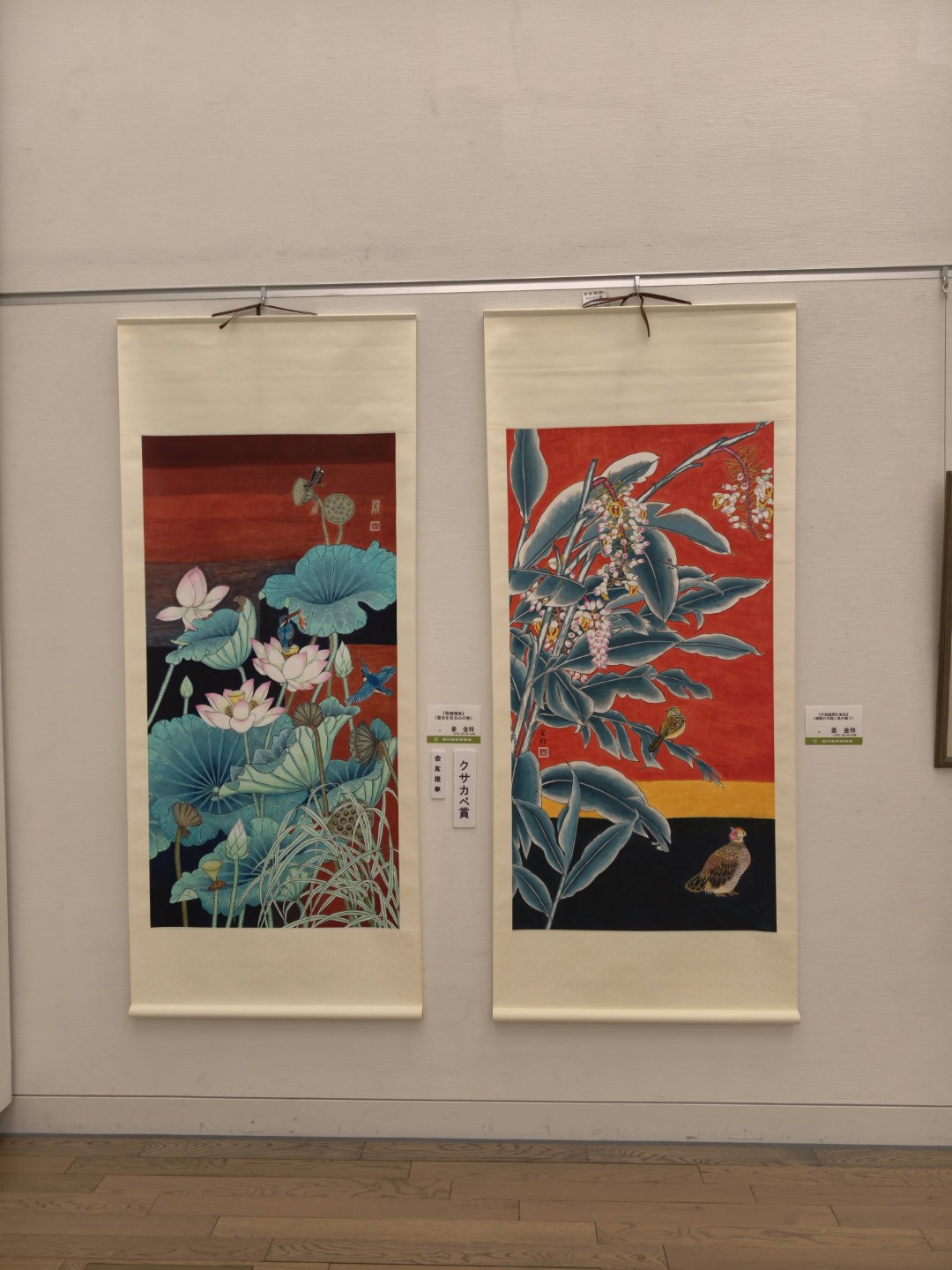
《荷塘情旅》與《月桃盛開引禽来》中的亞熱帶生命衝力、厚塗色彩與愛欲生態學
撰文:王穆提(WANG MUTI)
一、藝術家位置:在台灣群像中釋放感性色彩的高峰
在第82回日本「現展」台灣藝術家群像中,姜金玲的作品呈現出極為鮮明的感性力量。若蔡梅芳《戀戀紫藤》以彩墨風暴與情感依附展現自然崇高,廖純沂《未盡・浮境》則以冷色懸浮與心理拓撲呈現現代人的無根狀態,那麼姜金玲的《荷塘情旅》與《月桃盛開引禽来》則將觀看帶入一個充滿色彩、植物、身體感與生命衝動的亞熱帶場域。姜金玲的作品為「全面粉碎理性鐵籠、釋放細胞底層生命衝動的感性暴動」,並指出她以高度飽和的色相與厚重肌理,在六本木的白盒子空間中開闢出一處愛欲生態學的庇護所。
姜金玲作品的關鍵,不在於她描繪了荷花、月桃、禽鳥或情侶這些具象題材,而在於她如何使這些題材擺脫傳統花鳥畫、文人荷花或田園抒情的框架。她筆下的植物不是被觀賞的客體,而是具有強烈擴張性、侵入性與生命能量的主體。她的色彩也不是為了再現自然,而是將自然內部的熱力、慾望與生長衝動直接推到畫面表層。
因此,姜金玲在本專題中的位置,並不只是「自然題材藝術家」或「花卉畫家」,而是一位透過亞熱帶植物與高飽和色彩,重構自然、身體與情感關係的創作者。她的作品提供了台灣當代藝術中極具感官密度的一條路徑:不以冷靜分析取勝,而以色彩、肌理、植物與愛欲的交互生成,讓觀者重新感受生命的原始力量。
二、雙作品結構:《荷塘情旅》與《月桃盛開引禽来》的互補關係
姜金玲此次被討論的兩件作品——《荷塘情旅》與《月桃盛開引禽来》——可以視為一組彼此呼應的雙重結構。前者側重情感、旅程、親密關係與內在庇護;後者則強調植物繁盛、禽鳥吸引、自然擴張與生命場域的外放《月桃盛開引禽来》展現自然本體的狂飆,而《荷塘情旅》則將這股狂飆能量溫柔地收束於人類個體的情感經驗之中。
這種雙作品結構相當重要。若只觀看《月桃盛開引禽来》,我們會看見姜金玲如何將亞熱帶植物處理為高強度的生命事件:月桃不再只是植物,而像是一種向外擴張的自然意志。若只觀看《荷塘情旅》,我們則會看見自然如何成為情感與愛欲的庇護空間:荷塘不是背景,而是承接人類親密關係的感性場域。
兩件作品共同構成一個由外向內、由自然到情感、由植物擴張到人類依偎的視覺系統。《月桃盛開引禽来》是自然生命力的爆發,《荷塘情旅》是生命力在情感空間中的收束;前者接近生命本體的宣告,後者則接近愛與庇護的詩學。正因如此,姜金玲的作品不能被簡單歸類為花卉畫,而應被理解為一種「生命生態」與「情感生態」交織的當代彩墨實踐。
三、《月桃盛開引禽来》:亞熱帶植物的擴張性生命
《月桃盛開引禽来》這一題名,本身即具有敘事性與動態感。「月桃盛開」指向植物繁茂、花開至極盛狀態;「引禽来」則暗示植物不只是靜態存在,而具有吸引、召喚與牽引他者的能力。換言之,月桃不是孤立植物,而是整個生態關係的中心。
姜金玲在《月桃盛開引禽来》中摒棄傳統水墨的克制,採用帶有野獸派特質的厚塗肌理,並以燃燒般的洋紅、耀眼金黃、深邃普魯士藍等高飽和色彩,徹底粉碎植物的固有色。 這說明她並不追求植物學式的準確再現,而是以主觀色彩呈現植物內部的生命強度。
月桃在台灣亞熱帶環境中具有鮮明的地方性與感官特徵。其葉片寬大,花序飽滿,常與濕熱氣候、山林邊界、民間植物使用與島嶼自然經驗相關。姜金玲並未把月桃處理成地方風情符號,而是進一步將其變成一種具有主體性的生命力量。作品中的月桃像是向外伸展、膨脹、發光,甚至具有某種近乎侵略性的生長意志。
這使《月桃盛開引禽来》具備強烈的亞熱帶性。這裡的亞熱帶不是旅遊式的風景,也不是民俗式的地方色彩,而是一種濕潤、濃烈、難以被理性框限的生命狀態。姜金玲以色彩與肌理讓觀者感受到:自然不是溫順地等待觀看,而是主動向外生長、吸引、包圍並改變觀看者。
四、厚塗與重彩:媒材作為生命衝力的表面
姜金玲作品最具辨識度的特徵之一,是厚重而高能量的色彩表面。她的繪畫具有「厚塗(Impasto)」與「色彩的主觀解放」特質,畫面由大筆觸與濃烈顏料堆疊而成,讓畫布或紙面本身成為正在發生熱力學反應的有機體。
厚塗在這裡不只是技法,而是作品意義的一部分。當顏料不再只是薄薄覆蓋表面,而是以堆疊、擠壓、覆蓋、碰撞的方式形成物理厚度時,畫面便具有一種近似身體的存在感。觀者不只是「看見」色彩,也會感受到色彩的重量、溫度與觸覺。
這種媒材處理與姜金玲的主題高度一致。若她要表現的是植物生命的擴張與感性爆發,那麼輕薄、透明、克制的媒材處理便不足以承載此一力量。厚塗使植物不再是被描繪的圖像,而像是從畫面表面長出來。色彩不只是視覺效果,而成為生命衝動的痕跡。
因此,姜金玲的厚塗重彩可以被理解為一種「物質化的生命力」。它讓看不見的生長、慾望、吸引、繁殖與能量,轉化為可見、可感、近乎可觸摸的表面。這正是她作品區別於傳統花鳥畫的重要之處:傳統花鳥常透過線條與留白表現氣韻,而姜金玲則透過顏料厚度與色彩衝撞表現生命的熱度。
五、野獸派色彩與主觀自然
姜金玲作品中的色彩並非自然主義。她不依照植物的固有色描繪月桃或荷塘,而是使用高度主觀化、高飽和度與對比強烈的色彩,使自然從可辨識物象轉化為情緒與能量場。《月桃盛開引禽来》中的洋紅、金黃與普魯士藍,徹底粉碎了植物的固有色,呈現出近似野獸派的色彩解放。
野獸派色彩的核心,不在於顏色鮮豔本身,而在於色彩不再服從自然再現,而服從藝術家的感覺與內在強度。姜金玲的色彩正具有這樣的特徵。她不問「月桃原本是什麼顏色」,而是問「月桃內在的生命力應該如何被看見」。於是,色彩成為生命力的語言,而非物象的外衣。
這種主觀自然觀,讓姜金玲的植物具有強烈的情緒性。月桃不只是月桃,而像是生命自身的燃燒;荷塘不只是池水與花葉,而像是情感、記憶與身體感交織的場域。色彩在此不再附屬於形體,而是與形體共同生成作品的精神狀態。
因此,姜金玲的作品可被視為一種「情感化的自然」。自然不是被冷靜觀察,而是被身體感受;不是被理性分類,而是被色彩重新點燃。
六、斯賓諾莎式生命衝動:自然不是背景,而是主體
我們可以用斯賓諾莎的「生命衝動(Conatus)」理解姜金玲作品,指出其高飽和度色彩是萬物內在生命衝動的視覺證成。 這一理論視角有助於說明姜金玲作品中自然的主體性。
所謂生命衝動,可簡要理解為每一存在者維持自身、擴張自身、持續存在的內在力量。若以此觀看《月桃盛開引禽来》,月桃便不是被動植物,而是正在展現自身存在強度的生命主體。它盛開、伸展、吸引禽鳥,並將周圍空間轉化為自身生命場的一部分。
這也解釋了為何作品中的植物帶有某種壓迫性。觀者並不是從安全距離觀看植物,而像是被植物的色彩、葉片、花朵與能量包圍。自然不再是人類凝視下的景物,而是具有反向凝視與主動生成能力的存在。
姜金玲在此顛覆了傳統自然畫中常見的人類中心視角。她筆下的自然不是等待人類詮釋的客體,而是自我擴張、自我肯定、自我顯現的力量。這種自然觀與當代生態意識亦有呼應:人類不再位居世界中心,而必須重新感受植物、動物、氣候與環境所構成的共同生命網絡。
七、《荷塘情旅》:從自然狂飆到情感庇護
相較於《月桃盛開引禽来》的外放與擴張,《荷塘情旅》更偏向內在、情感與庇護。題名中的「荷塘」指向水域、植物與自然空間;「情旅」則使作品帶有旅程、情感、相伴與心理移動的意味,即「巡遊蓮池的心靈之旅」,顯示作品不是單純描繪荷塘景色,而是將荷塘轉化為情感與心靈的旅程空間。
在《荷塘情旅》中,自然不再只是生命力的爆發,而成為人類情感得以暫時安放的場所。畫面中一對極其微小的情侶依偎在龐大如超新星爆發般的荷花與深藍水波之間;這種比例失衡使人類個體顯得渺小,但也正因為渺小,其依偎姿態更具意義。
荷塘在此不是傳統文人畫中的出世象徵,也不是單純的清淨意象。它更像是一個包覆情感、承接身體與記憶的母體空間。情侶在荷塘中不是觀看自然,而是被自然包圍;他們不是凌駕於自然之上,而是融入其中。這使《荷塘情旅》具有一種明顯的愛欲生態學特質:愛不是孤立的人際事件,而是發生在水、花、葉、色彩與空間共同構成的生命環境之中。
八、荷塘意象的轉化:從清淨象徵到愛欲生態
荷花在東亞藝術中具有深厚傳統,常被視為潔淨、出淤泥而不染、清雅、禪意與文人品格的象徵。然而,姜金玲並不重複這一傳統詮釋。她的荷塘不是冷靜、疏離或出世的,而是充滿色彩、肌理、愛欲與身體感的。
這種轉化具有重要意義。傳統荷花圖像常強調「淨」與「遠」,藝術家與觀者在精神上保持一種超然距離;姜金玲的荷塘則強調「近」與「入」,觀者彷彿被帶入濃烈的色彩與水波之中。荷花不再只是道德象徵,而成為感性生命的一部分。
姜金玲在《荷塘情旅》中模糊了情侶與周遭荷塘的輪廓線,呈現自我邊界的消融,使愛欲超越世俗算計,進入與宇宙母體相融合的狀態。 這可被理解為姜金玲對荷花傳統的當代改寫:純潔不是遠離紅塵,而是在最濃烈的生命經驗中重新生成。
因此,《荷塘情旅》不是出世的荷塘,而是入世的荷塘;不是拒絕身體,而是讓身體、情感與自然彼此滲透。姜金玲讓荷塘從文人清賞轉向感性庇護,從道德象徵轉向生命共同體。
九、情侶意象:微小人物與巨大自然的比例辯證
《荷塘情旅》中若有一對情侶形象,其重要性不在於敘事情節,而在於比例關係。畫面中情侶極其微小,依偎於龐大的荷花與深藍水波之間,形成強烈的比例失衡。
這種比例失衡使人類不再是畫面中心的支配者。傳統人物畫或敘事畫常以人物作為視覺焦點,自然則成為背景;但在姜金玲作品中,自然巨大,人類微小。這並不是貶低人,而是重新調整人與自然的關係。人類的情感並非脫離環境而存在,而是在龐大生命場中找到短暫而珍貴的位置。
情侶的依偎姿態,使作品中的愛不只是個人情感,也是一種存在方式。當兩個微小人物置身於龐大的自然色域中,他們的相依便具有抵抗孤立的意味。與蔡梅芳《戀戀紫藤》中鴛鴦的情感錨點相似,姜金玲的情侶也象徵生命之間的靠近;但兩者氛圍不同。蔡梅芳是在宇宙風暴中確認眷戀,姜金玲則是在濃烈自然母體中讓愛欲與生命交融。
因此,《荷塘情旅》中的人物不是敘事主角,而是情感密度的凝結點。他們使整個荷塘不再只是植物空間,而成為一個能容納愛、身體與心靈旅程的場所。
十、色彩作為愛欲語言
姜金玲的色彩在《荷塘情旅》中不只是自然色彩,也是一種愛欲語言。若《月桃盛開引禽来》的色彩偏向擴張、燃燒與召喚,那麼《荷塘情旅》的色彩則更偏向包覆、滲透與融合。紫紅、深藍、墨色與亮色花葉共同形成一種介於夢境與身體感之間的色域。
愛欲在此並不被表現為具體情節,而是被轉化為空間氣氛。色彩的濃烈,使荷塘不再透明;水波的深藍,使情感具有深度;花葉的擴張,使人物被自然包圍。觀者感受到的不是外在事件,而是情感在空間中蔓延。
這種處理方式使《荷塘情旅》避免了直白敘事。姜金玲不需要描繪明確故事,也能讓觀者感受到親密、依偎、沉浸與庇護。她以色彩替代敘事,以色域替代心理描寫,使愛欲成為整個畫面的感官結構。
十一、邊界消融:人物、植物與水域的相互滲透
《荷塘情旅》最值得注意之處,在於邊界的消融。藝術家模糊了情侶與周遭荷塘的輪廓線,深藍水波與洋紅荷花光暈彷彿侵入人物身體,使自我邊界被鬆動。
這種邊界消融,是姜金玲作品的重要美學特徵。她不讓人物與背景保持清楚分離,而是讓人物、植物、水域、色彩互相滲透。這意味著個體不是封閉的,而是與環境、情感與自然共同生成。
在當代社會中,個體常被制度、科技與社會分工切割成孤立單位;姜金玲的畫面則提出另一種生命想像:人可以不再與自然對立,也不必把愛視為純粹私人事件,而可在與環境的交融中重新獲得整體感。
因此,《荷塘情旅》的邊界消融並非形式上的模糊,而是作品思想的核心。它使人與自然不再是主體與客體的關係,而是共同參與一個情感生態場。
十二、與傳統文人荷花的差異
若將姜金玲的荷塘與傳統文人荷花相比,差異會非常明顯。傳統文人荷花常重視線條節制、墨色清雅、留白與精神品格;畫面通常追求一種簡淡、清遠、出塵的美感。姜金玲則完全反其道而行。她的荷塘不清淡,而是濃烈;不疏遠,而是沉浸;不強調出世,而強調入世;不追求自我淨化,而追求情感與生命的交融。
對比傳統文人荷花與姜金玲現代彩墨,前者偏向生宣留白、出世禪觀與書房隱逸,後者則偏向熟宣或混合媒材厚塗、斯賓諾莎式生命衝動與六本木液態空間中的感性突圍。
這個差異說明姜金玲並不是在延續荷花題材,而是在重新身體化與當代化荷花。她使荷花不再只屬於文人精神潔癖,而回到泥土、水、身體、愛欲與色彩的混合狀態。她提醒觀者:真正的生命不在於遠離混濁,而在於能夠從混濁中吸收養分並盛開。
這種觀點使姜金玲作品具有強烈的當代意義。她不否定傳統,但拒絕被傳統的清雅範式限制。她讓荷花重新變得潮濕、熱烈、世俗而有生命。
十三、與台灣亞熱帶經驗的關係
姜金玲作品中強烈的植物性與色彩感,也可被放入台灣亞熱帶環境中理解。台灣的氣候濕潤、植物繁盛,山林、河流、濕地與農村邊界常充滿濃密的自然生命。這種環境經驗不同於乾燥、冷冽或高度人工化的自然景觀,也不同於日本傳統美學中常被強調的季節性節制、物哀與幽玄。
姜金玲的作品以濃烈色彩與厚重肌理,將台灣亞熱帶自然的濕熱、繁密與生長感帶入東京六本木的國立新美術館。這並不是簡單展示「台灣風景」,而是將一種來自島嶼環境的生命感轉化為當代藝術語言。
在翻譯姜金玲《月桃盛開引禽来》時,應讓日本觀眾感受到這股野獸派色彩有別於日本傳統「物哀」那種感傷、消極的凋零美學,而是一種具有擴張性與侵略性的亞熱帶能量。
這一點非常重要。姜金玲作品中的自然並不哀傷,也不以凋零為美;它是盛開、擴張、吸引、包圍與燃燒。這種自然觀讓台灣藝術在日本展場中呈現出鮮明的差異性:不是以異國情調被觀看,而是以強烈生命力與感官能量與日本觀眾發生碰撞。
 【專題評論】日本第82回「現展」台灣藝術家群像
十四、與國立新美術館場域的關係:白盒子中的色彩暴動
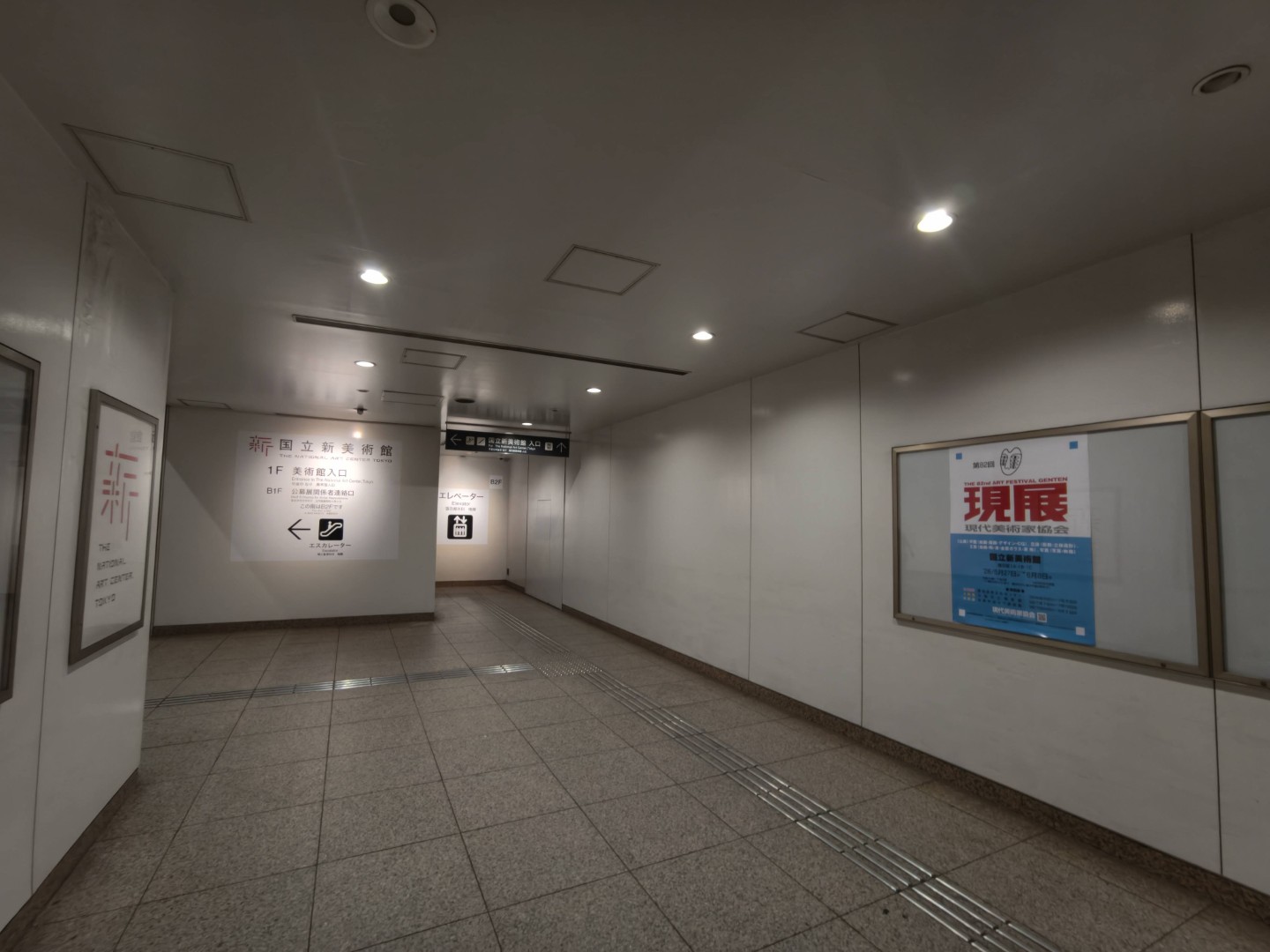
國立新美術館作為第82回現展本展場域,具有大型展覽空間、現代建築尺度與白盒子展場特徵。該館不設常設典藏,而以大型展示空間、多樣展覽與藝術資訊公開為主要功能。 在這樣的場域中,姜金玲作品的色彩與肌理必然產生強烈的空間效果。
白盒子展場常被視為中性、理性、去脈絡化的展示空間;而姜金玲的畫面則充滿濕度、熱度、植物性與身體感。當她的《荷塘情旅》與《月桃盛開引禽来》進入六本木國立新美術館時,作品本身便像是一股亞熱帶生命能量闖入現代展覽制度的冷靜空間。
這種對比強化了作品的存在感。觀者在現代美術館的白牆前,不只是觀看一幅植物畫,而是遭遇一種難以被白盒子完全馴化的色彩生命。姜金玲的畫面彷彿拒絕安靜地掛在牆上,而是向外蔓延,試圖以色彩與肌理重新佔領觀看空間。
因此,姜金玲作品與國立新美術館場域之間形成一種辯證關係:美術館提供制度性與公共性,作品則以感性色彩挑戰空間的理性秩序。這也正是她在本屆台灣群像中的重要性——她使台灣藝術不只是被納入日本展場,而是在展場中發出強烈的感官聲音。
十五、與掛軸展示的關係:柔性載體上的生命膨脹
本屆台灣參展作品多採掛軸形式展示,姜金玲作品亦可在此脈絡中重新理解。掛軸具有柔性、垂直性與可移動性,其源於東亞書畫傳統,也回應跨國運輸與大型作品展示的實務需要。
姜金玲的色彩與厚塗若置於掛軸形式中,會產生一種特殊張力。掛軸本身是柔軟、可收納、可懸垂的載體;而姜金玲的畫面卻充滿膨脹、擴張與色彩重量。柔性載體與強烈內容形成對比,使作品像是在輕盈形式中承載過量生命力。
這種對比也使觀看經驗更具動態性。觀者面對掛軸時,視線自然沿垂直方向移動;而姜金玲的植物與色彩則不斷向四周擴張,形成垂直觀看與橫向蔓延之間的拉扯。這種拉扯非常符合她作品的生命主題:植物不被邊界限制,色彩也不願被框住,而是在掛軸的柔性空間中持續生長。
十六、姜金玲作品的女性感性與生命政治
姜金玲作品中的感性力量,也可以從女性創作者的身體視角加以理解。這裡所謂女性感性,不是將作品簡化為性別本質,而是指出她對植物、情感、身體與庇護空間的處理,帶有一種不同於冷峻理性或英雄敘事的生命政治。
她的作品不以征服自然為目標,也不以抽象秩序控制畫面,而是讓自然與情感共同擴張。她不把愛欲排除在藝術之外,也不把色彩壓抑成純形式,而是讓愛欲、植物、色彩與身體感共同形成作品的中心。這種創作方式使她的作品具有一種對抗性:它對抗的是現代社會中對身體、感性與自然的壓抑。
《荷塘情旅》中的情侶依偎、《月桃盛開引禽来》中的植物召喚,都指向關係性的生命觀。生命不是孤立單位,而是透過吸引、靠近、庇護、滲透與共生而存在。這種關係性,正是姜金玲作品最深層的倫理意義。
十七、專業評論觀點:姜金玲作品的四重價值
綜合以上分析,姜金玲《荷塘情旅》與《月桃盛開引禽来》在本專題報告中具有以下四重價值。
第一,媒材價值
姜金玲以厚塗、重彩與高飽和色彩,突破傳統花鳥畫與文人荷花的克制美學。她讓顏料厚度、筆觸痕跡與色彩衝突成為生命力的可見形式。
第二,植物價值
月桃與荷塘在她筆下不再是自然背景,而是具有主體性的生命場。植物不只是被觀看,而是盛開、吸引、包圍並改變觀看者。
第三,情感價值
《荷塘情旅》將自然轉化為愛欲與情感庇護所。情侶在龐大荷塘中依偎,使愛不再只是人際事件,而成為發生於自然生態中的生命關係。
第四,跨文化價值
姜金玲將台灣亞熱帶的濕熱、繁盛與色彩能量帶入日本現展場域,與日本傳統美學中較為節制、感傷的自然觀形成差異。這使其作品在台日藝術交流中具有鮮明辨識度。
十八、本章小結:在濃烈色彩中重建生命共同體
姜金玲的《荷塘情旅》與《月桃盛開引禽来》並不是單純的自然題材作品,而是以亞熱帶植物為入口,重新建構自然、身體、情感與生命衝動之間的關係。《月桃盛開引禽来》展現自然向外擴張、自我肯定與召喚他者的力量;《荷塘情旅》則將這股力量轉化為愛欲、庇護與情感交融的空間。
她的作品以厚塗與重彩反抗過度理性化的觀看,以高飽和色彩釋放被壓抑的感性生命,以植物與人物的邊界消融重申生命之間的相互依存。與蔡梅芳的動態崇高、廖純沂的心理懸浮不同,姜金玲帶來的是一種濃烈、潮濕、燃燒而具有生態感的藝術語言。
在第82回現展的台灣藝術家群像中,姜金玲的重要性正在於:她使台灣當代藝術的亞熱帶生命力,以不可忽視的色彩強度進入東京六本木的國家級展場。她的作品提醒觀者,生命並不總是冷靜、清雅、理性或可控制;生命也可能是盛開、蔓延、吸引、沉浸與交融。真正的藝術力量,往往正來自這種無法被完全馴服的感性過剩。
相關內容:
姜金玲《荷塘情旅》《月桃盛開引禽来》亮相日本第82回現展,展現亞熱帶生命衝力
82回現展 2026日本國立新美術館展「日本第82回現代美術家展」
【Special Review】Portraits of Taiwanese Artists at the 82nd Japan “Genten” Exhibition
Jiang Jinling
Subtropical Life Force, Impasto Color, and Erotic Ecology in Emotional Journey in the Lotus Pond and Shell Ginger in Full Bloom Attracts Birds
Written by WANG MUTI
I. The Artist’s Position: A Peak of Sensuous Color Released within the Taiwanese Portrait
Among the portraits of Taiwanese artists in the 82nd Japan “Genten” Exhibition, Jiang Jinling’s works present an extremely vivid sensuous force. If Tsai Mei-Fang’s Lingering Wisteria expresses natural sublimity through color-ink storms and emotional attachment, and Liau Chun-Yi’s Unfinished・Floating Realm presents the rootless state of modern people through cool-toned suspension and psychological topology, then Jiang Jinling’s Emotional Journey in the Lotus Pond and Shell Ginger in Full Bloom Attracts Birds lead viewing into a subtropical field full of color, plants, bodily sensation, and life impulse. Jiang Jinling’s works are a “sensuous uprising that completely shatters the iron cage of rationality and releases the life impulse at the cellular depths,” and it is noted that, with highly saturated hues and heavy texture, she opens a refuge of erotic ecology within the white-cube space of Roppongi.
The key to Jiang Jinling’s work does not lie in her depiction of figurative subjects such as lotus flowers, shell ginger, birds, or lovers, but in how she frees these subjects from the frameworks of traditional bird-and-flower painting, literati lotus imagery, or pastoral lyricism. The plants in her paintings are not objects to be appreciated, but subjects with strong expansiveness, invasiveness, and life energy. Her colors are also not used to represent nature, but to push the heat, desire, and growth impulse inside nature directly to the surface of the image.
Therefore, Jiang Jinling’s position in this special topic is not merely that of a “nature-themed artist” or “flower painter,” but that of a creator who reconstructs the relationships between nature, body, and emotion through subtropical plants and highly saturated color. Her work offers a path in Taiwanese contemporary art with extremely dense sensoriality: it does not win through calm analysis, but through the mutual generation of color, texture, plants, and eros, allowing viewers to feel anew the primal force of life.
II. The Dual-Work Structure: The Complementary Relationship between Emotional Journey in the Lotus Pond and Shell Ginger in Full Bloom Attracts Birds
The two works by Jiang Jinling discussed here—Emotional Journey in the Lotus Pond and Shell Ginger in Full Bloom Attracts Birds—may be regarded as a mutually resonant dual structure. The former emphasizes emotion, journey, intimate relationship, and inner refuge; the latter emphasizes botanical abundance, the attraction of birds, natural expansion, and the outward release of a life field. Shell Ginger in Full Bloom Attracts Birds displays the storm of nature itself, while Emotional Journey in the Lotus Pond gently gathers that storm-like energy into the emotional experience of human individuals.
This dual-work structure is quite important. If one looks only at Shell Ginger in Full Bloom Attracts Birds, one sees how Jiang Jinling treats subtropical plants as high-intensity life events: shell ginger is no longer merely a plant, but seems like a natural will expanding outward. If one looks only at Emotional Journey in the Lotus Pond, one sees how nature becomes a refuge for emotion and eros: the lotus pond is not a background, but a sensuous field that receives human intimacy.
The two works together constitute a visual system that moves from outside to inside, from nature to emotion, from botanical expansion to human leaning-together. Shell Ginger in Full Bloom Attracts Birds is an eruption of natural vitality, while Emotional Journey in the Lotus Pond is the gathering of vitality within emotional space; the former approaches a declaration of life itself, while the latter approaches a poetics of love and refuge. Precisely because of this, Jiang Jinling’s works cannot be simply classified as flower paintings, but should be understood as a contemporary color-ink practice in which “life ecology” and “emotional ecology” are interwoven.
III. Shell Ginger in Full Bloom Attracts Birds: The Expansive Life of Subtropical Plants
The title Shell Ginger in Full Bloom Attracts Birds itself possesses narrativity and dynamism. “Shell ginger in full bloom” points to vegetal flourishing and the state of flowers blooming at their peak; “attracts birds” suggests that the plant is not merely a static existence, but has the ability to attract, summon, and draw others toward it. In other words, shell ginger is not an isolated plant, but the center of an entire ecological relationship.
In Shell Ginger in Full Bloom Attracts Birds, Jiang Jinling abandons the restraint of traditional ink wash, adopts impasto textures with Fauvist qualities, and uses highly saturated colors such as burning magenta, dazzling gold, and deep Prussian blue to completely shatter the inherent colors of plants. This shows that she does not seek botanically accurate representation, but presents the internal intensity of plant life through subjective color.
Shell ginger has distinctive local and sensory characteristics within Taiwan’s subtropical environment. Its leaves are broad, its inflorescences full, and it is often associated with humid heat, forest margins, folk uses of plants, and island experiences of nature. Jiang Jinling does not treat shell ginger as a symbol of local color, but further transforms it into a life force with subjectivity. The shell ginger in the work seems to stretch outward, swell, glow, and even possess an almost aggressive will to grow.
This gives Shell Ginger in Full Bloom Attracts Birds a strong subtropical quality. The subtropical here is not tourist-like scenery, nor folkloric local color, but a humid, intense, and difficult-to-rationally-frame state of life. Through color and texture, Jiang Jinling makes viewers feel that nature does not meekly wait to be viewed, but actively grows outward, attracts, surrounds, and transforms the viewer.
IV. Impasto and Heavy Color: Medium as the Surface of Life Force
One of the most recognizable features of Jiang Jinling’s work is its heavy and high-energy chromatic surface. Her paintings possess qualities of “impasto” and “the subjective liberation of color”; the image is formed through large brushstrokes and layers of intense pigment, making the canvas or paper surface itself become an organism undergoing a thermodynamic reaction.
Impasto here is not merely a technique, but part of the meaning of the work. When pigment is no longer merely a thin covering on the surface, but forms physical thickness through layering, squeezing, covering, and collision, the image acquires an almost bodily presence. Viewers not only “see” color, but also sense its weight, temperature, and tactility.
This material treatment is highly consistent with Jiang Jinling’s theme. If what she wants to express is the expansion of plant life and sensuous eruption, then thin, transparent, restrained material treatment is insufficient to carry this force. Impasto makes plants no longer images being depicted, but as if they were growing out of the surface of the picture. Color is not merely a visual effect, but becomes a trace of life impulse.
Therefore, Jiang Jinling’s impasto heavy color may be understood as a “materialized vitality.” It transforms invisible growth, desire, attraction, reproduction, and energy into visible, sensible, almost touchable surfaces. This is precisely what distinguishes her work from traditional bird-and-flower painting: traditional bird-and-flower painting often expresses vital resonance through line and void, while Jiang Jinling expresses the heat of life through the thickness of pigment and the collision of color.
V. Fauvist Color and Subjective Nature
The colors in Jiang Jinling’s work are not naturalistic. She does not depict shell ginger or lotus ponds according to their inherent colors, but uses highly subjective, highly saturated, and strongly contrasting colors to transform nature from recognizable objects into fields of emotion and energy. The magenta, gold, and Prussian blue in Shell Ginger in Full Bloom Attracts Birds completely shatter the inherent colors of plants and present a liberation of color close to Fauvism.
The core of Fauvist color does not lie in brightness itself, but in the fact that color no longer obeys natural representation, but obeys the artist’s feeling and inner intensity. Jiang Jinling’s color has precisely this quality. She does not ask, “What color is shell ginger originally?” but asks, “How should the inner vitality of shell ginger be seen?” Thus, color becomes the language of vitality rather than the outer garment of objects.
This subjective view of nature gives Jiang Jinling’s plants strong emotionality. Shell ginger is not merely shell ginger, but seems like the burning of life itself; the lotus pond is not merely water, flowers, and leaves, but a field where emotion, memory, and bodily sensation are interwoven. Color here is no longer subordinate to form, but co-generates the spiritual state of the work together with form.
Therefore, Jiang Jinling’s work may be regarded as a kind of “emotionalized nature.” Nature is not calmly observed, but felt by the body; it is not rationally classified, but reignited through color.
VI. Spinozist Conatus: Nature Is Not Background, but Subject
We may understand Jiang Jinling’s work through Spinoza’s “conatus,” pointing out that her highly saturated colors are a visual proof of the inner life impulse of all things. This theoretical perspective helps explain the subjectivity of nature in Jiang Jinling’s work.
Conatus may be briefly understood as the internal force by which every being maintains itself, expands itself, and continues to exist. If viewed from this perspective, the shell ginger in Shell Ginger in Full Bloom Attracts Birds is not a passive plant, but a life subject displaying the intensity of its own existence. It blooms, extends, attracts birds, and transforms the surrounding space into part of its own life field.
This also explains why the plants in the work carry a certain oppressive quality. Viewers do not observe the plants from a safe distance, but seem to be surrounded by their color, leaves, flowers, and energy. Nature is no longer scenery under the human gaze, but an existence with a reverse gaze and active generative capacity.
Here, Jiang Jinling overturns the human-centered perspective commonly found in traditional nature painting. The nature she paints is not an object waiting for human interpretation, but a force of self-expansion, self-affirmation, and self-manifestation. This view of nature also resonates with contemporary ecological consciousness: human beings no longer occupy the center of the world, but must re-sense the shared web of life composed of plants, animals, climate, and environment.
VII. Emotional Journey in the Lotus Pond: From Natural Storm to Emotional Refuge
Compared with the outward release and expansion of Shell Ginger in Full Bloom Attracts Birds, Emotional Journey in the Lotus Pond leans more toward inwardness, emotion, and refuge. The “lotus pond” in the title points to water, plants, and natural space; “emotional journey” gives the work meanings of journey, emotion, companionship, and psychological movement—namely, “a spiritual journey through the lotus pond”—showing that the work does not simply depict the scenery of a lotus pond, but transforms the lotus pond into a space of emotional and spiritual journey.
In Emotional Journey in the Lotus Pond, nature is no longer merely an eruption of vitality, but becomes a place where human emotion can be temporarily placed. A pair of extremely small lovers lean together among lotus flowers as vast as a supernova explosion and deep blue water waves; this imbalance of scale makes human individuals appear small, yet precisely because of this smallness, their gesture of leaning together becomes more meaningful.
The lotus pond here is not an otherworldly symbol in traditional literati painting, nor simply an image of purity. It is more like a maternal space that enfolds emotion and receives body and memory. The lovers in the lotus pond do not look at nature, but are surrounded by nature; they do not stand above nature, but merge into it. This gives Emotional Journey in the Lotus Pond an obvious quality of erotic ecology: love is not an isolated interpersonal event, but occurs within a living environment jointly constituted by water, flowers, leaves, color, and space.
VIII. The Transformation of the Lotus-Pond Image: From Symbol of Purity to Erotic Ecology
The lotus has a deep tradition in East Asian art and is often regarded as a symbol of purity, emerging unstained from the mud, elegance, Chan/Zen meaning, and literati character. However, Jiang Jinling does not repeat this traditional interpretation. Her lotus pond is not calm, distant, or otherworldly, but full of color, texture, eros, and bodily sensation.
This transformation is highly significant. Traditional lotus images often emphasize “purity” and “distance,” with the artist and viewer maintaining a spiritually detached distance; Jiang Jinling’s lotus pond emphasizes “nearness” and “entry,” as if the viewer were brought into intense color and water waves. The lotus is no longer merely a moral symbol, but becomes part of sensuous life.
In Emotional Journey in the Lotus Pond, Jiang Jinling blurs the contour lines between the lovers and the surrounding lotus pond, presenting the dissolution of self-boundaries and allowing eros to transcend worldly calculation and enter a state of fusion with the cosmic maternal body. This may be understood as Jiang Jinling’s contemporary rewriting of the lotus tradition: purity is not produced by leaving the human world behind, but is regenerated within the most intense experiences of life.
Therefore, Emotional Journey in the Lotus Pond is not an otherworldly lotus pond, but a worldly one; it does not reject the body, but lets body, emotion, and nature penetrate one another. Jiang Jinling shifts the lotus pond from literati appreciation toward sensuous refuge, and from moral symbol toward a community of life.
IX. The Image of Lovers: The Proportional Dialectic between Tiny Figures and Vast Nature
If there is a pair of lovers in Emotional Journey in the Lotus Pond, their importance lies not in narrative plot, but in proportional relationship. In the image, the lovers are extremely small, leaning together among enormous lotus flowers and deep blue water waves, forming a strong imbalance of scale.
This imbalance of scale means that human beings are no longer the dominant center of the picture. Traditional figure painting or narrative painting often takes figures as the visual focus, with nature becoming the background; but in Jiang Jinling’s work, nature is vast and human beings are small. This does not belittle people, but readjusts the relationship between humans and nature. Human emotion does not exist apart from the environment, but finds a brief and precious place within a vast field of life.
The leaning-together posture of the lovers makes love in the work not merely a personal emotion, but a mode of existence. When two tiny figures are placed within a vast natural color field, their mutual dependence carries the meaning of resisting isolation. Similar to the emotional anchor of mandarin ducks in Tsai Mei-Fang’s Lingering Wisteria, Jiang Jinling’s lovers also symbolize closeness between lives; however, the atmosphere differs. Tsai Mei-Fang confirms attachment within a cosmic storm, while Jiang Jinling allows eros and life to merge within an intense natural maternal body.
Therefore, the figures in Emotional Journey in the Lotus Pond are not narrative protagonists, but condensations of emotional density. They make the entire lotus pond no longer merely a botanical space, but a place capable of containing love, body, and spiritual journey.
X. Color as the Language of Eros
Jiang Jinling’s color in Emotional Journey in the Lotus Pond is not only natural color, but also a language of eros. If the color of Shell Ginger in Full Bloom Attracts Birds tends toward expansion, burning, and summoning, then the color of Emotional Journey in the Lotus Pond tends more toward enveloping, penetration, and fusion. Purple-red, deep blue, ink tones, and bright leaves together form a color field between dream and bodily sensation.
Eros here is not expressed as a concrete plot, but is transformed into spatial atmosphere. The intensity of color makes the lotus pond no longer transparent; the deep blue of the water waves gives emotion depth; the expansion of flowers and leaves surrounds the figures with nature. What the viewer feels is not an external event, but the spread of emotion within space.
This treatment allows Emotional Journey in the Lotus Pond to avoid straightforward narration. Jiang Jinling does not need to depict a clear story in order for viewers to sense intimacy, leaning together, immersion, and refuge. She replaces narrative with color and psychological description with color fields, making eros the sensory structure of the entire image.
XI. Dissolving Boundaries: The Mutual Penetration of Figures, Plants, and Water
The most noteworthy aspect of Emotional Journey in the Lotus Pond is the dissolution of boundaries. The artist blurs the contour lines between the lovers and the surrounding lotus pond; the deep blue water waves and magenta lotus halos seem to invade the bodies of the figures, loosening the boundaries of the self.
This dissolution of boundaries is an important aesthetic feature of Jiang Jinling’s work. She does not keep figures and background clearly separate, but lets figures, plants, water, and color mutually penetrate one another. This means that the individual is not closed, but co-generated with environment, emotion, and nature.
In contemporary society, individuals are often cut into isolated units by institutions, technology, and social division of labor; Jiang Jinling’s image proposes another imagination of life: human beings need no longer oppose nature, nor must love be regarded as a purely private event, but may regain wholeness through fusion with the environment.
Therefore, the dissolution of boundaries in Emotional Journey in the Lotus Pond is not merely formal blurring, but the core of the work’s thought. It makes human beings and nature no longer relate as subject and object, but jointly participate in an emotional ecological field.
XII. Difference from the Traditional Literati Lotus
If Jiang Jinling’s lotus pond is compared with the traditional literati lotus, the difference becomes very clear. Traditional literati lotus paintings often value restraint of line, elegant ink tones, voids, and spiritual character; the image usually pursues a plain, distant, and transcendental beauty. Jiang Jinling proceeds in exactly the opposite direction. Her lotus pond is not plain, but intense; not distant, but immersive; not focused on transcendence, but on entering the world; not pursuing self-purification, but the fusion of emotion and life.
Comparing the traditional literati lotus with Jiang Jinling’s modern color ink, the former tends toward raw xuan paper and voids, otherworldly Chan contemplation, and study-room seclusion, while the latter tends toward processed xuan or mixed-media impasto, Spinozist conatus, and sensuous breakthrough within the liquid space of Roppongi.
This difference shows that Jiang Jinling is not continuing the lotus subject, but re-embodying and contemporizing the lotus. She makes the lotus no longer belong only to the spiritual fastidiousness of literati, but return to a mixed state of mud, water, body, eros, and color. She reminds viewers that true life does not lie in distancing itself from muddiness, but in being able to absorb nutrients from muddiness and bloom.
This perspective gives Jiang Jinling’s work strong contemporary significance. She does not deny tradition, but refuses to be restricted by its paradigm of elegance. She makes the lotus moist, passionate, worldly, and alive once again.
XIII. Relationship with Taiwan’s Subtropical Experience
The strong plant quality and sense of color in Jiang Jinling’s work may also be understood within Taiwan’s subtropical environment. Taiwan’s climate is humid and its vegetation abundant; mountains, forests, rivers, wetlands, and rural margins are often full of dense natural life. This environmental experience differs from dry, cold, or highly artificial natural landscapes, and also differs from the seasonal restraint, mono no aware, and yūgen often emphasized in traditional Japanese aesthetics.
Through intense color and heavy texture, Jiang Jinling brings the humid heat, density, and sense of growth of Taiwan’s subtropical nature into The National Art Center, Tokyo, in Roppongi. This is not a simple display of “Taiwanese scenery,” but the transformation of a life feeling derived from an island environment into contemporary artistic language.
When translating Jiang Jinling’s Shell Ginger in Full Bloom Attracts Birds, Japanese viewers should be made to feel that this Fauvist color differs from the sentimental and passive aesthetics of decay associated with traditional Japanese mono no aware, and is instead a subtropical energy with expansiveness and aggressiveness.
This point is very important. Nature in Jiang Jinling’s work is not sorrowful, nor does it take withering as beauty; it is blooming, expanding, attracting, surrounding, and burning. This view of nature allows Taiwanese art to present a clear difference within the Japanese exhibition site: it is not viewed as exoticism, but encounters Japanese viewers through intense vitality and sensory energy.
【Special Review】Portraits of Taiwanese Artists at the 82nd Japan “Genten” Exhibition
XIV. Relationship with the Field of The National Art Center, Tokyo: A Riot of Color in the White Cube
As the main venue of the 82nd Genten Exhibition, The National Art Center, Tokyo, possesses large-scale exhibition spaces, a modern architectural scale, and the characteristics of the white cube. The museum has no permanent collection and takes large-scale exhibition spaces, diverse exhibitions, and public access to art information as its primary functions. In such a field, the color and texture of Jiang Jinling’s works inevitably produce strong spatial effects.
The white-cube exhibition space is often regarded as neutral, rational, and decontextualized; Jiang Jinling’s images, however, are full of humidity, heat, plant life, and bodily sensation. When her Emotional Journey in the Lotus Pond and Shell Ginger in Full Bloom Attracts Birds enter The National Art Center, Tokyo, in Roppongi, the works themselves seem like a surge of subtropical life energy breaking into the calm space of the modern exhibition system.
This contrast strengthens the presence of the works. Standing before the white walls of a modern art museum, viewers are not merely looking at a plant painting, but encountering a chromatic life that is difficult for the white cube to fully domesticate. Jiang Jinling’s images seem to refuse to hang quietly on the wall; instead, they spread outward, attempting to reoccupy the viewing space through color and texture.
Therefore, a dialectical relationship forms between Jiang Jinling’s works and the field of The National Art Center, Tokyo: the museum provides institutionality and publicness, while the works challenge the rational order of space through sensuous color. This is precisely her importance within this Taiwanese portrait—she makes Taiwanese art not only incorporated into the Japanese exhibition site, but also emit a powerful sensory voice within it.
XV. Relationship with Hanging-Scroll Display: The Expansion of Life on a Flexible Support
Many Taiwanese participating works in this exhibition are displayed in hanging-scroll form, and Jiang Jinling’s works may also be reunderstood in this context. The hanging scroll has flexibility, verticality, and mobility; it originates in East Asian calligraphy and painting traditions and also responds to the practical needs of transnational transportation and the display of large-scale works.
If Jiang Jinling’s color and impasto are placed within the hanging-scroll format, they produce a special tension. The hanging scroll itself is a soft, storable, and pendant support; Jiang Jinling’s images, however, are full of swelling, expansion, and chromatic weight. The contrast between flexible support and intense content makes the work seem to carry excessive vitality within a light form.
This contrast also makes the viewing experience more dynamic. When facing a hanging scroll, the viewer’s gaze naturally moves vertically; Jiang Jinling’s plants and colors, however, continually expand outward in all directions, forming a pull between vertical viewing and horizontal spreading. This pull corresponds very closely to the life theme of her work: plants are not restricted by boundaries, and color refuses to be framed, but continues to grow within the flexible space of the hanging scroll.
XVI. Feminine Sensibility and the Biopolitics of Jiang Jinling’s Work
The sensuous force in Jiang Jinling’s work may also be understood through the bodily perspective of a woman creator. What is meant here by feminine sensibility is not to reduce the work to gender essence, but to point out that her treatment of plants, emotion, body, and spaces of refuge carries a biopolitics different from cold rationality or heroic narrative.
Her works do not aim to conquer nature, nor to control the image through abstract order, but allow nature and emotion to expand together. She does not exclude eros from art, nor suppress color into pure form; rather, she lets eros, plants, color, and bodily sensation jointly form the center of the work. This creative method gives her work a certain resistance: it resists the suppression of body, sensibility, and nature in modern society.
The leaning-together lovers in Emotional Journey in the Lotus Pond and the botanical summoning in Shell Ginger in Full Bloom Attracts Birds both point toward a relational view of life. Life is not an isolated unit, but exists through attraction, closeness, refuge, penetration, and symbiosis. This relationality is the deepest ethical meaning of Jiang Jinling’s work.
XVII. Professional Critical Perspective: The Fourfold Value of Jiang Jinling’s Work
In summary, Jiang Jinling’s Emotional Journey in the Lotus Pond and Shell Ginger in Full Bloom Attracts Birds possess the following fourfold value in this special report.
First, Material Value
Through impasto, heavy color, and highly saturated color, Jiang Jinling breaks through the restrained aesthetics of traditional bird-and-flower painting and literati lotus imagery. She makes pigment thickness, brushstroke traces, and color conflict become visible forms of vitality.
Second, Botanical Value
Shell ginger and the lotus pond are no longer natural backgrounds in her painting, but life fields with subjectivity. Plants are not merely viewed, but bloom, attract, surround, and transform the viewer.
Third, Emotional Value
Emotional Journey in the Lotus Pond transforms nature into a refuge of eros and emotion. The lovers lean together within the vast lotus pond, making love no longer merely an interpersonal event, but a life relationship occurring within natural ecology.
Fourth, Cross-Cultural Value
Jiang Jinling brings the humid heat, abundance, and chromatic energy of Taiwan’s subtropical environment into the field of Japan’s Genten Exhibition, forming a difference from the more restrained and sentimental view of nature in traditional Japanese aesthetics. This gives her work clear recognizability within Taiwan–Japan art exchange.
XVIII. Chapter Summary: Rebuilding a Community of Life through Intense Color
Jiang Jinling’s Emotional Journey in the Lotus Pond and Shell Ginger in Full Bloom Attracts Birds are not simply works with natural subjects, but use subtropical plants as an entry point to reconstruct the relationships among nature, body, emotion, and life impulse. Shell Ginger in Full Bloom Attracts Birds displays nature’s power of outward expansion, self-affirmation, and summoning others; Emotional Journey in the Lotus Pond transforms this power into a space of eros, refuge, and emotional fusion.
Her works resist overly rationalized viewing through impasto and heavy color, release repressed sensuous life through highly saturated color, and reaffirm the mutual dependence between lives through the dissolution of boundaries between plants and figures. Different from Tsai Mei-Fang’s dynamic sublimity and Liau Chun-Yi’s psychological suspension, Jiang Jinling brings an artistic language that is intense, humid, burning, and ecological.
Within the portraits of Taiwanese artists in the 82nd Genten Exhibition, Jiang Jinling’s importance lies in the fact that she allows the subtropical vitality of Taiwanese contemporary art to enter a national-level exhibition venue in Roppongi, Tokyo, with an undeniable intensity of color. Her works remind viewers that life is not always calm, elegant, rational, or controllable; life may also be blooming, spreading, attracting, immersing, and fusing. True artistic power often comes precisely from this sensuous excess that cannot be fully domesticated.
【特集評論】日本第82回「現展」台湾芸術家群像
姜金玲 Jiang Jinling
《荷塘情旅》と《月桃盛開引禽来》における亜熱帯の生命衝動、厚塗り色彩、エロスの生態学
執筆:王穆提(WANG MUTI)
一、芸術家の位置:台湾群像において感性的色彩を解放する頂点
第82回日本「現展」の台湾芸術家群像において、姜金玲の作品は極めて鮮明な感性的力を示している。蔡梅芳《恋恋紫藤》が彩墨の嵐と感情的依拠によって自然崇高を示し、廖純沂《未尽・浮境》が寒色の浮遊と心理的トポロジーによって現代人の根なし状態を提示しているとすれば、姜金玲の《荷塘情旅》と《月桃盛開引禽来》は、鑑賞を色彩、植物、身体感、生命衝動に満ちた亜熱帯の場域へと導く。姜金玲の作品は「理性の鉄の檻を全面的に粉砕し、細胞の底層にある生命衝動を解放する感性的暴動」であり、彼女は高度に飽和した色相と重厚な肌理によって、六本木のホワイトキューブ空間の中にエロスの生態学の庇護所を切り開いているといえる。
姜金玲作品の鍵は、彼女が蓮、月桃、鳥、恋人といった具象題材を描いていることにあるのではない。むしろ、それらの題材を伝統的花鳥画、文人の蓮、田園的抒情の枠組みからいかに解放しているかにある。彼女の筆下の植物は鑑賞される客体ではなく、強烈な拡張性、侵入性、生命エネルギーを備えた主体である。彼女の色彩もまた自然を再現するためのものではなく、自然内部の熱、欲望、成長衝動を直接画面表層へと押し出すものである。
したがって、本特集における姜金玲の位置は、単なる「自然題材の芸術家」や「花卉画家」ではない。彼女は亜熱帯植物と高彩度の色彩を通じて、自然、身体、感情の関係を再構築する創作者である。彼女の作品は、台湾現代美術の中で極めて感覚密度の高い一つの道筋を提示している。冷静な分析によって勝負するのではなく、色彩、肌理、植物、エロスの相互生成によって、鑑賞者に生命の原初的な力を改めて感じさせるのである。
二、二作品構造:《荷塘情旅》と《月桃盛開引禽来》の相補関係
今回論じられる姜金玲の二作品——《荷塘情旅》と《月桃盛開引禽来》——は、互いに呼応する二重構造として見ることができる。前者は感情、旅、親密な関係、内面的庇護に重点を置き、後者は植物の繁盛、鳥を惹き寄せる力、自然の拡張、生命場域の外向的解放を強調する。《月桃盛開引禽来》は自然そのものの疾風怒濤を示し、《荷塘情旅》はその荒々しいエネルギーを人間個体の感情経験の中へとやさしく収束させている。
この二作品構造は非常に重要である。《月桃盛開引禽来》だけを見れば、姜金玲がいかに亜熱帯植物を高強度の生命事件として処理しているかが見える。月桃はもはや単なる植物ではなく、外へ向かって拡張する自然の意志のようである。《荷塘情旅》だけを見れば、自然がいかに感情とエロスの庇護空間となるかが見える。荷塘は背景ではなく、人間の親密な関係を受け止める感性的場域である。
二つの作品は共に、外から内へ、自然から感情へ、植物の拡張から人間の寄り添いへと向かう視覚システムを構成している。《月桃盛開引禽来》は自然生命力の爆発であり、《荷塘情旅》は感情空間における生命力の収束である。前者は生命そのものの宣言に近く、後者は愛と庇護の詩学に近い。まさにそのため、姜金玲の作品は単純に花卉画として分類されるべきではなく、「生命生態」と「感情生態」が交錯する現代彩墨実践として理解されるべきである。
三、《月桃盛開引禽来》:亜熱帯植物の拡張的生命
《月桃盛開引禽来》という題名そのものが、叙事性と動的感覚を備えている。「月桃盛開」は植物の繁茂、花が最盛期まで咲ききった状態を指し、「引禽来」は植物が単なる静的存在ではなく、他者を惹き寄せ、召喚し、牽引する能力を持つことを暗示している。言い換えれば、月桃は孤立した植物ではなく、全体の生態関係の中心である。
姜金玲は《月桃盛開引禽来》において、伝統水墨の抑制を捨て、フォーヴィスム的性質を帯びた厚塗りの肌理を採用し、燃えるようなマゼンタ、まばゆい金黄、深いプルシアンブルーなどの高彩度色彩によって、植物の固有色を徹底的に粉砕している。これは彼女が植物学的な正確な再現を追求しているのではなく、主観的色彩によって植物内部の生命強度を提示していることを示す。
月桃は台湾の亜熱帯環境において、鮮明な地域性と感覚的特徴を持つ。その葉は広く、花序は豊かであり、湿熱の気候、山林の境界、民間における植物利用、島嶼の自然経験と結びつくことが多い。姜金玲は月桃を地方風情の記号として処理するのではなく、さらにそれを主体性を備えた生命力へと変えている。作品中の月桃は、外へ向かって伸び、膨張し、発光し、さらにはほとんど侵略的ともいえる成長意志を持っているようである。
これにより《月桃盛開引禽来》は強烈な亜熱帯性を備える。ここでいう亜熱帯は観光的な風景でも、民俗的な地方色でもなく、湿潤で、濃烈で、理性によって枠づけることが難しい生命状態である。姜金玲は色彩と肌理によって、自然が従順に見られるのを待っているのではなく、能動的に外へ成長し、惹き寄せ、包囲し、鑑賞者を変えていくものだと感じさせる。
四、厚塗りと重彩:生命衝動の表面としてのメディア
姜金玲作品の最も識別しやすい特徴の一つは、重厚で高エネルギーな色彩表面である。彼女の絵画は「厚塗り(Impasto)」と「色彩の主観的解放」という特質を持ち、画面は大きな筆触と濃烈な顔料の積層によって構成され、カンヴァスまたは紙面そのものが熱力学的反応を起こしている有機体のようになる。
ここでの厚塗りは単なる技法ではなく、作品の意味の一部である。顔料がもはや表面を薄く覆うだけではなく、積み重ね、押し出し、覆い、衝突する方法で物理的厚みを形成する時、画面は身体に近い存在感を持つ。鑑賞者は色彩を「見る」だけではなく、色彩の重さ、温度、触覚をも感じることになる。
このメディア処理は姜金玲の主題と高度に一致している。もし彼女が表現しようとするものが植物生命の拡張と感性的爆発であるなら、薄く、透明で、抑制されたメディア処理ではその力を担うには不十分である。厚塗りは植物を描かれた図像ではなく、画面表面から生えてくるもののようにする。色彩は単なる視覚効果ではなく、生命衝動の痕跡となる。
したがって、姜金玲の厚塗り重彩は一種の「物質化された生命力」として理解できる。それは見えない成長、欲望、誘引、繁殖、エネルギーを、見えるもの、感じられるもの、ほとんど触れられそうな表面へと転化する。これこそが彼女の作品を伝統的花鳥画と区別する重要な点である。伝統的花鳥画はしばしば線と余白によって気韻を表現するが、姜金玲は顔料の厚みと色彩の衝突によって生命の熱を表現している。
五、フォーヴィスム的色彩と主観的自然
姜金玲作品における色彩は自然主義的ではない。彼女は月桃や荷塘を植物の固有色に従って描くのではなく、高度に主観化され、高彩度で、強い対比を持つ色彩を用いることで、自然を識別可能な物象から感情とエネルギーの場へと転化している。《月桃盛開引禽来》におけるマゼンタ、金黄、プルシアンブルーは、植物の固有色を徹底的に粉砕し、フォーヴィスムに近い色彩の解放を示している。
フォーヴィスム的色彩の核心は、色が鮮やかであること自体にあるのではなく、色彩がもはや自然再現に従わず、芸術家の感覚と内面的強度に従う点にある。姜金玲の色彩はまさにこのような特徴を持つ。彼女は「月桃は本来何色か」と問うのではなく、「月桃内部の生命力はどのように見られるべきか」と問う。そこで色彩は生命力の言語となり、物象の外衣ではなくなる。
この主観的自然観は、姜金玲の植物に強烈な感情性を与えている。月桃は単なる月桃ではなく、生命そのものの燃焼のようである。荷塘は単なる池水や花葉ではなく、感情、記憶、身体感が交錯する場域のようである。色彩はここで形体に従属するのではなく、形体と共に作品の精神状態を生成している。
したがって、姜金玲の作品は一種の「感情化された自然」と見なすことができる。自然は冷静に観察されるものではなく、身体によって感じられるものである。理性的に分類されるものではなく、色彩によって再び火をつけられるものである。
六、スピノザ的生命衝動:自然は背景ではなく主体である
私たちはスピノザの「生命衝動(Conatus)」によって姜金玲作品を理解することができる。彼女の高彩度色彩は、万物に内在する生命衝動の視覚的証成である。この理論的視点は、姜金玲作品における自然の主体性を説明する助けとなる。
いわゆる生命衝動は、各存在者が自己を維持し、自己を拡張し、存在し続けようとする内在的な力として簡潔に理解できる。この観点から《月桃盛開引禽来》を見るなら、月桃は受動的な植物ではなく、自らの存在強度を示している生命主体である。それは咲き、伸び、鳥を惹き寄せ、周囲の空間を自らの生命場の一部へと転化する。
これはまた、なぜ作品中の植物がある種の圧迫性を帯びているのかを説明している。鑑賞者は安全な距離から植物を見るのではなく、植物の色彩、葉、花、エネルギーに包囲されるように感じる。自然はもはや人間のまなざしの下にある景物ではなく、逆向きのまなざしと能動的生成能力を備えた存在である。
姜金玲はここで、伝統的自然画にしばしば見られる人間中心的視点を覆している。彼女の筆下の自然は、人間の解釈を待つ客体ではなく、自己拡張、自己肯定、自己顕現の力である。この自然観は現代の生態意識とも呼応している。人類はもはや世界の中心に位置するのではなく、植物、動物、気候、環境によって構成される共通の生命ネットワークを改めて感じ取らなければならない。
七、《荷塘情旅》:自然の疾風怒濤から感情の庇護へ
《月桃盛開引禽来》の外向的解放と拡張に比べ、《荷塘情旅》はより内面的で、感情と庇護に傾いている。題名中の「荷塘」は水域、植物、自然空間を指し、「情旅」は旅、感情、寄り添い、心理的移動の意味を作品に与える。すなわち「蓮池を巡る心の旅」であり、作品が単に荷塘の景色を描いているのではなく、荷塘を感情と心の旅の空間へと転化していることを示している。
《荷塘情旅》において、自然はもはや生命力の爆発であるだけでなく、人間の感情が一時的に安置される場所となる。画面中では、極めて小さな一対の恋人が、超新星爆発のように巨大な蓮花と深い青の水波の間で寄り添っている。この比例の不均衡は人間個体を小さく見せるが、まさにその小ささゆえに、その寄り添う姿勢はいっそう意味を持つ。
ここでの荷塘は、伝統的文人画における出世の象徴でも、単純な清浄のイメージでもない。それはむしろ感情を包み込み、身体と記憶を受け止める母体的空間のようである。恋人たちは荷塘の中で自然を見ているのではなく、自然に包まれている。彼らは自然の上に立つのではなく、その中へ溶け込んでいる。これにより《荷塘情旅》は明確なエロスの生態学的性質を持つ。愛は孤立した人間関係の事件ではなく、水、花、葉、色彩、空間が共に構成する生命環境の中で発生しているのである。
八、荷塘イメージの転化:清浄の象徴からエロスの生態へ
蓮は東アジア芸術において深い伝統を持ち、しばしば清浄、泥中から出て染まらないこと、清雅、禅意、文人の品格の象徴とされてきた。しかし姜金玲はこの伝統的解釈を繰り返さない。彼女の荷塘は冷静で、疎遠で、出世的なものではなく、色彩、肌理、エロス、身体感に満ちている。
この転化は重要な意味を持つ。伝統的な蓮の図像はしばしば「浄」と「遠」を強調し、芸術家と鑑賞者は精神的にある種の超然とした距離を保つ。姜金玲の荷塘は、それに対して「近」と「入」を強調する。鑑賞者は濃烈な色彩と水波の中へ導かれるかのようである。蓮はもはや道徳的象徴にとどまらず、感性的生命の一部となる。
姜金玲は《荷塘情旅》において、恋人と周囲の荷塘の輪郭線を曖昧にし、自己境界の消融を提示している。これにより、エロスは世俗的計算を超え、宇宙的母体と融合する状態へ入る。これは姜金玲による蓮の伝統の現代的書き換えとして理解できる。純潔とは俗世から遠ざかることではなく、最も濃烈な生命経験の中で改めて生成されるものなのである。
したがって、《荷塘情旅》は出世の荷塘ではなく、入世の荷塘である。身体を拒むものではなく、身体、感情、自然を互いに浸透させるものである。姜金玲は荷塘を文人的清賞から感性的庇護へ、道徳的象徴から生命共同体へと転化している。
九、恋人のイメージ:小さな人物と巨大な自然の比例的弁証法
《荷塘情旅》に一対の恋人の形象があるとすれば、その重要性は叙事情節ではなく、比例関係にある。画面中の恋人は極めて小さく、巨大な蓮花と深い青の水波の間に寄り添い、強烈な比例の不均衡を形成している。
この比例の不均衡により、人間はもはや画面中心の支配者ではなくなる。伝統的な人物画や叙事画は、しばしば人物を視覚的焦点とし、自然は背景となる。しかし姜金玲の作品では、自然が巨大であり、人間は小さい。これは人を貶めることではなく、人と自然の関係を再調整することである。人間の感情は環境から離れて存在するのではなく、巨大な生命場の中で一時的で貴重な位置を見出すのである。
恋人の寄り添う姿勢は、作品中の愛を単なる個人的感情ではなく、一つの存在方式にしている。二人の小さな人物が巨大な自然の色域の中に置かれる時、その相依は孤立への抵抗の意味を持つ。蔡梅芳《恋恋紫藤》における鴛鴦の感情の錨点と同様に、姜金玲の恋人も生命同士の接近を象徴している。しかし両者の雰囲気は異なる。蔡梅芳は宇宙的嵐の中で愛着を確認するが、姜金玲は濃烈な自然母体の中でエロスと生命を交融させる。
したがって、《荷塘情旅》における人物は叙事の主人公ではなく、感情密度の凝結点である。彼らは荷塘全体を単なる植物空間ではなく、愛、身体、心の旅を受け入れることのできる場所にしている。
十、エロスの言語としての色彩
姜金玲の色彩は《荷塘情旅》において、自然色彩であるだけでなく、エロスの言語でもある。《月桃盛開引禽来》の色彩が拡張、燃焼、召喚に傾くとすれば、《荷塘情旅》の色彩は包み込み、浸透、融合に傾いている。紫紅、深青、墨色、明るい花葉が共に、夢境と身体感の間にある色域を形成している。
ここでのエロスは具体的な情節として表現されるのではなく、空間の雰囲気へと転化されている。色彩の濃烈さは荷塘をもはや透明ではないものにし、水波の深青は感情に深度を与え、花葉の拡張は人物を自然に包囲させる。鑑賞者が感じるのは外在的な出来事ではなく、感情が空間の中で広がっていくことである。
この処理方法により、《荷塘情旅》は直截的な叙事を避けている。姜金玲は明確な物語を描く必要なしに、鑑賞者に親密さ、寄り添い、没入、庇護を感じさせることができる。彼女は色彩によって叙事を代替し、色域によって心理描写を代替し、エロスを画面全体の感覚構造にしている。
十一、境界の消融:人物、植物、水域の相互浸透
《荷塘情旅》で最も注目すべき点は、境界の消融である。芸術家は恋人と周囲の荷塘の輪郭線を曖昧にし、深青の水波とマゼンタの蓮花の光暈が人物の身体へ侵入しているかのように見せ、自己境界を緩ませている。
この境界の消融は、姜金玲作品の重要な美学的特徴である。彼女は人物と背景を明確に分離したままにせず、人物、植物、水域、色彩を互いに浸透させる。これは個体が閉じられたものではなく、環境、感情、自然と共に生成されるものであることを意味する。
現代社会において、個体は制度、テクノロジー、社会的分業によって孤立した単位へと切り分けられることが多い。姜金玲の画面は、それとは別の生命想像を提出している。人は自然と対立し続ける必要はなく、愛を純粋な私的事件として見る必要もない。環境との交融の中で、再び全体感を獲得することができるのである。
したがって、《荷塘情旅》における境界の消融は、形式上の曖昧さではなく、作品思想の核心である。それは人と自然を主体と客体の関係から解放し、共に一つの感情的生態場に参与させる。
十二、伝統的文人の蓮との違い
姜金玲の荷塘を伝統的文人の蓮と比較すると、その違いは非常に明らかである。伝統的文人の蓮は、しばしば線の抑制、清雅な墨色、余白、精神的品格を重視する。画面は通常、簡淡で、清遠で、俗世を離れた美感を追求する。姜金玲はこれとは完全に逆の方向へ進む。彼女の荷塘は淡泊ではなく、濃烈である。疎遠ではなく、没入的である。出世を強調するのではなく、入世を強調する。自己浄化を追求するのではなく、感情と生命の交融を追求する。
伝統的文人の蓮と姜金玲の現代彩墨を対比すると、前者は生宣の余白、出世的禅観、書斎的隠逸に傾き、後者は熟宣あるいはミクストメディアの厚塗り、スピノザ的生命衝動、六本木の液状空間における感性的突破に傾く。
この違いは、姜金玲が蓮の題材を単に継承しているのではなく、蓮を再身体化し、現代化していることを示している。彼女は蓮をもはや文人の精神的潔癖だけに属するものではなく、泥、水、身体、エロス、色彩が混ざり合う状態へと戻している。彼女は鑑賞者に、真の生命は濁りから遠ざかることにあるのではなく、濁りの中から養分を吸収して咲くことにあると気づかせる。
この観点は姜金玲作品に強烈な現代的意味を与えている。彼女は伝統を否定しないが、伝統の清雅な範式に制限されることを拒む。彼女は蓮を再び湿った、熱烈な、世俗的で生命あるものにしている。
十三、台湾の亜熱帯経験との関係
姜金玲作品における強烈な植物性と色彩感は、台湾の亜熱帯環境の中に置いて理解することもできる。台湾の気候は湿潤で、植物は繁茂し、山林、河川、湿地、農村の境界にはしばしば濃密な自然生命が満ちている。このような環境経験は、乾燥した、冷冽な、あるいは高度に人工化された自然景観とは異なり、日本伝統美学においてしばしば強調される季節的節制、物哀、幽玄とも異なる。
姜金玲の作品は濃烈な色彩と重厚な肌理によって、台湾亜熱帯自然の湿熱、繁密さ、成長感を東京・六本木の国立新美術館へ持ち込んでいる。これは単に「台湾の風景」を展示することではなく、島嶼環境に由来する生命感を現代芸術言語へと転化することである。
姜金玲《月桃盛開引禽来》を翻訳する際には、日本の観客に、このフォーヴィスム的色彩が日本伝統の「物哀」に見られる感傷的で消極的な凋落美学とは異なり、拡張性と侵略性を備えた亜熱帯エネルギーであることを感じさせるべきである。
この点は非常に重要である。姜金玲作品中の自然は悲しげではなく、凋落を美とするものでもない。それは咲き、拡張し、惹き寄せ、包囲し、燃焼する。この自然観は、日本の展示場において台湾芸術に鮮明な差異性を与える。異国情緒として見られるのではなく、強烈な生命力と感覚エネルギーによって日本の観客と衝突するのである。
【特集評論】日本第82回「現展」台湾芸術家群像
十四、国立新美術館という場との関係:ホワイトキューブの中の色彩暴動
国立新美術館は第82回現展本展の場として、大規模な展示空間、現代建築の尺度、ホワイトキューブ的展示場の特徴を持っている。同館は常設コレクションを持たず、大規模な展示空間、多様な展覧会、芸術情報の公開を主要機能としている。このような場において、姜金玲作品の色彩と肌理は必然的に強烈な空間効果を生み出す。
ホワイトキューブの展示空間は、しばしば中立的、理性的、脱文脈化された展示空間と見なされる。しかし姜金玲の画面は湿度、熱、植物性、身体感に満ちている。彼女の《荷塘情旅》と《月桃盛開引禽来》が六本木の国立新美術館へ入る時、作品そのものは亜熱帯の生命エネルギーが現代展覧会制度の冷静な空間へ突入するかのようである。
この対比は作品の存在感を強化する。鑑賞者は現代美術館の白い壁の前で、単に一枚の植物画を見ているのではなく、ホワイトキューブによって完全には馴化できない色彩の生命に遭遇している。姜金玲の画面は、壁に静かに掛かることを拒むかのように、外へと広がり、色彩と肌理によって鑑賞空間を再占拠しようとしている。
したがって、姜金玲作品と国立新美術館という場の間には、一種の弁証法的関係が形成される。美術館は制度性と公共性を提供し、作品は感性的色彩によって空間の理性的秩序に挑戦する。これこそが、本回の台湾群像における彼女の重要性である。彼女は台湾芸術を単に日本の展示場に組み込ませるだけでなく、展示場の中で強烈な感覚的声を発させている。
十五、掛軸展示との関係:柔軟な支持体上の生命の膨張
本回の台湾出展作品の多くは掛軸形式で展示されており、姜金玲作品もこの文脈の中で改めて理解できる。掛軸は柔軟性、垂直性、移動可能性を持ち、東アジア書画伝統に由来すると同時に、越境輸送と大型作品展示の実務的必要にも応えている。
姜金玲の色彩と厚塗りが掛軸形式の中に置かれる時、特殊な緊張が生じる。掛軸そのものは柔らかく、収納可能で、垂下できる支持体である。しかし姜金玲の画面は膨張、拡張、色彩の重さに満ちている。柔軟な支持体と強烈な内容が対比を形成し、作品は軽やかな形式の中に過剰な生命力を担っているかのように見える。
この対比は鑑賞経験をより動的なものにする。鑑賞者が掛軸に向き合う時、視線は自然に垂直方向へ移動する。しかし姜金玲の植物と色彩は絶えず四方へ拡張し、垂直的鑑賞と横方向への蔓延との間に引っ張り合いを形成する。この引っ張り合いは彼女の作品の生命主題に非常によく合っている。植物は境界に制限されず、色彩もまた枠に閉じ込められることを望まず、掛軸の柔軟な空間の中で成長し続ける。
十六、姜金玲作品の女性的感性と生命政治
姜金玲作品における感性的力は、女性創作者の身体的視点から理解することもできる。ここでいう女性的感性とは、作品を性別本質へ単純化することではなく、彼女が植物、感情、身体、庇護空間を処理する方法に、冷峻な理性や英雄的叙事とは異なる生命政治が含まれていることを指す。
彼女の作品は自然を征服することを目標とせず、抽象的秩序によって画面を制御することも目指さない。むしろ自然と感情を共に拡張させる。彼女はエロスを芸術から排除せず、色彩を純粋形式へと抑圧することもない。エロス、植物、色彩、身体感を共に作品の中心にしている。この創作方法は彼女の作品に一種の対抗性を与える。それが対抗しているのは、現代社会における身体、感性、自然への抑圧である。
《荷塘情旅》における恋人の寄り添い、《月桃盛開引禽来》における植物の召喚は、いずれも関係的な生命観を指し示している。生命は孤立した単位ではなく、惹き寄せ、接近し、庇護し、浸透し、共生することによって存在する。この関係性こそ、姜金玲作品の最も深層にある倫理的意味である。
十七、専門的評論の観点:姜金玲作品の四重の価値
以上の分析を総合すると、姜金玲《荷塘情旅》と《月桃盛開引禽来》は、本特集報告において以下の四重の価値を持っている。
第一、メディアの価値
姜金玲は厚塗り、重彩、高彩度色彩によって、伝統的花鳥画と文人の蓮における抑制の美学を突破している。彼女は顔料の厚み、筆触の痕跡、色彩の衝突を、生命力の可視的形式にしている。
第二、植物の価値
月桃と荷塘は彼女の筆下において、もはや自然背景ではなく、主体性を備えた生命場である。植物は単に見られるものではなく、咲き、惹き寄せ、包囲し、鑑賞者を変えるものである。
第三、感情の価値
《荷塘情旅》は自然をエロスと感情の庇護所へと転化している。恋人は巨大な荷塘の中で寄り添い、愛をもはや人間関係の事件にとどめず、自然生態の中で発生する生命関係にしている。
第四、異文化的価値
姜金玲は台湾亜熱帯の湿熱、繁盛、色彩エネルギーを日本の現展の場へ持ち込み、日本伝統美学における比較的抑制的で感傷的な自然観との違いを形成している。これにより、その作品は台日芸術交流において鮮明な識別性を持つ。
十八、本章小結:濃烈な色彩の中で生命共同体を再構築する
姜金玲の《荷塘情旅》と《月桃盛開引禽来》は、単なる自然題材の作品ではない。それは亜熱帯植物を入口として、自然、身体、感情、生命衝動の間の関係を再構築する作品である。《月桃盛開引禽来》は、自然が外へ拡張し、自己肯定し、他者を召喚する力を示す。《荷塘情旅》は、その力をエロス、庇護、感情交融の空間へと転化している。
彼女の作品は厚塗りと重彩によって過度に理性化された鑑賞に抵抗し、高彩度色彩によって抑圧された感性的生命を解放し、植物と人物の境界消融によって生命同士の相互依存を改めて主張している。蔡梅芳の動的崇高、廖純沂の心理的浮遊とは異なり、姜金玲がもたらすのは、濃烈で、湿潤で、燃え上がり、生態感を備えた芸術言語である。
第82回現展の台湾芸術家群像における姜金玲の重要性は、彼女が台湾現代美術の亜熱帯的生命力を、無視できない色彩強度によって東京・六本木の国家級展示場へと持ち込んでいる点にある。彼女の作品は鑑賞者に、生命が常に冷静、清雅、理性的、制御可能であるとは限らないことを思い出させる。生命はまた、咲き、蔓延し、惹き寄せ、没入し、交融するものでもありうる。真の芸術の力は、しばしばこの完全には馴化できない感性的過剰から生まれるのである。