 【專題評論】日本第82回「現展」台灣藝術家群像
吳智勇 Wu Zhiyong
《鄉愁之秋》中的水彩流動、液態都市與漫遊者輓歌
撰文:王穆提(WANG MUTI)
一、藝術家位置:入選內定與都市水彩的當代性
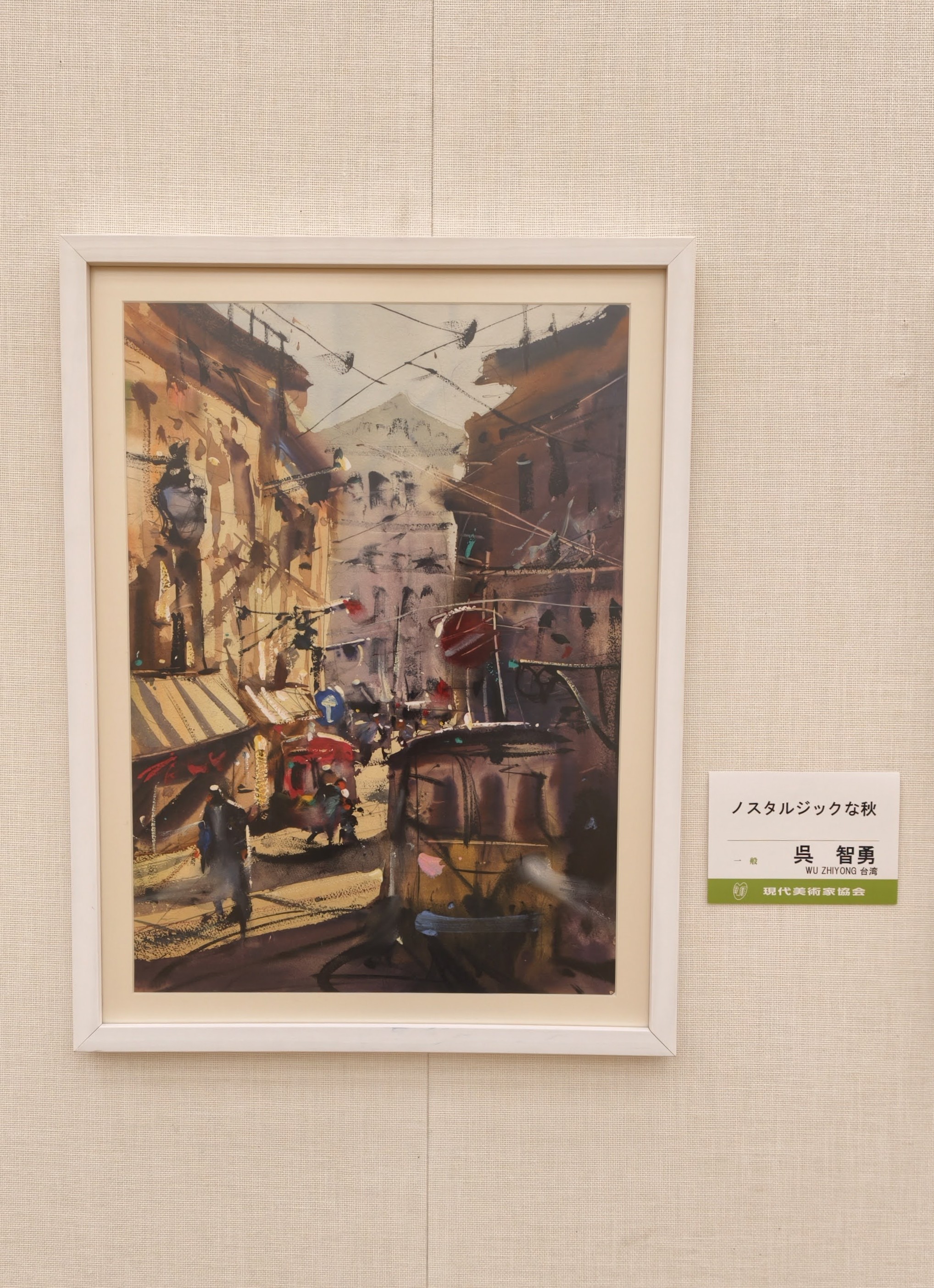
在第82回日本「現展」台灣藝術家群像中,吳智勇的《鄉愁之秋》「ノスタルジックな秋」被標示為入選內定。這一制度位置顯示,其作品在正式展出前已獲得評審體系的肯定,也意味著他的水彩語言與都市敘事具備足以進入日本現代美術公募展場的表現力。吳智勇《鄉愁之秋》在正式展出前即獲得入選內定,顯示其水彩技法與當代都市敘事的結合,精準擊中了現展評審團的審美共鳴。
相較於前幾位藝術家,吳智勇的作品將台灣藝術家群像的觀看焦點轉向都市空間。蔡梅芳面對自然崇高,廖純沂處理心理懸浮,姜金玲釋放亞熱帶生命力,陳福祺進入數位擬像,王詮富回到水墨靜觀;而吳智勇則以水彩描繪現代城市中的移動、模糊、記憶與孤獨。他的作品不以巨大哲學符號或強烈色彩衝擊取勝,而是透過水彩的透明性、濕潤感與邊界溶解,使都市景觀變成一種可感的心理狀態。
《鄉愁之秋》之所以值得作為專題評論對象,正在於它將看似日常的街景轉化為現代人精神處境的隱喻。作品中的都市不是堅硬、冷酷、確定的空間,而是一個在水分、光線與記憶中逐漸溶解的場域。電車、街道、建築、光影與模糊人影共同構成一種秋日的心理地景,使「鄉愁」不再只指向故鄉,而指向現代人在流動世界中對真實連結的渴望。
二、《鄉愁之秋》的題名:秋日不是季節,而是記憶的濾鏡
《鄉愁之秋》這一題名由兩個關鍵詞構成:「鄉愁」與「秋」。若從字面理解,它似乎指向秋季中的思鄉情緒;但在吳智勇的作品中,這種鄉愁並不必然指涉某個明確地理故鄉。作品題名為《鄉愁之秋》,但畫中並沒有傳統意義上的田園故土,反而引出一個更深層的問題:現代人的鄉愁究竟指向何方?
這一問題是理解本作的核心。傳統鄉愁常與故鄉、家園、童年、土地或親族記憶相關;然而在現代都市經驗中,許多人生活於移動、通勤、租居、遷徙與資訊流動之中,故鄉不再是一個穩定可回返的地點。於是,鄉愁不再只是「想回到某地」,而成為「想回到某種確定感」——一種曾經相信世界具有穩定連結、身體有所歸屬、記憶能被安放的狀態。
「秋」則在作品中扮演情緒濾鏡的角色。秋天不只是季節變化,也常與時間流逝、光線轉弱、生命沉澱與情感回望有關。吳智勇以秋日命名作品,使畫面中的都市景觀被一層回憶與衰微感覆蓋。街道不只是街道,電車不只是交通工具,模糊人影也不只是路人;它們都被秋天轉化為記憶中的殘影。
因此,《鄉愁之秋》不是一件單純描繪秋天城市的水彩作品,而是一件關於現代人如何在城市中感受到失落、懷念與尋找歸屬的作品。它將季節轉化為心理色調,將都市轉化為記憶容器。
三、水彩的媒材特性:透明、流動與不可完全控制
吳智勇選擇水彩作為媒材,與作品主題高度契合。水彩的特性在於透明、流動、滲化與不可完全控制。顏料與水在紙面上相遇後,會隨著濕度、紙張吸水性、筆觸速度與時間推移而產生變化;藝術家可以引導水分,但無法完全支配它。這種半控制、半偶發的特質,使水彩特別適合表現記憶、天氣、霧氣、光線與情緒。
吳智勇在《鄉愁之秋》中大量運用「濕中濕(Wet-on-wet)」渲染技法,使電車與建築輪廓邊界模糊,彷彿正在被空氣與水分溶解。
這種技法不只是水彩技巧,而是作品意義的一部分。城市在濕中濕技法中失去硬邊,建築不再堅固,電車不再銳利,街景也不再清楚分層。整個都市景觀像被潮濕空氣、雨後光線或回憶的水氣包覆。這種溶解感使畫面中的都市從物理空間轉化為心理空間。
水彩的透明性也使作品具有時間感。不同色層相互疊加,卻不完全遮蔽;底層仍隱約透出,如同記憶中的過去經驗仍在當下浮現。吳智勇並不是用水彩描摹都市表面,而是讓水彩本身成為記憶沉澱與時間流動的媒介。
四、濕中濕技法:都市輪廓的溶解
《鄉愁之秋》中最重要的視覺效果,是都市輪廓的溶解。水彩濕中濕技法使形體邊界變得鬆動,街景不像攝影般精準,也不像建築圖般理性,而是呈現一種被水氣軟化的狀態。我們將此理解為對「液態現代性」的視覺化:這座邊界消融的城市,正是失去固態結構社會的縮影。
這一點十分關鍵。現代都市通常被視為堅固、鋼筋水泥、交通系統與資本秩序的集合;然而在吳智勇畫中,城市並不堅硬。它被水彩溶解,被秋日光線暈開,被空氣透視推遠。電車可能正在駛來,但其輪廓並不銳利;建築可能位於街道兩側,卻像霧中記憶;道路延伸向遠方,卻沒有給予明確方向。
這種溶解不是單純的浪漫化,而是對現代生活不確定性的視覺表達。在當代城市中,人們看似擁有清楚的交通路線、工作地點與生活規律,但心理上卻常處於漂移狀態。關係不穩定,歸屬感薄弱,生活節奏被外在系統牽引。吳智勇讓城市輪廓溶解,正是在呈現這種外在秩序與內在失重之間的矛盾。
因此,濕中濕技法不只是營造美感,而是使城市失去確定性,讓觀者感受到現代生活的液態化。
五、電車意象:移動、通勤與現代時間
《鄉愁之秋》中若出現電車,它便具有重要象徵意義。電車是現代城市中最具代表性的移動裝置之一,連接不同地點,也規訓日常時間。它承載通勤、工作、等待、錯過、抵達與離開。對許多現代人而言,電車不只是交通工具,而是生活節奏的框架。
在吳智勇的水彩中,電車並未被描繪成冷硬機械,而是與濕潤空氣、街道色彩和秋日光影相互滲透。這使它不再只是現代性符號,也成為記憶與情感的載體。它可能代表一段旅程,也可能代表日復一日的通勤;可能指向離家,也可能指向歸途。
電車的移動性與題名中的鄉愁形成張力。鄉愁通常意味著回望、停留與想返回;電車則意味著移動、前進與不斷被運送到他處。吳智勇把這兩者放在同一畫面中,使現代人的情感處境變得可見:我們在不斷移動中懷念穩定,在城市交通中尋找歸屬,在被系統推動的日常裡渴望某種真正屬於自己的地方。
因此,電車不是背景物,而是現代時間的象徵。它使《鄉愁之秋》不只是都市風景,而成為關於移動生活與情感失落的作品。
六、街道與空氣透視:記憶通道的形成
吳智勇作品中的街道並不只是空間通道,也可被理解為記憶通道。當道路、建築、電纜與電車在水彩中逐漸模糊時,街道便不再只是城市的物理結構,而像是一條通往過去、內心或未明方向的心理長廊。
《鄉愁之秋》中的街道被空氣透視與迷霧吞噬,像是一條通往記憶深處的心理長廊。 這一描述可作為本作的關鍵理解。街道向畫面深處延伸,觀者的視線也被帶往遠方;但那個遠方並不清楚,反而被光、霧、水彩暈染與色層遮蔽。這使觀看成為一種追憶:我們看見方向,卻看不清終點。
這種空間處理與鄉愁的心理結構相互呼應。鄉愁往往不是對清楚記憶的再現,而是對模糊而不可完全返回之物的追尋。記憶中的故鄉或過去,並不會以完整形貌出現,而總是帶著霧氣、缺口、變形與情感濾鏡。吳智勇以水彩呈現的街道,正是這種追憶狀態的視覺化。
七、模糊人影:班雅明式漫遊者的現代孤獨
在《鄉愁之秋》中,模糊人影具有極高的評論價值。畫面中的模糊黑色人影可被理解為瓦爾特・班雅明筆下的「漫遊者(Flâneur)」,他身處喧囂街頭,卻與世界保持疏離的美學距離。
漫遊者原本是現代都市中的觀察者。他行走於街道、人群與商品景觀之間,看似閒逛,實則以敏銳目光感受城市的變化。他既在城市之中,又與城市保持距離;既是參與者,也是旁觀者。
吳智勇畫中的模糊人影,正延續了這種現代都市主體的特質。此人影可能只是街角行人,也可能是藝術家自身、觀者自身或所有在城市中徘徊的人。其模糊性使他不具特定身份,反而成為一種普遍象徵:在現代城市中,我們都可能是那個被水氣與光影吞沒的孤獨身影。
這一人物不以清楚臉孔出現,也沒有明確動作,因而更具心理投射性。觀者可以將自己的經驗放入其中:等車、回家、離開、路過、想念某地、或只是站在街頭感到一種難以言說的失落。
因此,模糊人影是作品中的情感樞紐。它使城市不只是景觀,而成為人的精神處境;也使鄉愁不再抽象,而凝聚於一個孤獨、沉默、正在城市中行走或停留的身體。
八、現代鄉愁:不是思念故鄉,而是哀悼失去的確定性
《鄉愁之秋》最具當代性的地方,在於它重新定義了鄉愁。作品中的鄉愁並非對具體故土的思念,而是對現代社會中「失去的真實連結與確定性」的無盡哀悼。
這一點使作品超越傳統懷舊。傳統懷舊常指向過去某個時間或地點;吳智勇的鄉愁則更抽象,也更普遍。它指向現代人在高度流動社會中的精神缺口:我們居住在城市,卻未必感到歸屬;我們與許多人擦肩而過,卻未必建立真正連結;我們每天移動,卻未必知道自己要回到哪裡。
因此,《鄉愁之秋》中的鄉愁是一種存在狀態。它不是簡單的懷舊情緒,而是現代主體對安定、真實、親密與歸屬的渴望。作品沒有把這種渴望說破,而是讓它散布在水彩的濕潤邊界、秋日光線、電車軌跡與模糊人影之中。
吳智勇的高明之處在於,他沒有用直接敘事表現悲傷,而是透過整個城市氣氛讓觀者感受到某種柔軟的失落。這種失落不是劇烈的,而是持續、低聲、像秋雨或薄霧一樣包圍著人。
九、秋日光線:溫柔而衰微的時間感
《鄉愁之秋》的情感力量也來自秋日光線。秋天的光不同於夏日強光,也不同於冬日冷光;它常帶有傾斜、柔和、金黃、灰暗與時間沉澱的特質。吳智勇透過水彩透明層次,使光線像被濕氣稀釋,散布於街道與建築之間。
這種光線使城市不再是純粹功能空間,而成為記憶空間。日常街景在秋日光中顯得更柔軟,也更脆弱。建築與交通不再只是現代秩序的象徵,而被一層時間感覆蓋。觀者感覺到的不是「現在」的清晰,而是「正在逝去」的現在。
秋日光線也使鄉愁不至於沉重。吳智勇的作品不是陰暗絕望的都市批判,而是一首溫柔的輓歌。他沒有用批判眼光描繪城市的冷酷與異化,而是以溫柔、濕潤的水彩筆觸,為鋼筋水泥叢林披上一層充滿記憶與溫度的秋日濾鏡。
這正是作品的特點:它不是否定城市,而是用水彩為城市找回情感溫度。即使城市使人孤獨,城市仍然可以被記憶、被懷念、被溫柔地觀看。
十、液態都市:城市如何失去硬邊
我們可以用「液態都市」形容吳智勇的作品,這一概念非常貼切。液態都市並不是指城市真的變成液體,而是指城市在現代生活中不再提供穩固歸屬。它的空間、關係與身份都處於流動狀態。
在《鄉愁之秋》中,液態性首先表現在水彩技法上:顏料流動、邊界暈散、形體鬆動。其次表現在城市結構上:電車移動、街道延伸、人影不定。最後表現在情感層面:鄉愁沒有明確對象,記憶沒有清楚輪廓,歸屬感也無法被固定。
這三個層次共同構成作品的液態美學。吳智勇不是用理論說明現代性,而是讓城市在紙上失去硬邊,使觀者以身體感受到液態現代性的狀態。
這種處理方式使作品具有很強的當代性。它不依靠科技題材或社會標語,而是透過水彩媒材本身,把現代生活的流動感、失重感與不確定性轉化為視覺經驗。
十一、與王詮富的對照:靜觀與漫遊
若將吳智勇與前一回的王詮富相對照,可看出兩人皆以相對安靜的方式回應現代焦慮,但方向不同。
王詮富《一念菩提開翠微》以水墨留白、禽鳥與一念覺知,引導觀者從世界喧囂回到內在澄明;吳智勇《鄉愁之秋》則不讓觀者離開城市,而是在城市中尋找柔軟的記憶與失落的歸屬。
王詮富的鳥停下來,吳智勇的人影則在街道中徘徊;王詮富的空白指向心念的安住,吳智勇的水彩暈染則指向記憶與城市的溶解。兩人都不是激烈批判型藝術家,但都以靜默方式處理當代人精神處境。
這種對照使第82回現展台灣群像更具層次。台灣藝術家並非只有強烈色彩或哲學宏論,也有對日常城市、孤獨身影與微弱情緒的細膩觀察。
 【專題評論】日本第82回「現展」台灣藝術家群像
十二、與國立新美術館場域的關係:在東京觀看都市鄉愁
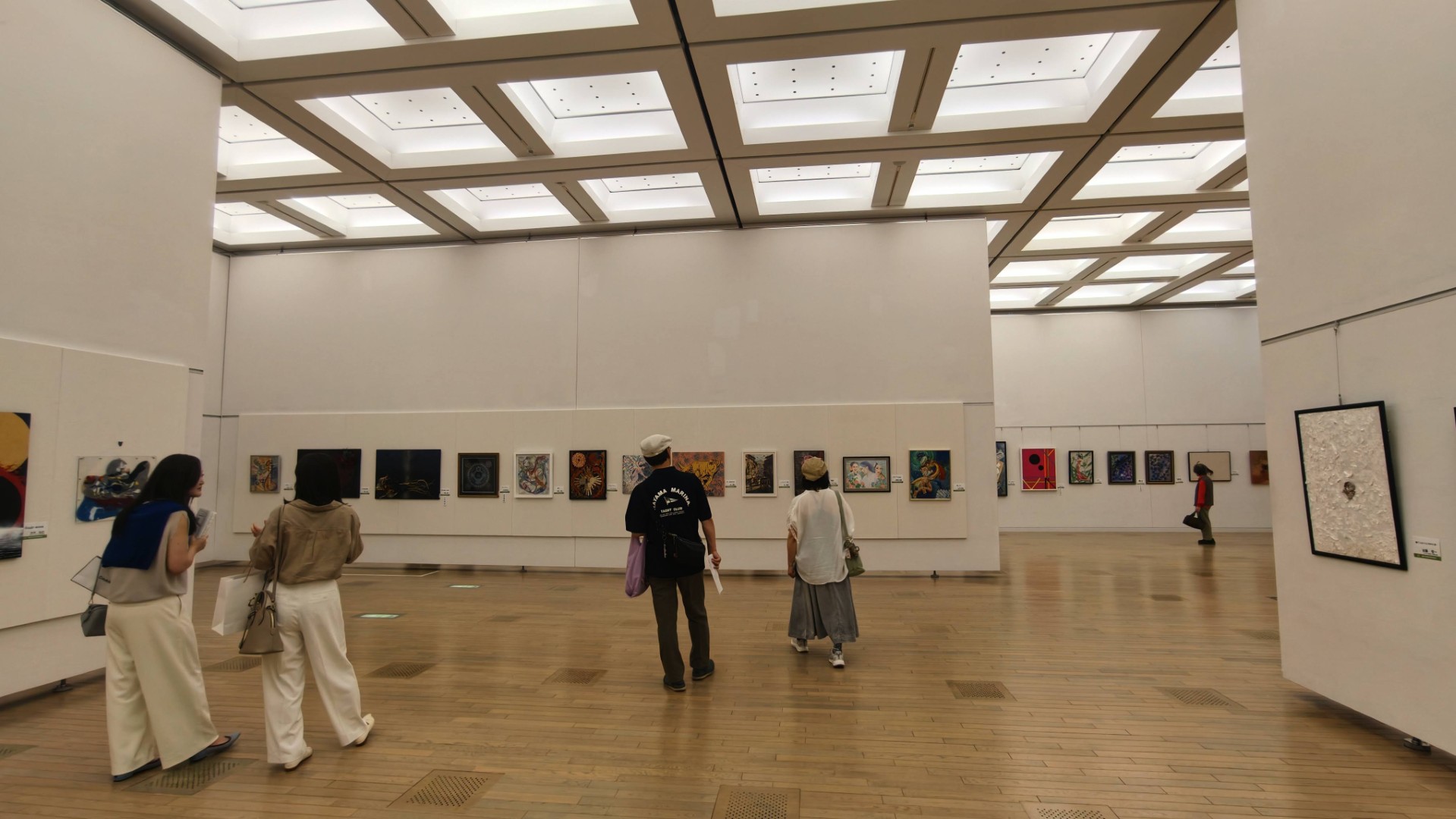
《鄉愁之秋》在東京六本木國立新美術館展出時,具有特殊的場域意義。六本木本身是東京高度都市化、國際化與文化機構密集的區域。當一件描繪都市鄉愁的水彩作品進入這樣的展場,它並不只是再現城市,而是在城市核心中反觀城市經驗。
第82回現展本展於國立新美術館舉行,該館位於東京都港區六本木,並作為大型公募展與多樣藝術活動的重要平台。 在這樣的場域中,吳智勇的作品會與東京觀眾的日常經驗產生直接關係。觀者或許剛從地鐵、電車、街道與人群中抵達美術館,再於展場中看見一幅關於電車、街道與孤獨人影的作品,於是畫面不再只是異地風景,而可能觸動他們自身的城市記憶。
這使《鄉愁之秋》的跨文化性不同於以台灣地方風景吸引日本觀眾的方式。它呈現的是現代都市人共同經驗:在交通系統與街道網絡中移動,在人群中孤獨,在秋日光線中突然想起某種失去的連結。這種情感跨越國界,也使作品在日本展場中具有普遍可讀性。
十三、與掛軸展示的關係:水彩街景的垂直記憶
本屆台灣參展作品多採掛軸形式展示,而吳智勇的水彩作品若以掛軸呈現,將產生特殊效果。掛軸通常與東亞書畫、山水與紙本傳統相關;吳智勇則將都市街景、水彩與現代交通帶入這一形式。
這種結合使作品具有跨時代感。傳統掛軸常讓觀者沿垂直方向閱讀山水、雲氣、樹石與人物;吳智勇則可能讓觀者沿著垂直畫面閱讀街道、建築、電車與光影。城市取代山水,電車取代舟楫,模糊人影取代隱士或旅人。掛軸形式因此被現代都市內容重新活化。
水彩的流動性與掛軸的垂直性也會互相呼應。濕潤色彩在紙面上的下滲感,與掛軸的自然垂墜形成微妙關係,使畫面更具時間流動感。觀者面對的不是被框住的城市,而是一段垂直懸掛、如記憶般展開的都市片段。
十四、專業評論觀點:吳智勇《鄉愁之秋》的四重價值
吳智勇《鄉愁之秋》在第82回現展台灣藝術家群像中具有以下四重價值。
第一,媒材價值
作品充分發揮水彩透明、流動、滲化與不可完全控制的特質。濕中濕技法不只是形式技巧,而成為都市記憶與現代不確定性的視覺語言。
第二,都市價值
作品將城市從堅硬建築與交通系統轉化為柔軟的心理空間。電車、街道、建築與光影不再只是都市物件,而成為現代生活流動性的象徵。
第三,情感價值
《鄉愁之秋》重新定義鄉愁,使其不再只指向故鄉,而指向現代人對真實連結、穩定歸屬與確定感的追尋。
第四,跨文化價值
在東京六本木展場中,作品以都市經驗連接台灣藝術家與日本觀眾。它不依賴地方符號,而以現代都市人的共同孤獨與記憶感產生共鳴。
十五、本章小結:在溶解的城市中尋找歸屬
吳智勇《鄉愁之秋》是一件以水彩表現現代都市心理的作品。它看似描繪街景,實則處理移動、記憶、孤獨與鄉愁。畫面中的電車、街道、建築與人影,都在水彩的濕潤流動中失去硬邊,形成一座正在溶解的液態都市。
在這座城市中,鄉愁不再只是對故土的思念,而是對失去確定性的溫柔哀悼。模糊人影像現代漫遊者,在光影與水氣中徘徊;秋日濾鏡則讓城市不再冰冷,而帶有記憶的溫度。吳智勇沒有用激烈批判描繪都市異化,而是以柔軟水彩為城市唱出一首低聲的輓歌。
在第82回現展台灣藝術家群像中,吳智勇的重要性正在於,他使台灣當代藝術的視野進入現代都市日常。他證明日常街景並不平凡,只要透過精準媒材與深層感受,電車、街道與秋日光線也能成為現代人精神狀態的肖像。其《鄉愁之秋》最終讓我們看見:即使城市不再堅固,即使歸屬不再明確,人仍會在溶解的光影中尋找回家的方向。
相關內容:
吳智勇參展日本第82回現展,以《鄉愁之秋》水彩流動書寫都市記憶與鄉愁輓歌
82回現展 2026日本國立新美術館展「日本第82回現代美術家展」
【Special Review】Portraits of Taiwanese Artists at the 82nd Japan “Genten” Exhibition
Wu Zhiyong
Watercolor Flow, Liquid City, and the Flâneur’s Elegy in Autumn of Nostalgia
Written by WANG MUTI
I. The Artist’s Position: Pre-Confirmed Selection and the Contemporaneity of Urban Watercolor
Among the portraits of Taiwanese artists in the 82nd Japan “Genten” Exhibition, Wu Zhiyong’s Autumn of Nostalgia “ノスタルジックな秋” is marked as pre-confirmed for selection. This institutional position indicates that his work had already received recognition from the review system before its formal exhibition, and also means that his watercolor language and urban narrative possess sufficient expressive power to enter the public-entry field of Japanese modern art. Wu Zhiyong’s Autumn of Nostalgia receiving pre-confirmed selection before formal exhibition shows that the combination of his watercolor technique and contemporary urban narrative precisely struck an aesthetic resonance with the Genten jury.
Compared with the preceding artists, Wu Zhiyong’s work shifts the focus of viewing within the Taiwanese artist portrait toward urban space. Tsai Mei-Fang faces natural sublimity, Liau Chun-Yi deals with psychological suspension, Jiang Jinling releases subtropical vitality, Chen Fu-Chi enters digital simulacra, and Wang Chuan Fu returns to contemplative ink wash; Wu Zhiyong, however, uses watercolor to depict movement, blurring, memory, and solitude in the modern city. His work does not win through grand philosophical symbols or intense chromatic impact, but through the transparency, moistness, and dissolving boundaries of watercolor, turning the urban landscape into a perceptible psychological state.
The reason Autumn of Nostalgia is worthy of special critical attention lies precisely in the way it transforms an apparently ordinary street scene into a metaphor for the spiritual condition of modern people. The city in the work is not a hard, cold, and definite space, but a field gradually dissolving in moisture, light, and memory. Trains, streets, buildings, light and shadow, and blurred human figures together form an autumnal psychological landscape, making “nostalgia” point not only toward one’s hometown, but toward the modern person’s longing for genuine connection in a fluid world.
II. The Title of Autumn of Nostalgia: Autumn Is Not a Season, but a Filter of Memory
The title Autumn of Nostalgia consists of two key words: “nostalgia” and “autumn.” Taken literally, it seems to point toward homesickness in autumn; yet in Wu Zhiyong’s work, this nostalgia does not necessarily refer to a clearly defined geographical hometown. The work is titled Autumn of Nostalgia, but there is no pastoral homeland in the traditional sense within the painting. Instead, it raises a deeper question: toward where, exactly, does modern nostalgia point?
This question is central to understanding the work. Traditional nostalgia is often related to hometown, home, childhood, land, or family memory. However, in modern urban experience, many people live amid movement, commuting, renting, migration, and flows of information; the hometown is no longer a stable place to which one can return. Thus, nostalgia is no longer merely “wanting to return somewhere,” but becomes “wanting to return to a certain sense of certainty”—a state in which one once believed the world possessed stable connections, the body had belonging, and memory could be placed somewhere.
“Autumn” functions in the work as an emotional filter. Autumn is not only a seasonal change; it is also often associated with the passage of time, weakening light, the settling of life, and emotional retrospection. By naming the work with autumn, Wu Zhiyong covers the urban landscape in the picture with a layer of memory and decline. Streets are not merely streets, trains are not merely means of transportation, and blurred human figures are not merely passersby; all of them are transformed by autumn into afterimages of memory.
Therefore, Autumn of Nostalgia is not simply a watercolor work depicting an autumn city, but a work about how modern people feel loss, remembrance, and the search for belonging in the city. It transforms season into psychological tonality and transforms the city into a vessel of memory.
III. The Material Characteristics of Watercolor: Transparency, Flow, and Incomplete Control
Wu Zhiyong’s choice of watercolor as a medium is highly consistent with the theme of the work. Watercolor is characterized by transparency, flow, penetration, and incomplete control. After pigment and water meet on paper, they change according to humidity, the absorbency of the paper, the speed of brushstrokes, and the passage of time; the artist can guide the water, but cannot completely dominate it. This half-controlled, half-accidental quality makes watercolor especially suitable for expressing memory, weather, mist, light, and emotion.
In Autumn of Nostalgia, Wu Zhiyong makes extensive use of the “wet-on-wet” rendering technique, blurring the boundaries of train and building contours, as if they were being dissolved by air and moisture.
This technique is not merely a watercolor skill, but part of the meaning of the work. In the wet-on-wet technique, the city loses its hard edges; buildings are no longer solid, trains are no longer sharp, and the street scene is no longer clearly layered. The entire urban landscape seems to be enveloped by humid air, post-rain light, or the moisture of recollection. This sense of dissolution transforms the city in the picture from physical space into psychological space.
The transparency of watercolor also gives the work a sense of time. Different layers of color overlap without completely concealing one another; the lower layers still faintly show through, just as past experiences in memory continue to surface in the present. Wu Zhiyong does not use watercolor merely to depict the surface of the city; rather, he allows watercolor itself to become a medium of memory sedimentation and temporal flow.
IV. Wet-on-Wet Technique: The Dissolution of Urban Contours
The most important visual effect in Autumn of Nostalgia is the dissolution of urban contours. The wet-on-wet watercolor technique loosens the boundaries of forms; the street scene is neither as precise as photography nor as rational as an architectural drawing, but presents a state softened by moisture. We understand this as a visualization of “liquid modernity”: this city of dissolved boundaries is precisely the miniature of a society that has lost its solid structure.
This point is crucial. The modern city is usually regarded as an assemblage of solidity, reinforced concrete, transportation systems, and capitalist order. Yet in Wu Zhiyong’s painting, the city is not hard. It is dissolved by watercolor, diffused by autumn light, and pushed into the distance through aerial perspective. A train may be approaching, but its outline is not sharp; buildings may stand on both sides of the street, yet resemble memories in mist; the road extends into the distance, yet offers no clear direction.
This dissolution is not simple romanticization, but a visual expression of uncertainty in modern life. In contemporary cities, people may seem to possess clear transportation routes, workplaces, and routines, yet psychologically they often remain in a state of drifting. Relationships are unstable, the sense of belonging is weak, and the rhythm of life is pulled by external systems. By dissolving the contours of the city, Wu Zhiyong presents the contradiction between external order and inner weightlessness.
Therefore, the wet-on-wet technique does not merely create beauty; it makes the city lose certainty and allows viewers to feel the liquefaction of modern life.
V. The Image of the Train: Movement, Commuting, and Modern Time
If a train appears in Autumn of Nostalgia, it carries important symbolic meaning. The train is one of the most representative devices of movement in the modern city. It connects different places and also disciplines everyday time. It carries commuting, work, waiting, missing, arriving, and departing. For many modern people, the train is not merely a means of transportation, but a framework for the rhythm of life.
In Wu Zhiyong’s watercolor, the train is not depicted as a cold, hard machine, but penetrates one another with humid air, street colors, and autumn light and shadow. This means that it is no longer merely a symbol of modernity, but becomes a carrier of memory and emotion. It may represent a journey, or it may represent daily commuting; it may point away from home, or toward a return.
The mobility of the train forms tension with the nostalgia in the title. Nostalgia usually implies looking back, staying, and wanting to return; the train implies movement, moving forward, and being continuously transported elsewhere. By placing these two within the same image, Wu Zhiyong makes the emotional condition of modern people visible: we long for stability while constantly moving, seek belonging in urban transportation, and desire a place that truly belongs to us within everyday life driven by systems.
Therefore, the train is not a background object, but a symbol of modern time. It makes Autumn of Nostalgia not merely an urban landscape, but a work about mobile life and emotional loss.
VI. Streets and Aerial Perspective: The Formation of a Passage of Memory
The streets in Wu Zhiyong’s work are not merely spatial passages, but may also be understood as passages of memory. When roads, buildings, cables, and trains gradually blur in watercolor, the street is no longer merely the physical structure of the city, but resembles a psychological corridor leading toward the past, the inner self, or an unknown direction.
The street in Autumn of Nostalgia is swallowed by aerial perspective and mist, like a psychological corridor leading into the depths of memory. This description may serve as a key understanding of the work. The street extends into the depth of the image, and the viewer’s gaze is also led into the distance; yet that distance is not clear, but is obscured by light, fog, watercolor diffusion, and layers of color. This makes viewing become an act of recollection: we see a direction, but cannot clearly see the endpoint.
This spatial treatment echoes the psychological structure of nostalgia. Nostalgia is often not the reproduction of clear memory, but the pursuit of something blurred and impossible to fully return to. The hometown or past in memory does not appear in complete form, but always carries mist, gaps, deformation, and emotional filters. The street presented by Wu Zhiyong in watercolor is precisely the visualization of this state of recollection.
VII. Blurred Human Figures: The Modern Solitude of the Benjaminian Flâneur
In Autumn of Nostalgia, blurred human figures have extremely high critical value. The blurred black figure in the picture may be understood as the “flâneur” described by Walter Benjamin, who stands in the noisy street yet maintains an aesthetic distance from the world.
The flâneur was originally an observer in the modern city. He walks among streets, crowds, and commodity spectacles; he appears to wander idly, yet in fact senses the changes of the city with a keen gaze. He is both within the city and at a distance from it; both participant and observer.
The blurred human figure in Wu Zhiyong’s painting extends precisely this characteristic of the modern urban subject. This figure may simply be a passerby on a street corner, or may be the artist himself, the viewer, or anyone wandering in the city. Its blurriness deprives it of specific identity and instead makes it a universal symbol: in the modern city, we may all be that lonely figure swallowed by moisture and light.
This figure appears without a clear face and without definite action, and is therefore more psychologically projective. Viewers may place their own experiences into it: waiting for a train, going home, leaving, passing by, missing some place, or simply standing on a street and feeling an inexpressible loss.
Therefore, the blurred figure is the emotional pivot of the work. It makes the city not merely a landscape, but a human spiritual condition; it also makes nostalgia no longer abstract, but condensed into a lonely, silent body walking or staying within the city.
VIII. Modern Nostalgia: Not Missing a Hometown, but Mourning Lost Certainty
The most contemporary aspect of Autumn of Nostalgia lies in the way it redefines nostalgia. The nostalgia in the work is not longing for a concrete homeland, but an endless mourning for the “lost genuine connections and certainty” of modern society.
This allows the work to transcend traditional nostalgia. Traditional nostalgia often points toward a certain time or place in the past; Wu Zhiyong’s nostalgia is more abstract and more universal. It points toward the spiritual gap of modern people in a highly fluid society: we live in cities, yet may not feel belonging; we pass by many people, yet may not establish real connections; we move every day, yet may not know where we are supposed to return.
Therefore, the nostalgia in Autumn of Nostalgia is an existential state. It is not a simple nostalgic emotion, but the modern subject’s desire for stability, reality, intimacy, and belonging. The work does not state this desire directly, but lets it spread through the moist boundaries of watercolor, autumn light, train tracks, and blurred human figures.
Wu Zhiyong’s subtlety lies in the fact that he does not express sadness through direct narration, but lets viewers sense a kind of soft loss through the atmosphere of the entire city. This loss is not violent, but continuous, low-voiced, surrounding people like autumn rain or thin mist.
IX. Autumn Light: A Gentle Yet Fading Sense of Time
The emotional force of Autumn of Nostalgia also comes from autumn light. Autumn light differs from the strong light of summer and from the cold light of winter; it often carries qualities of slanting, softness, gold, grayness, and temporal sedimentation. Through transparent watercolor layers, Wu Zhiyong makes the light seem diluted by moisture and dispersed among streets and buildings.
This light makes the city no longer a purely functional space, but a space of memory. Everyday street scenes appear softer and more fragile in autumn light. Buildings and transportation are no longer merely symbols of modern order, but are covered by a layer of temporality. What viewers feel is not the clarity of “the present,” but a present that is “passing away.”
Autumn light also prevents nostalgia from becoming too heavy. Wu Zhiyong’s work is not a dark and despairing critique of the city, but a gentle elegy. He does not depict the coldness and alienation of the city with a critical gaze, but uses gentle, moist watercolor brushwork to cover the concrete jungle with an autumn filter full of memory and warmth.
This is precisely the character of the work: it does not negate the city, but uses watercolor to restore emotional warmth to the city. Even if the city makes people lonely, the city can still be remembered, missed, and viewed with tenderness.
X. Liquid City: How the City Loses Its Hard Edges
We may describe Wu Zhiyong’s work with the term “liquid city,” a concept that is highly appropriate. Liquid city does not mean that the city literally becomes liquid, but that the city no longer provides stable belonging in modern life. Its spaces, relationships, and identities are all in a state of flow.
In Autumn of Nostalgia, liquidity first appears in the watercolor technique: pigment flows, boundaries diffuse, and forms loosen. Second, it appears in the urban structure: trains move, streets extend, and human figures are unstable. Finally, it appears at the emotional level: nostalgia has no clear object, memory has no clear contour, and belonging cannot be fixed.
These three levels together constitute the liquid aesthetics of the work. Wu Zhiyong does not explain modernity through theory, but allows the city to lose its hard edges on paper, making viewers physically sense the state of liquid modernity.
This treatment gives the work a strong contemporaneity. It does not rely on technological subjects or social slogans, but transforms the fluidity, weightlessness, and uncertainty of modern life into visual experience through the medium of watercolor itself.
XI. Comparison with Wang Chuan Fu: Contemplation and Wandering
If Wu Zhiyong is compared with Wang Chuan Fu from the previous section, we can see that both respond to modern anxiety in relatively quiet ways, though in different directions.
Wang Chuan Fu’s One Thought of Bodhi Opens the Verdant Mist uses ink-wash voids, birds, and one thought of awareness to guide viewers from the noise of the world back to inner clarity; Wu Zhiyong’s Autumn of Nostalgia, by contrast, does not allow viewers to leave the city, but searches within the city for soft memory and lost belonging.
Wang Chuan Fu’s bird stops, while Wu Zhiyong’s human figure wanders through the street; Wang Chuan Fu’s blankness points toward the resting of mind, while Wu Zhiyong’s watercolor diffusion points toward the dissolution of memory and city. Neither artist is a radically critical type, yet both handle the spiritual condition of contemporary people through quietness.
This contrast gives the Taiwanese portrait of the 82nd Genten Exhibition greater depth. Taiwanese artists are not limited to intense color or philosophical grand discourse; they also include delicate observations of everyday cities, lonely figures, and subtle emotions.
【Special Review】Portraits of Taiwanese Artists at the 82nd Japan “Genten” Exhibition
XII. Relationship with the Field of The National Art Center, Tokyo: Viewing Urban Nostalgia in Tokyo
When Autumn of Nostalgia is exhibited at The National Art Center, Tokyo, in Roppongi, Tokyo, it carries special field significance. Roppongi itself is a highly urbanized, internationalized area of Tokyo dense with cultural institutions. When a watercolor work depicting urban nostalgia enters such an exhibition site, it does not merely represent the city, but reflects on urban experience from within the core of the city.
The main exhibition of the 82nd Genten Exhibition was held at The National Art Center, Tokyo, which is located in Roppongi, Minato-ku, Tokyo, and serves as an important platform for large-scale public-entry exhibitions and diverse artistic activities. Within such a field, Wu Zhiyong’s work can directly connect with the everyday experience of Tokyo viewers. Viewers may have just arrived at the museum from subways, trains, streets, and crowds, and then see in the exhibition a work about trains, streets, and a lonely figure. The image is therefore no longer merely scenery from elsewhere, but may touch their own urban memories.
This gives Autumn of Nostalgia a cross-cultural quality different from attracting Japanese viewers through Taiwanese local scenery. It presents the shared experience of modern urban people: moving within transportation systems and street networks, being lonely among crowds, and suddenly recalling some lost connection in autumn light. This emotion crosses national boundaries and gives the work a universal readability within the Japanese exhibition site.
XIII. Relationship with Hanging-Scroll Display: The Vertical Memory of Watercolor Street Scenes
Many Taiwanese participating works in this exhibition are displayed in hanging-scroll form, and if Wu Zhiyong’s watercolor work is presented as a hanging scroll, it produces a special effect. The hanging scroll is usually associated with East Asian calligraphy and painting, landscape, and paper-based traditions; Wu Zhiyong brings urban street scenes, watercolor, and modern transportation into this form.
This combination gives the work a cross-temporal quality. Traditional hanging scrolls often allow viewers to read mountains and waters, cloud vapor, trees and rocks, and figures along a vertical direction; Wu Zhiyong may instead allow viewers to read streets, buildings, trains, and light and shadow along the vertical image. The city replaces landscape, the train replaces the boat, and the blurred figure replaces the hermit or traveler. The hanging-scroll form is thus reactivated by modern urban content.
The fluidity of watercolor and the verticality of the hanging scroll also echo each other. The downward penetration of moist color on paper forms a subtle relationship with the natural hanging of the scroll, giving the image a stronger sense of temporal flow. Viewers do not face a framed city, but a vertically suspended urban fragment that unfolds like memory.
XIV. Professional Critical Perspective: The Fourfold Value of Wu Zhiyong’s Autumn of Nostalgia
Wu Zhiyong’s Autumn of Nostalgia possesses the following fourfold value within the portraits of Taiwanese artists in the 82nd Genten Exhibition.
First, Material Value
The work fully brings out the transparent, flowing, penetrating, and incompletely controllable qualities of watercolor. The wet-on-wet technique is not merely a formal technique, but becomes a visual language of urban memory and modern uncertainty.
Second, Urban Value
The work transforms the city from hard architecture and transportation systems into a soft psychological space. Trains, streets, buildings, and light and shadow are no longer merely urban objects, but symbols of the fluidity of modern life.
Third, Emotional Value
Autumn of Nostalgia redefines nostalgia, making it no longer point only toward one’s hometown, but toward modern people’s search for genuine connection, stable belonging, and certainty.
Fourth, Cross-Cultural Value
Within the exhibition site in Roppongi, Tokyo, the work connects Taiwanese artists and Japanese viewers through urban experience. It does not rely on local symbols, but resonates through the shared solitude and sense of memory of modern urban people.
XV. Chapter Summary: Searching for Belonging in a Dissolving City
Wu Zhiyong’s Autumn of Nostalgia is a work that uses watercolor to express modern urban psychology. It appears to depict a street scene, but in fact deals with movement, memory, solitude, and nostalgia. The trains, streets, buildings, and human figures in the picture all lose their hard edges within the moist flow of watercolor, forming a liquid city that is dissolving.
In this city, nostalgia is no longer merely longing for one’s homeland, but a gentle mourning for lost certainty. The blurred figure resembles a modern flâneur wandering within light, shadow, and moisture; the autumnal filter makes the city no longer cold, but filled with the warmth of memory. Wu Zhiyong does not depict urban alienation through intense critique, but sings a low-voiced elegy for the city with soft watercolor.
Within the portraits of Taiwanese artists in the 82nd Genten Exhibition, Wu Zhiyong’s importance lies in the fact that he brings the vision of Taiwanese contemporary art into modern urban everyday life. He proves that everyday street scenes are not ordinary; as long as they are treated with precise medium and deep feeling, trains, streets, and autumn light can also become portraits of the spiritual state of modern people. His Autumn of Nostalgia ultimately lets us see that even if the city is no longer solid, and even if belonging is no longer clear, people will still search for the direction home within dissolving light and shadow.
【特集評論】日本第82回「現展」台湾芸術家群像
吳智勇 Wu Zhiyong
《郷愁の秋》における水彩の流動、液状都市、遊歩者の挽歌
執筆:王穆提(WANG MUTI)
一、芸術家の位置:入選内定と都市水彩の現代性
第82回日本「現展」の台湾芸術家群像において、吳智勇の《郷愁の秋》「ノスタルジックな秋」は入選内定と記されている。この制度的位置は、その作品が正式展示の前にすでに審査体系から肯定を得ていたことを示しており、また彼の水彩言語と都市叙事が、日本現代美術の公募展場へ入るに足る表現力を備えていることを意味している。吳智勇《郷愁の秋》が正式展示前に入選内定を得たことは、その水彩技法と現代都市叙事の結合が、現展審査団の美的共鳴を的確に捉えたことを示している。
前の数名の芸術家と比べると、吳智勇の作品は台湾芸術家群像の鑑賞焦点を都市空間へと向けている。蔡梅芳は自然崇高に向き合い、廖純沂は心理的浮遊を扱い、姜金玲は亜熱帯の生命力を解放し、陳福祺はデジタル擬像へ入り、王詮富は水墨の静観へ戻る。それに対して吳智勇は、水彩によって現代都市における移動、曖昧さ、記憶、孤独を描く。彼の作品は巨大な哲学的記号や強烈な色彩衝撃によって勝負するのではなく、水彩の透明性、湿潤感、境界の溶解を通じて、都市景観を感受可能な心理状態へと変えている。
《郷愁の秋》が特集評論の対象として価値を持つのは、一見日常的な街景を現代人の精神的状況の隠喩へと転化しているからである。作品中の都市は硬く、冷たく、確定された空間ではなく、水分、光線、記憶の中で徐々に溶解していく場域である。電車、街道、建築、光影、ぼやけた人物像が共に秋の日の心理的地景を構成し、「郷愁」をもはや故郷だけへ向けるのではなく、流動する世界の中で現代人が真実のつながりを渇望することへと向けている。
二、《郷愁の秋》の題名:秋日は季節ではなく、記憶のフィルターである
《郷愁の秋》という題名は、「郷愁」と「秋」という二つのキーワードから構成されている。字義通りに理解すれば、それは秋季の思郷感情を指しているように見える。しかし吳智勇の作品において、この郷愁は必ずしも明確な地理的故郷を指すものではない。作品の題名は《郷愁の秋》であるが、画中には伝統的意味での田園的故土はなく、むしろより深層の問いを引き出している。現代人の郷愁はいったいどこへ向かうのか。
この問いは本作を理解する核心である。伝統的郷愁はしばしば故郷、家、幼年期、土地、親族の記憶と関係している。しかし現代都市経験において、多くの人は移動、通勤、賃貸居住、移住、情報流動の中で生きており、故郷はもはや安定して帰還できる場所ではない。そこで郷愁は単に「どこかへ帰りたい」ということではなく、「ある種の確かさへ戻りたい」というものになる。すなわち、世界には安定したつながりがあり、身体には帰属があり、記憶は置き場を持つと信じられた状態へ戻りたいのである。
「秋」は作品中で感情のフィルターとして機能する。秋は単なる季節変化ではなく、時間の流逝、光の弱まり、生命の沈殿、感情の回顧とも関係することが多い。吳智勇は秋の日によって作品を命名することで、画面中の都市景観を記憶と衰微感の層で覆っている。街道は単なる街道ではなく、電車は単なる交通手段ではなく、ぼやけた人物像も単なる通行人ではない。それらはすべて秋によって記憶の中の残影へと転化されている。
したがって、《郷愁の秋》は単に秋の都市を描いた水彩作品ではなく、現代人が都市の中でいかに喪失、懐かしさ、帰属の探求を感じるかについての作品である。それは季節を心理的色調へ、都市を記憶の容器へと転化している。
三、水彩のメディア特性:透明、流動、完全には制御できないこと
吳智勇が水彩をメディアとして選んだことは、作品主題と高度に合致している。水彩の特性は透明性、流動性、浸透、完全には制御できないことにある。顔料と水が紙面で出会った後、それは湿度、紙の吸水性、筆触の速度、時間の推移に応じて変化する。芸術家は水分を導くことはできるが、それを完全に支配することはできない。この半制御、半偶発的な特質により、水彩は記憶、天候、霧、光線、感情を表現するのに特に適している。
吳智勇は《郷愁の秋》において、「ウェット・オン・ウェット(Wet-on-wet)」の渲染技法を大量に用い、電車と建築の輪郭境界を曖昧にし、それらが空気と水分によって溶解されつつあるかのように見せている。
この技法は単なる水彩技術ではなく、作品の意味の一部である。都市はウェット・オン・ウェット技法の中で硬い縁を失い、建築はもはや堅固ではなく、電車はもはや鋭くなく、街景も明確に層分けされていない。都市景観全体が湿った空気、雨上がりの光、あるいは回想の水気に包まれているかのようである。この溶解感により、画面中の都市は物理空間から心理空間へと転化される。
水彩の透明性はまた、作品に時間感覚を与える。異なる色層は互いに重なり合うが、完全には覆い隠さない。底層はなおかすかに透けて見え、まるで記憶の中の過去の経験が現在に浮かび上がってくるようである。吳智勇は水彩によって都市の表面を描写しているのではなく、水彩そのものを記憶の沈殿と時間の流動のメディアにしている。
四、ウェット・オン・ウェット技法:都市輪郭の溶解
《郷愁の秋》において最も重要な視覚効果は、都市輪郭の溶解である。水彩のウェット・オン・ウェット技法は形体の境界を緩ませ、街景を写真のように精密でも、建築図のように理性的でもないものにし、水気によって柔らかくされた状態として提示する。私たちはこれを「液状近代性」の視覚化として理解する。この境界が融解する都市こそ、固体的構造を失った社会の縮図である。
この点は非常に重要である。現代都市は通常、堅固なもの、鉄筋コンクリート、交通システム、資本秩序の集合として見なされる。しかし吳智勇の画中において、都市は硬くない。それは水彩によって溶かされ、秋日の光によってにじみ、空気遠近法によって遠ざけられている。電車は近づいてきているかもしれないが、その輪郭は鋭くない。建築は街道の両側にあるかもしれないが、霧の中の記憶のようである。道路は遠方へ伸びているが、明確な方向を与えない。
この溶解は単なるロマン化ではなく、現代生活の不確定性の視覚的表現である。現代都市において、人々は一見明確な交通経路、勤務先、生活規律を持っているように見える。しかし心理的にはしばしば漂流状態にある。関係は不安定で、帰属感は弱く、生活リズムは外在的システムに牽引される。吳智勇が都市輪郭を溶解させることは、まさにこの外在的秩序と内在的無重力の矛盾を提示しているのである。
したがって、ウェット・オン・ウェット技法は美感を作るだけではなく、都市に確定性を失わせ、鑑賞者に現代生活の液状化を感じさせる。
五、電車イメージ:移動、通勤、現代時間
《郷愁の秋》に電車が現れるなら、それは重要な象徴的意味を持つ。電車は現代都市において最も代表的な移動装置の一つであり、異なる場所を結び、日常時間を規律化する。それは通勤、仕事、待機、乗り遅れ、到着、出発を担う。多くの現代人にとって、電車は単なる交通手段ではなく、生活リズムの枠組みである。
吳智勇の水彩において、電車は冷たく硬い機械として描かれているのではなく、湿った空気、街道の色彩、秋日の光影と相互に浸透している。これにより、それはもはや単なる近代性の記号ではなく、記憶と感情の担い手となる。それは一つの旅を表しているかもしれず、日々繰り返される通勤を表しているかもしれない。家を離れることを指すかもしれず、帰路を指すかもしれない。
電車の移動性と題名中の郷愁は緊張関係を形成する。郷愁は通常、振り返ること、留まること、戻りたいことを意味する。電車は移動、前進、絶えず他所へ運ばれることを意味する。吳智勇はこの二つを同じ画面に置くことで、現代人の感情的状況を可視化している。私たちは絶えず移動しながら安定を懐かしみ、都市交通の中で帰属を探し、システムに動かされる日常の中で、真に自分のものといえる場所を渇望している。
したがって、電車は背景物ではなく、現代時間の象徴である。それは《郷愁の秋》を単なる都市風景ではなく、移動生活と感情的喪失についての作品にしている。
六、街道と空気遠近法:記憶通路の形成
吳智勇作品における街道は単なる空間通路ではなく、記憶通路としても理解できる。道路、建築、電線、電車が水彩の中で徐々に曖昧になる時、街道はもはや都市の物理構造ではなく、過去、内面、あるいは未明の方向へ向かう心理的長廊のようになる。
《郷愁の秋》の街道は空気遠近法と迷霧に飲み込まれ、記憶の深部へ向かう心理的長廊のようである。この描写は本作を理解する鍵となる。街道は画面の奥へ伸び、鑑賞者の視線も遠方へ導かれる。しかしその遠方は明瞭ではなく、光、霧、水彩のにじみ、色層によって遮られている。これにより、鑑賞は一種の追憶となる。私たちは方向を見るが、終点をはっきり見ることはできない。
この空間処理は郷愁の心理構造と互いに呼応している。郷愁はしばしば明確な記憶の再現ではなく、曖昧で完全には戻れないものへの追求である。記憶の中の故郷や過去は、完全な形貌で現れることはなく、常に霧、欠落、変形、感情のフィルターを帯びている。吳智勇が水彩で提示する街道は、まさにこの追憶状態の視覚化である。
七、ぼやけた人物像:ベンヤミン的遊歩者の現代的孤独
《郷愁の秋》において、ぼやけた人物像は極めて高い評論的価値を持つ。画面中のぼやけた黒い人物像は、ヴァルター・ベンヤミンの筆下における「遊歩者(Flâneur)」として理解できる。彼は喧騒の街頭に身を置きながら、世界と美学的距離を保っている。
遊歩者は本来、現代都市における観察者である。彼は街道、人群、商品景観の間を歩き、一見ぶらぶらしているように見えるが、実際には鋭いまなざしによって都市の変化を感じ取っている。彼は都市の中にいながら都市と距離を保ち、参与者であると同時に傍観者でもある。
吳智勇の画中のぼやけた人物像は、まさにこの現代都市主体の特質を引き継いでいる。この人物像は街角の通行人であるかもしれず、芸術家自身であるかもしれず、鑑賞者自身、あるいは都市を徘徊するすべての人であるかもしれない。その曖昧さは特定の身分を持たせず、かえって一種の普遍的象徴にしている。現代都市において、私たちは皆、水気と光影に飲み込まれるその孤独な影でありうる。
この人物は明確な顔で現れず、明確な動作も持たないため、より心理的投影性を持っている。鑑賞者は自らの経験をそこに置くことができる。電車を待つこと、家へ帰ること、離れること、通り過ぎること、どこかを懐かしむこと、あるいはただ街頭に立ち、言葉にしがたい喪失を感じること。
したがって、ぼやけた人物像は作品中の感情的枢軸である。それは都市を単なる景観ではなく、人の精神的状況にし、郷愁を抽象的なものではなく、都市の中を歩く、あるいは留まる孤独で沈黙した身体へと凝縮している。
八、現代的郷愁:故郷を思うことではなく、失われた確かさを悼むこと
《郷愁の秋》において最も現代的な点は、郷愁を再定義していることにある。作品中の郷愁は具体的な故土への思慕ではなく、現代社会における「失われた真実のつながりと確かさ」への尽きることのない哀悼である。
この点により、作品は伝統的懐旧を超えている。伝統的懐旧はしばしば過去のある時間や場所を指す。吳智勇の郷愁はより抽象的で、より普遍的である。それは高度に流動する社会における現代人の精神的欠落を指している。私たちは都市に住んでいるが、必ずしも帰属を感じているわけではない。多くの人とすれ違うが、必ずしも本当のつながりを築いているわけではない。毎日移動しているが、自分がどこへ帰るべきか必ずしも分かっているわけではない。
したがって、《郷愁の秋》における郷愁は一つの存在状態である。それは単純な懐旧感情ではなく、現代主体が安定、真実、親密さ、帰属を渇望することである。作品はこの渇望を直接語るのではなく、水彩の湿った境界、秋日の光、電車の軌跡、ぼやけた人物像の中に散布している。
吳智勇の巧みさは、彼が直接的な叙事によって悲しみを表現していない点にある。むしろ都市全体の雰囲気を通じて、鑑賞者にある柔らかな喪失を感じさせている。この喪失は激しいものではなく、持続的で、低い声で、秋雨や薄霧のように人を包み込む。
九、秋日の光線:柔らかく衰微する時間感
《郷愁の秋》の感情的力は、秋日の光線からも来ている。秋の光は夏の強い光とも、冬の冷たい光とも異なる。それはしばしば傾き、柔らかさ、金色、灰暗さ、時間の沈殿という性質を帯びている。吳智勇は水彩の透明な層を通じて、光線が湿気によって薄められ、街道と建築の間に散布されているかのように見せている。
この光線により、都市はもはや純粋な機能空間ではなく、記憶空間となる。日常の街景は秋日の光の中でより柔らかく、より脆く見える。建築と交通はもはや現代秩序の象徴にすぎず、一層の時間感に覆われている。鑑賞者が感じるのは「現在」の明晰さではなく、「過ぎ去りつつある」現在である。
秋日の光線はまた、郷愁を過度に重くしない。吳智勇の作品は暗く絶望的な都市批判ではなく、柔らかな挽歌である。彼は批判的なまなざしで都市の冷酷さや疎外を描くのではなく、柔らかく湿った水彩の筆触によって、鉄筋コンクリートの森に記憶と温度に満ちた秋日のフィルターをかけている。
これこそが作品の特徴である。それは都市を否定するのではなく、水彩によって都市に感情の温度を取り戻している。たとえ都市が人を孤独にするとしても、都市はなお記憶され、懐かしまれ、柔らかく見つめられることができる。
十、液状都市:都市はいかに硬い縁を失うか
私たちは「液状都市」という言葉で吳智勇の作品を形容することができる。この概念は非常に的確である。液状都市とは、都市が本当に液体になることではなく、現代生活において都市がもはや安定した帰属を提供しないことを指す。その空間、関係、身分はいずれも流動状態にある。
《郷愁の秋》において、液状性はまず水彩技法に現れる。顔料が流れ、境界がにじみ、形体が緩む。次に都市構造に現れる。電車が移動し、街道が延伸し、人物像は不定である。最後に感情の層に現れる。郷愁には明確な対象がなく、記憶には明確な輪郭がなく、帰属感も固定できない。
この三つの層が共に作品の液状美学を構成している。吳智勇は理論によって現代性を説明しているのではなく、紙の上で都市に硬い縁を失わせ、鑑賞者に身体を通して液状近代性の状態を感じさせている。
この処理方法により、作品は強い現代性を持つ。それはテクノロジー題材や社会的スローガンに依拠するのではなく、水彩メディアそのものを通じて、現代生活の流動感、無重力感、不確定性を視覚経験へと転化している。
十一、王詮富との対照:静観と遊歩
吳智勇を前回の王詮富と対照して見るなら、二人はいずれも比較的静かな方法で現代の焦慮に応答しているが、その方向は異なる。
王詮富《一念菩提開翠微》は水墨の余白、禽鳥、一念の覚知によって、鑑賞者を世界の喧騒から内面的澄明へ導く。吳智勇《郷愁の秋》は鑑賞者を都市から離れさせるのではなく、都市の中で柔らかな記憶と失われた帰属を探す。
王詮富の鳥は停止し、吳智勇の人物像は街道の中を徘徊する。王詮富の空白は心念の安住を指し、吳智勇の水彩のにじみは記憶と都市の溶解を指す。二人はいずれも激しい批判型の芸術家ではないが、いずれも静黙の方法によって現代人の精神的状況を扱っている。
この対照により、第82回現展の台湾群像はいっそう層を持つ。台湾芸術家は強烈な色彩や哲学的な大論だけではなく、日常都市、孤独な影、微弱な感情への繊細な観察も持っている。
【特集評論】日本第82回「現展」台湾芸術家群像
十二、国立新美術館という場との関係:東京で都市郷愁を見る
《郷愁の秋》が東京・六本木の国立新美術館で展示される時、特殊な場の意味を持つ。六本木そのものが東京における高度に都市化され、国際化され、文化機関が密集した区域である。都市郷愁を描く一件の水彩作品がこのような展示場に入る時、それは単に都市を再現するのではなく、都市の核心において都市経験を反観することになる。
第82回現展本展は国立新美術館で開催され、同館は東京都港区六本木に位置し、大型公募展と多様な芸術活動の重要なプラットフォームとして機能している。このような場において、吳智勇の作品は東京の観客の日常経験と直接関係を生む。鑑賞者は地下鉄、電車、街道、人群から美術館へ到着したばかりかもしれず、展示場で電車、街道、孤独な人物像についての一枚の作品を見る。すると画面はもはや異地の風景ではなく、彼ら自身の都市記憶に触れる可能性がある。
これにより、《郷愁の秋》の異文化性は、台湾の地方風景によって日本の観客を惹きつける方法とは異なるものとなる。それが提示するのは、現代都市人に共通する経験である。交通システムと街道ネットワークの中で移動し、人群の中で孤独であり、秋日の光の中で突然、失われたつながりを思い出す。この感情は国境を越え、作品を日本の展示場において普遍的に読みうるものにしている。
十三、掛軸展示との関係:水彩街景の垂直的記憶
本回の台湾出展作品の多くは掛軸形式で展示されており、吳智勇の水彩作品が掛軸として提示されるなら、特殊な効果を生む。掛軸は通常、東アジアの書画、山水、紙本伝統と関係している。吳智勇はそこへ都市街景、水彩、現代交通を持ち込んでいる。
この結合により、作品は時代横断的な感覚を持つ。伝統的掛軸はしばしば鑑賞者に、垂直方向に沿って山水、雲気、樹石、人物を読ませる。吳智勇はおそらく、鑑賞者に垂直画面に沿って街道、建築、電車、光影を読ませる。都市が山水に取って代わり、電車が舟に取って代わり、ぼやけた人物像が隠士や旅人に取って代わる。掛軸形式はこのように現代都市内容によって再び活性化されている。
水彩の流動性と掛軸の垂直性もまた互いに呼応する。湿った色彩が紙面で下へ浸透する感覚は、掛軸の自然な垂れと微妙な関係を形成し、画面により強い時間の流動感を与える。鑑賞者が向き合うのは額装された都市ではなく、垂直に掛けられ、記憶のように展開する都市の断片である。
十四、専門的評論の観点:吳智勇《郷愁の秋》の四重の価値
吳智勇《郷愁の秋》は第82回現展の台湾芸術家群像において、以下の四重の価値を持っている。
第一、メディアの価値
作品は水彩の透明性、流動性、浸透性、完全には制御できない特質を十分に発揮している。ウェット・オン・ウェット技法は単なる形式技法ではなく、都市記憶と現代的不確定性の視覚言語となっている。
第二、都市の価値
作品は都市を硬い建築と交通システムから、柔らかな心理空間へと転化している。電車、街道、建築、光影はもはや単なる都市物件ではなく、現代生活の流動性の象徴となっている。
第三、感情の価値
《郷愁の秋》は郷愁を再定義し、それを故郷だけへ向けるものではなく、現代人が真実のつながり、安定した帰属、確かさを追い求めることへ向けている。
第四、異文化的価値
東京・六本木の展示場において、作品は都市経験によって台湾芸術家と日本の観客を結びつけている。それは地方記号に依存せず、現代都市人に共通する孤独と記憶感によって共鳴を生む。
十五、本章小結:溶解する都市の中で帰属を探す
吳智勇《郷愁の秋》は、水彩によって現代都市心理を表現する作品である。それは一見街景を描いているようだが、実際には移動、記憶、孤独、郷愁を扱っている。画面中の電車、街道、建築、人物像はすべて、水彩の湿った流動の中で硬い縁を失い、溶解しつつある液状都市を形成している。
この都市において、郷愁はもはや故土への思念だけではなく、失われた確かさへの柔らかな哀悼である。ぼやけた人物像は現代の遊歩者のように、光影と水気の中を徘徊する。秋日のフィルターは都市をもはや冷たいものにせず、記憶の温度を帯びさせる。吳智勇は激しい批判によって都市の疎外を描くのではなく、柔らかな水彩によって都市に低い声の挽歌を歌わせている。
第82回現展の台湾芸術家群像において、吳智勇の重要性は、台湾現代美術の視野を現代都市の日常へと入らせている点にある。彼は日常街景が平凡ではないことを証明している。精確なメディアと深い感受を通じれば、電車、街道、秋日の光線もまた現代人の精神状態の肖像となりうる。《郷愁の秋》は最終的に私たちに見せている。都市がもはや堅固でなくても、帰属がもはや明確でなくても、人はなお溶解する光影の中で帰る方向を探し続けるのである。