我時常在想,人為何對黃昏如此著迷。古人說這是「逢魔時刻」,是白晝與黑夜交替的縫隙,萬物在此刻都顯得有些曖昧不清,彷彿現實的輪廓稍微鬆動了一些。今日,我凝視著速水敬一郎的一幅畫作《夕刻に》(傍晚時分),這份久違的困惑與敬畏再次湧上心頭。我並不打算去拆解他的透視法則或色彩理論,我只想談談,這幅畫是如何讓我在一個尋常的午後,感受到時間的灰燼落在肩膀上的重量。
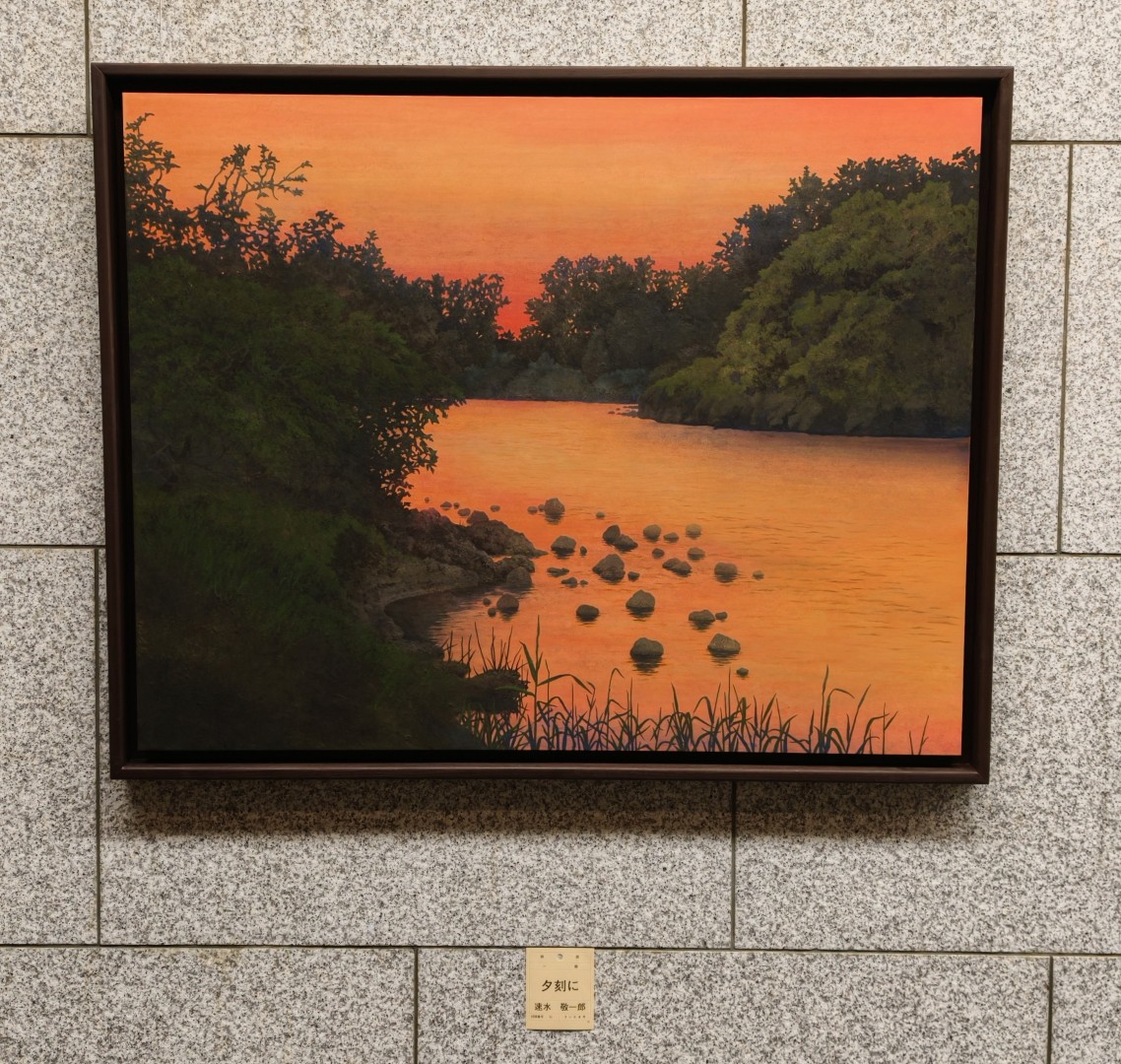
畫中最先攝取我心魄的,是那片漫無邊際、幾乎要燃燒起來的橘紅。那不是我們肉眼在日常中能捕捉到的落日,而是一種被抽離了現實雜質的純粹光芒。天空與河水在這裡失去了界線,水不再是透明的液體,而是承載著光的濃稠介質。我常覺得,時間是抓不住的,特別是黃昏,你眼看著它沉沒、消散,卻無能為力。但這位畫家,似乎用畫筆將這個短暫的剎那生生懸置了起來。他讓這片發光的虛空停留在畫布上,逼著我們去直視那種即將消逝、卻又無比壯麗的殘喘。這讓我想起人的一生,最璀璨的時刻,往往也是最接近終點的時刻。我們總是在無常中尋求永恆,而這幅畫,便是一個將瞬間凝固為永恆的妄想。
然而,這幅畫最讓我深思的,並非那片虛空的光,而是那些擋在光前面的樹叢與礁石。
若是湊近去看,你會發現那些暗色的植物,並非輕盈的葉片,而是由極度粗糙、厚重的礦物顏料層層堆疊而成的。它們看起來簡直就像冷酷的火山岩或是乾涸的苔蘚。我不禁自問:為何要用如此死寂、沉重的物質,來描繪本該充滿生機的植物?
或許,這就是世界本來的面目。相較於那轉瞬即逝的天光,這些沉甸甸的物質才是冷酷而真實的。它們沒有意識,沒有情感,只是絕對地、沉重地存在著。當那片橘紅色的虛空試圖吞噬一切時,這些由礦石碎屑堆砌而成的黑色剪影,邊緣鋒利如刀,就像是一道道冰冷的結界,頑固地宣告著物質的不可侵犯。光與暗、輕與重,在這裡進行著一場無聲卻慘烈的角力。我們這些自詡為萬物之靈的人類,在面對這種純粹的物質重量時,總是不免感到一絲自身的微小與虛無。我們的煩惱與悲歡,在這些沉重的岩石與植物面前,究竟算得了什麼呢?
我的目光順著邊緣滑落,最終停留在畫面的最下方——那一排僅用寥寥數筆勾勒出的蘆葦。
相較於燃燒的天空與沉重的岩石,它們顯得如此脆弱,彷彿一陣微風就能將其折斷。但看著看著,我突然意識到,那叢蘆葦,其實就是「我」。或者說,是每一個站在畫前、凝視著這個世界的我們。
我們站在堅實的岸邊,肉身如蘆葦般脆弱,生命如朝露般短暫,卻擁有一雙能凝視時間、思索存在的眼睛。我們無法阻止黃昏的降臨,無法撼動沉重的物質法則,但我們能站在這個邊界上,靜靜地看著時間的河流將白晝的光芒燃燒成灰燼。
蒙田說過,探究哲學就是學習死亡。我想,凝視這樣一幅畫也是如此。在速水敬一郎的黃昏裡,我沒有看到傳統意義上的風景,我只看到了一個尋常人,在面對宇宙的龐大與時間的無情時,所能擁有的最深沉的靜觀。我們終將如那落日般隱沒,但在隱沒之前,我們至少曾站在此岸,清醒地見證過這場壯麗的燃燒。
(日本美術院 院友水平依然很高,日本畫的寫實能力非常好。)
On Twilight, and the Weight of Gazing into Time
— Reflections on Keiichiro Hayami’s At Dusk (夕刻に)
Essay
I often wonder why people are so fascinated by dusk. The ancients called it the “hour of meeting demons,” a crevice between day and night, when all things seem somewhat ambiguous, as though the contours of reality have loosened ever so slightly. Today, as I gazed at a painting by Keiichiro Hayami, In the Evening, that long-lost perplexity and awe once again surged into my heart. I do not intend to dissect his rules of perspective or theories of color; I only wish to speak about how this painting, on an ordinary afternoon, made me feel the weight of time’s ashes settling upon my shoulders.
What first seized my soul in the painting was that boundless expanse of orange-red, almost on the verge of bursting into flame. It is not the sunset our naked eyes can capture in daily life, but a kind of pure radiance stripped of the impurities of reality. Here, sky and river lose their boundary; water is no longer a transparent liquid, but a dense medium that bears light. I often feel that time cannot be grasped, especially dusk: you watch it sink and dissipate before your eyes, yet you are powerless to stop it. But this painter seems to have used his brush to forcibly suspend that fleeting instant. He lets this luminous void remain upon the canvas, compelling us to look directly at that last breath—about to vanish, yet incomparably magnificent. It reminds me of human life: the most dazzling moments are often also the moments closest to the end. We are always seeking eternity amid impermanence, and this painting is precisely a delusion that freezes an instant into eternity.
Yet what makes me ponder this painting most deeply is not the light of that void, but the thickets and reefs that stand in front of the light.
If you move closer and look carefully, you will discover that those dark plants are not light, delicate leaves, but layers upon layers of extremely coarse and heavy mineral pigments. They look almost like cold volcanic rock or dried moss. I cannot help asking myself: why use such deathly still, heavy matter to depict plants that ought to be full of vitality?
Perhaps this is the true face of the world. Compared with that fleeting skylight, these weighty substances are what is cold and real. They have no consciousness, no emotion; they simply exist—absolutely and heavily. When that orange-red void attempts to devour everything, these black silhouettes built from fragments of mineral stone, their edges sharp as knives, are like one cold barrier after another, stubbornly declaring the inviolability of matter. Light and darkness, lightness and weight, are engaged here in a silent yet brutal struggle. We humans, who pride ourselves on being the most sentient of all things, cannot help but feel a trace of our own smallness and emptiness when faced with such pure material weight. What, after all, do our troubles, joys, and sorrows amount to before these heavy rocks and plants?
My gaze slid downward along the edges and finally came to rest at the very bottom of the painting—the row of reeds sketched with only a few sparse strokes.
Compared with the burning sky and the heavy rocks, they appear so fragile, as though a single breeze could snap them. But as I kept looking, I suddenly realized that those reeds are, in fact, “me.” Or rather, they are each of us standing before the painting, gazing at this world.
We stand upon the solid shore, our bodies as fragile as reeds, our lives as brief as morning dew, yet we possess a pair of eyes capable of gazing at time and contemplating existence. We cannot prevent dusk from descending, nor can we shake the heavy laws of matter, but we can stand upon this boundary and quietly watch the river of time burn the light of day into ashes.
Montaigne once said that to study philosophy is to learn how to die. I think gazing at a painting like this is much the same. In Keiichiro Hayami’s dusk, I do not see a landscape in the traditional sense; I see only the deepest contemplation an ordinary person can possess when facing the vastness of the universe and the mercilessness of time. We will eventually disappear like that setting sun, but before we disappear, at least we once stood on this shore and lucidly bore witness to this magnificent burning.
〈黄昏について、そして時間の重みを見つめること〉
――速水敬一郎《夕刻に》を観て 随筆
私はしばしば、人はなぜこれほど黄昏に魅せられるのだろうかと考える。古人はこれを「逢魔が時」と呼んだ。それは白昼と夜とが入れ替わる狭間であり、万物がこの瞬間にはどこか曖昧に見え、まるで現実の輪郭がわずかに緩んだかのように感じられる。今日、私は速水敬一郎の一幅の作品《夕刻に》を見つめているうちに、久しく忘れていた困惑と畏敬の念が、再び胸の奥へと湧き上がってきた。私は彼の遠近法の規則や色彩理論を解剖しようとは思わない。ただ語りたいのは、この絵がいかにして、ありふれた午後のひとときに、時間の灰が肩の上に落ちてくる重みを私に感じさせたのか、ということである。
絵の中で最初に私の心を奪ったのは、果てしなく広がり、今にも燃え上がりそうな橙赤色の一面である。それは私たちが日常の中で肉眼によって捉えられる夕日ではなく、現実の夾雑物を取り除かれた、純粋な光である。ここでは空と川の境界が失われ、水はもはや透明な液体ではなく、光を受け止める濃密な媒質となっている。私は常々、時間とは掴むことのできないものだと感じている。とりわけ黄昏はそうだ。目の前でそれが沈み、消え去っていくのを見ながら、私たちは何もできない。しかしこの画家は、筆によってその束の間の刹那を、あえて宙吊りにしてみせたかのようである。彼はこの発光する虚空を画布の上に留め、まさに消え去ろうとしていながら、なお比類なく壮麗なその残息を、私たちに直視するよう迫ってくる。それは私に人の一生を思い起こさせる。最もまばゆい瞬間とは、しばしば終点に最も近い瞬間でもあるのだ。私たちは常に無常の中に永遠を求める。そしてこの絵は、瞬間を永遠へと凍結させようとする、ひとつの妄想なのである。
しかし、この絵において私に最も深く考えさせるものは、あの虚空の光ではなく、その光の前に立ちはだかる茂みと岩礁である。
近づいてよく見れば、それらの暗色の植物は、軽やかな葉ではなく、極度に粗く、重たい鉱物顔料が幾重にも積み重ねられてできていることに気づく。それらはまるで冷酷な火山岩、あるいは乾ききった苔のように見える。私は思わず自問する。なぜ、本来なら生命力に満ちているはずの植物を描くために、これほどまでに死の静けさを帯びた、重い物質を用いるのだろうか。
おそらく、これこそが世界の本来の姿なのだろう。瞬く間に過ぎ去る天光に比べれば、これらの重たい物質こそが、冷酷でありながら真実なのである。それらには意識もなく、感情もない。ただ絶対的に、重々しく存在しているだけだ。あの橙赤色の虚空がすべてを呑み込もうとするとき、鉱石の砕片によって築かれたこれらの黒いシルエットは、刃のように鋭い輪郭を持ち、冷たい結界のように、物質の不可侵性を頑固に宣告している。光と闇、軽さと重さは、ここで無言でありながら凄惨な角力を繰り広げている。万物の霊長を自負する私たち人間も、このような純粋な物質の重みに直面するとき、自らの小ささと虚無を感じずにはいられない。私たちの悩みや悲しみや喜びなど、これらの重たい岩石と植物の前では、いったい何ほどのものだというのだろうか。
私の視線は縁に沿って滑り落ち、やがて画面の最下部――わずかな筆致だけで描き出された一列の葦にたどり着く。
燃える空と重たい岩石に比べると、それらはあまりにも脆く、ひと吹きの微風で折れてしまいそうに見える。しかし見つめているうちに、私はふと気づいた。その葦の群れとは、実は「私」なのだ、と。あるいは、絵の前に立ち、この世界を見つめている私たち一人ひとりなのだ、と。
私たちは堅固な岸辺に立っている。肉体は葦のように脆く、生命は朝露のように短い。それでも、時間を見つめ、存在について思索することのできる一対の眼を持っている。私たちは黄昏の到来を止めることはできず、重たい物質の法則を揺るがすこともできない。けれども、この境界の上に立ち、時間の河が白昼の光を灰へと燃やし尽くしていくさまを、静かに見つめることはできる。
モンテーニュは、哲学を探究することは死を学ぶことだ、と述べた。私は、このような一幅の絵を見つめることもまた同じなのだと思う。速水敬一郎の黄昏の中に、私は伝統的な意味での風景を見てはいない。私が見ているのは、宇宙の巨大さと時間の無情さに向き合うとき、ひとりの平凡な人間が持ちうる、最も深い静観である。私たちはいずれ、あの落日のように沈み消えていく。しかし消え去る前に、少なくとも私たちはかつてこの岸辺に立ち、醒めた眼差しで、この壮麗な燃焼を見届けたのである。
(日本美術院の院友たちの作品水準は今なお極めて高く、日本画における卓越した写実力には深い感銘を受ける。)