《墨的狂舞:陳福祺的行動書寫與身體氣韻》
—— 日本第24回 NAU 21世紀美術連立展:台灣藝術家陳福祺參展全紀錄與深度藝評
策劃・撰文 / 王 穆提(WANG MUTI)
六本木的旋風 —— 當太極書藝狂草介入白盒子
2026 年初春,東京六本木。由建築大師 黑川紀章 設計的 國立新美術館(NACT),以其巨大的玻璃帷幕與冷靜的幾何結構,構築了一座理性的藝術殿堂。
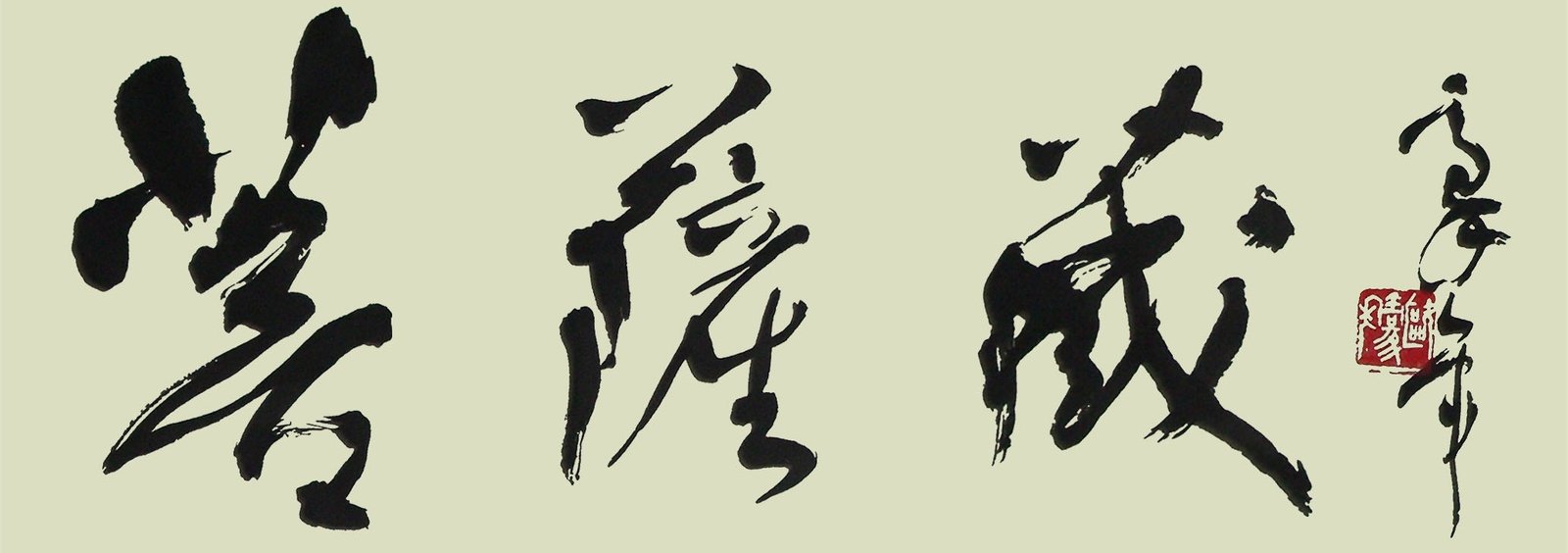
然而,在 《日本第24回 NAU21世紀美術連立展》 的展廳中,一股來自台灣的黑色旋風打破了這份寧靜。那是藝術家 陳福祺(Chen, Fu-Chi) 的雙幅水墨立軸作品 —— 《舞》。陳福祺 就是一位 「墨的舞者」。他拋棄了對物象的描摹,直接用 線條的速度 與 墨色的濃淡,在紙面上留下了一場關於 「生命律動」 的視覺紀錄。

這組作品不僅僅是掛在牆上的畫,更像是一個 「凝固的表演現場」。觀眾彷彿能聽到毛筆在紙上摩擦的沙沙聲,看到墨汁飛濺的瞬間。陳福祺用最傳統的媒材,展現了最當代的 「行動力(Agency)」。
場域的現象學
—— 在黑川紀章的靜謐容器中,引爆墨的能量
要在國立新美術館這樣一個巨大的現代主義空間中展出水墨,藝術家面臨的最大挑戰是:如何讓平面的紙張,產生對抗空間的體量感?
1. 立軸的當代轉身
陳福祺選擇了傳統的 立軸(137x69cm) 形式。在古代,立軸是為了適應廳堂的高牆;在當代美術館,這種 「垂直性(Verticality)」 成為了一種強勢的介入。
作品懸掛在展牆上,如同兩道黑色的閃電,切開了白色的空間。這種狹長的比例,強化了畫面中線條 「上下貫穿」 的氣勢,讓觀眾的視線不得不隨著筆觸快速移動。
2. 黑白的極致張力
NACT 的展廳光線均勻而明亮。在這樣的環境下,色彩 容易被環境光稀釋,但 黑白 卻會被強化。
陳福祺捨棄了所有色彩,只用 純粹的墨。這種極簡的策略,在紛繁複雜的當代藝術展中,反而形成了一種 「視覺的淨化」。那種深沈的黑,像是一個 「吸光體」,將周圍的喧囂都吸納進去,只留下純粹的能量震盪。
作品深度解構
—— 《舞》的視覺修辭與雙幅變奏
這組作品名為 《舞》,但畫中沒有舞者,只有 「舞」的軌跡。
核心的凝聚(墨的重量)
畫面中央有一團 巨大的、濃重的墨塊。這不是隨意的塗抹,而是經過高度控制的 「潑墨」 與 「積墨」。
- 墨韻: 這團黑墨並非死黑,而是充滿了層次。邊緣處有水份滲出的淡墨暈染(毛細現象),中心處則濃得像要滴落。
- 隱喻: 這象徵著舞者的 「丹田」 或 「核心能量」。所有的動作都從這裡發出,所有的氣都匯聚於此。它給予了畫面一個穩定的重心,防止飛揚的線條散亂。
線條的飛揚(氣的流動)
圍繞著核心墨塊,是無數條 飛舞的線條。
- 筆法: 陳福祺運用了 狂草 的筆意,甚至可能有 「散鋒」 或 「枯筆」 的運用。線條時而粗獷如鐵鞭,時而纖細如游絲。
- 動態: 這些線條呈現出一種 「離心力(Centrifugal Force)」 的運動軌跡。它們向四周噴射、旋轉、交纏,如同舞者甩動的水袖,或者旋轉時飛揚的裙擺。
- 速度感: 觀者可以清晰地辨識出運筆的速度——哪裡是急停,哪裡是加速,哪裡是迴旋。這種 「速度的可視化」,是《舞》這件作品最迷人的地方。
身體的在場
—— 從「畫」到「舞」的跨界轉譯
陳福祺的作品體現了當代藝術中一個重要的概念:「身體性(Corporeality)」。
1. 筆墨即身體
在傳統繪畫中,身體是隱藏的,只留下圖像。但在陳福祺的畫中,身體是缺席的在場者。
每一道筆觸,都是藝術家 手臂揮動、腰部扭轉、呼吸吐納 的直接紀錄。
- 當我們看到那道橫掃過畫面的長線條時,我們彷彿能感受到藝術家揮臂時的肌肉張力。
- 當我們看到那團濺開的墨點時,我們彷彿能感受到筆尖撞擊紙面時的爆發力。
- 這不是在描繪舞蹈,這 本身就是一場紙上的舞蹈。
2. 書畫同源的現代演繹
中國美學講究「書畫同源」。陳福祺將書法的 「寫意」 推向了極致。
他不再受限於文字的結構(作品中雖有落款,但主體是抽象的),而是提取了書法的 「線條美學」——提按、頓挫、輕重、緩急。他將書法從「表意(Semantics)」的功能中解放出來,還原為純粹的 「表情(Expression)」。
哲學的凝視
—— 莊子的「逍遙遊」與當代水墨的自由
作品標題 《舞》,讓人聯想到尼采所說的:「每一個不曾起舞的日子,都是對生命的辜負。」但在東方語境下,這更接近莊子的 「逍遙遊」。
1. 解放的靈魂
畫中的線條無拘無束,打破了傳統水墨畫對於構圖的平衡、留白的規範。這是一種 「精神的解放」。
在現代社會的規訓下,人的身體和思想往往是僵化的。陳福祺通過這種狂放的筆墨,試圖找回生命最原始的 「自由意志」。
2. 混沌中的秩序
看似混亂的線條,其實遵循著內在的 「氣韻」 秩序。這就是道家所說的 「道法自然」。
亂而有序,動而有根。這幅畫展示了一種 「動態平衡」——在極度的混亂中,依然保持著核心的穩定(那團濃墨)。這正是當代人在變動不居的世界中,最需要的生存智慧。
系譜的對話
—— 井上有一、波洛克與陳福祺的筆墨連結
將陳福祺置於藝術史的座標中,可以清晰地看到東西方藝術的交匯。
1. 東方:對話井上有一(Inoue Yuichi)
日本戰後書法大師井上有一,以「貧窮書法」和單字大書聞名。陳福祺與其共有的是那種 「生命搏擊」 的態度。
但不同於井上有一對「字」的執著,陳福祺走向了更徹底的 「抽象」。他保留了書法的骨血,卻拋棄了文字的皮囊。
2. 西方:對話傑克遜·波洛克(Jackson Pollock)
美國抽象表現主義大師波洛克的「滴畫」,強調行動的過程。陳福祺的作品同樣具有這種 「行動繪畫(Action Painting)」 的特質。
但不同於波洛克的無意識滴灑(Drip),陳福祺的每一筆都帶有東方筆墨的 「控制力(Control)」。那是經過長期訓練後,對毛筆鋒毫的精準駕馭。這是一種 「有意識的狂放」。
—— NAU 展場中的「動態」突圍
在 第 24 回 NAU21世紀美術連立展 中,陳福祺的作品具有極高的辨識度。
1. 視覺的流動
在眾多靜態的繪畫或裝置作品中,陳福祺的《舞》提供了強烈的 「動態感(Movement)」。
觀眾走過這件作品時,視線會不由自主地被那些飛揚的線條帶動。這使得作品在展場中具有了 「引導性」,成為視覺動線上的一個高潮點。
2. 最東方也最現代
水墨是東方的,抽象是現代的。陳福祺完美地結合了這兩者。
對於日本觀眾來說,他們能從筆觸中讀出熟悉的書法美學;對於西方觀眾來說,他們能從構圖中讀出抽象表現主義的張力。這種 「雙重可讀性」,是他在國際展覽中獲得成功的關鍵。
墨痕即心痕 —— 台灣當代水墨的生命原力
陳福祺在東京六本木的展出,是一場 「氣」 的勝利。
他沒有依賴豔麗的色彩,沒有依賴複雜的觀念,僅憑 一支筆、一碟墨、一張紙,就創造出如此撼動人心的視覺力量。
《舞》 告訴我們:水墨畫從來沒有過時,因為它直接連結著人類的 「身體」 與 「呼吸」。只要人類還在呼吸,還在運動,這種紀錄生命律動的藝術形式,就永遠具有當代性。
在國立新美術館的聚光燈下,陳福祺留下的那些飛揚跋扈的墨痕,就是台灣當代水墨 「生命原力」 的最佳證明。
【藝術家檔案 Data File】
- 藝術家: 陳福祺 (Chen, Fu-Chi)
- 入選展覽: 日本第24回 NAU21世紀美術連立展
- 展出地點: 日本東京・國立新美術館
- 參展作品:
- 題名: 《舞》
- 形式: 立軸
- 媒材: 水墨、紙本
- 尺寸: 137 x 69 cm (每幅)
- 創作年份: 2023
- 風格關鍵字: 現代水墨、太極書藝、狂草筆意、行動繪畫、抽象表現、氣韻生動。
The Wild Dance of Ink: Chen Fu-Chi’s Action Writing and the Rhythms of the Body
The 24th NAU 21st Century Art Exhibition in Japan: A Complete Record and In-Depth Critical Review of Taiwanese Artist Chen Fu-Chi’s Participation
Curated and Written by Wang Muti
A Whirlwind in Roppongi — When Taiji Calligraphic Art and Cursive Script Intervene in the White Cube
Early spring, 2026. Roppongi, Tokyo.
The National Art Center, Tokyo (NACT), designed by master architect Kisho Kurokawa, constructs a rational temple of art through its vast glass curtain wall and cool geometric structure.
Yet within the exhibition halls of The 24th NAU 21st Century Art Exhibition in Japan, a black whirlwind from Taiwan shattered this stillness. It was the diptych hanging-scroll ink work by artist Chen Fu-Chi — Dance. Chen Fu-Chi is truly a**“dancer of ink.”** He abandons the depiction of external objects and instead uses the speed of line and the density of ink tones to leave upon paper a visual record of the rhythm of life.
This group of works is not merely painting hung on a wall, but more like a**“solidified performance site.”** The viewer seems almost able to hear the rustling sound of the brush rubbing against paper and to see the very instant when the ink splashes outward. With the most traditional of media, Chen Fu-Chi demonstrates the most contemporary kind of agency.
The Phenomenology of the Site
Exploding the Energy of Ink Within Kisho Kurokawa’s Quiet Vessel
To exhibit ink painting in a huge modernist space such as the National Art Center, Tokyo, the greatest challenge facing the artist is this: How can a flat sheet of paper generate a sense of volume capable of confronting the surrounding space?
1. The Contemporary Turn of the Hanging Scroll
Chen Fu-Chi chose the traditional hanging scroll format (137 × 69 cm). In ancient times, hanging scrolls were designed to suit the high walls of halls; in the contemporary museum, this verticality becomes a strong form of intervention.
Suspended upon the exhibition wall, the works resemble two bolts of black lightning slicing open the white space. This elongated proportion intensifies the force of the lines that pierce vertically through the picture, compelling the viewer’s gaze to move rapidly with the brushwork.
2. The Extreme Tension of Black and White
The exhibition halls of NACT are evenly and brightly lit. In such an environment, color can easily be diluted by ambient light, but black and white are intensified.
Chen Fu-Chi abandons all color and works only with pure ink. This minimalist strategy, set amid the complexity of contemporary art exhibitions, instead produces a kind of visual purification. That deep black becomes like a light-absorbing body, drawing in the surrounding noise and leaving only the vibration of pure energy.
A Deep Deconstruction of the Work
The Visual Rhetoric and Diptych Variation of Dance
This body of work is titled Dance, yet there is no dancer in the painting — only the trace of dance itself.
The Core of Concentration
The Weight of Ink
At the center of each composition is a large, dense mass of ink. This is not random smearing, but a highly controlled process of splashed ink and accumulated ink.
- Ink resonance: This mass of black ink is not dead black, but full of layers. At its outer edges are soft halos of diluted ink spreading through moisture by capillary action, while at the center it is so saturated that it seems almost ready to drip.
- Metaphor: This symbolizes the dancer’s dantian, or core energy center. All movement issues from here, and all breath-energy gathers here. It gives the composition a stable center of gravity, preventing the soaring lines from collapsing into disorder.
The Flight of Line
The Flow of Qi
Surrounding this central ink mass are countless flying lines.
- Brushwork: Chen Fu-Chi employs the brush spirit of wild cursive script, and perhaps even makes use of split brush tips or dry brush. At times the lines are coarse and forceful like iron whips; at other times they are as fine as drifting silk threads.
- Dynamics: These lines manifest a trajectory of centrifugal force. They shoot outward, rotate, and intertwine, like the sweeping water sleeves of a dancer or the whirling hem of a spinning skirt.
- Sense of speed: The viewer can clearly identify the speed of the brush — where it stops abruptly, where it accelerates, where it turns in a spiral. This visualization of speed is one of the most captivating aspects of Dance.
The Presence of the Body
A Cross-Disciplinary Translation from “Painting” to “Dance”
Chen Fu-Chi’s work embodies an important concept in contemporary art: corporeality.
1. Brush and Ink as Body
In traditional painting, the body is hidden, leaving behind only the image. But in Chen Fu-Chi’s work, the body is an absent presence.
Every brushstroke is a direct record of the artist’s arm swinging, waist twisting, and breathing in and out.
- When we see that long sweeping line cutting across the surface, we seem to feel the muscular tension in the artist’s arm as it swung.
- When we see that burst of splattered ink, we seem to feel the explosive force of the brush tip striking the paper.
- This is not painting a dance — this is itself a dance upon paper.
2. A Modern Interpretation of the Shared Origin of Calligraphy and Painting
Chinese aesthetics speaks of the principle that calligraphy and painting share the same origin. Chen Fu-Chi pushes the calligraphic spirit of xieyi — expressive writing — to an extreme.
He is no longer confined by the structure of written characters (even though there is a signature in the work, the main body is abstract). Instead, he extracts the aesthetics of line from calligraphy — lifting and pressing, pauses and turns, heaviness and lightness, slowness and urgency. He liberates calligraphy from the function of semantics and restores it to pure expression.
A Philosophical Gaze
Zhuangzi’s “Free and Easy Wandering” and the Freedom of Contemporary Ink
The title Dance recalls Nietzsche’s phrase: “Every day on which one has not danced is a loss to life.” Yet in an Eastern context, this is even closer to Zhuangzi’s idea of free and easy wandering.
1. The Liberated Spirit
The lines in the painting are unconstrained, breaking through the traditional demands of compositional balance and the conventions of empty space in ink painting. This is a kind of spiritual liberation.
Under the discipline of modern society, the human body and mind are often stiffened and constrained. Through such wild brush-and-ink expression, Chen Fu-Chi attempts to recover the most original form of free will in life.
2. Order Within Chaos
The lines may appear chaotic, but in fact they follow an inner order of rhythmic vitality. This is what Daoist thought calls**“the Way follows nature.”**
Disordered, yet ordered; dynamic, yet rooted. This painting presents a kind of dynamic equilibrium — within extreme turbulence, it still maintains a stable core (that dense mass of ink). This is precisely the wisdom of survival most needed by contemporary people in a world of constant flux.
A Dialogue of Genealogies
The Brush-and-Ink Connection Between Inoue Yuichi, Pollock, and Chen Fu-Chi
Placed within the coordinates of art history, Chen Fu-Chi’s work clearly reveals a convergence of Eastern and Western art.
1. The East: A Dialogue with Inoue Yuichi
The postwar Japanese calligraphy master Inoue Yuichi was famous for his “poor calligraphy” and bold single-character works. What Chen Fu-Chi shares with him is that same attitude of life struggling against itself.
Yet unlike Inoue Yuichi’s devotion to the character, Chen Fu-Chi moves toward a more radical abstraction. He retains the flesh and bones of calligraphy, while discarding the outer skin of the written word.
2. The West: A Dialogue with Jackson Pollock
The “drip paintings” of the great American Abstract Expressionist Jackson Pollock emphasized the process of action. Chen Fu-Chi’s work similarly possesses the qualities of action painting.
But unlike Pollock’s unconscious drip, every stroke by Chen Fu-Chi carries the control of Eastern brush-and-ink practice. It is the precise command of the brush tip acquired through long training. This is a kind of conscious wildness.
A Dynamic Breakthrough in the NAU Exhibition Space
At The 24th NAU 21st Century Art Exhibition, Chen Fu-Chi’s work possesses an exceptionally high degree of recognizability.
1. Visual Flow
Among many static paintings and installation works, Chen Fu-Chi’s Dance offers a powerful sense of movement.
As viewers pass by the work, their gaze is involuntarily drawn along the soaring lines. This gives the work a kind of guiding force within the exhibition, making it a visual climax along the route of movement.
2. At Once the Most Eastern and the Most Modern
Ink painting is Eastern; abstraction is modern. Chen Fu-Chi combines the two perfectly.
For Japanese viewers, the brushwork evokes a familiar calligraphic aesthetic; for Western viewers, the composition reveals the tension of Abstract Expressionism. This double readability is the key to his success in international exhibitions.
Ink Traces as Heart Traces — The Vital Force of Taiwanese Contemporary Ink
Chen Fu-Chi’s exhibition in Roppongi, Tokyo, is a victory of qi.
He relies neither on dazzling color nor on complicated concepts; with only one brush, one dish of ink, and one sheet of paper, he creates a visual force powerful enough to shake the heart.
Dance tells us this: ink painting has never become outdated, because it is directly connected to the human body and breath. As long as human beings continue to breathe and move, this art form — which records the rhythms of life — will always remain contemporary.
Under the spotlights of the National Art Center, Tokyo, those wildly soaring traces of ink left by Chen Fu-Chi stand as the finest proof of the vital force of Taiwanese contemporary ink art.
Artist Data File
- Artist: Chen Fu-Chi
- Selected Exhibition: The 24th NAU 21st Century Art Exhibition in Japan
- Exhibition Venue: National Art Center, Tokyo, Japan
- Exhibited Work:
- Title:Dance
- Format: Hanging Scroll
- Medium: Ink on Paper
- Dimensions: 137 × 69 cm (each panel)
- Year: 2023
- Style Keywords: Contemporary Ink, Taiji Calligraphic Art, Wild Cursive Brushwork, Action Painting, Abstract Expression, Rhythmic Vitality
墨の狂舞――陳福祺の行動的書写と身体の気韻
日本第24回 NAU21世紀美術連立展――台湾人アーティスト陳福祺の出品全記録と詳細芸術評論
企画・執筆/王 穆提(WANG MUTI)
六本木の旋風――太極書芸の狂草がホワイトキューブに介入するとき
2026年初春、東京・六本木。
建築の巨匠 黒川紀章 が設計した 国立新美術館(NACT) は、その巨大なガラスカーテンウォールと冷静な幾何学構造によって、ひとつの理性的な芸術の殿堂を構築している。
しかし、《日本第24回 NAU21世紀美術連立展》 の展示空間の中で、台湾から来たひとつの黒い旋風がその静けさを破った。それが、アーティスト 陳福祺(Chen, Fu-Chi) の二幅対の水墨立軸作品――《舞》 である。陳福祺はまさに**「墨の舞手」** である。彼は物象の描写を捨て去り、線の速度 と 墨の濃淡 のみを用いて、紙面の上に**「生命の律動」** に関する視覚的記録を残した。
この作品群は、単に壁に掛けられた絵ではない。むしろ**「凝固したパフォーマンスの現場」** に近い。観者は、筆が紙を擦るかすかな音を聞き、墨が飛び散る瞬間を見るような感覚に包まれる。陳福祺は最も伝統的な媒材によって、最も現代的な**「行動力(Agency)」** を示している。
場域の現象学
黒川紀章の静かな器の中で、墨のエネルギーを爆発させる
国立新美術館のような巨大なモダニズム空間で水墨を展示する際、アーティストが直面する最大の課題はこうである。いかにして平面的な紙に、空間へ対抗しうる量感を生じさせるか。
1. 立軸の現代的転身
陳福祺は伝統的な 立軸(137×69cm) の形式を選んだ。古代において立軸とは、広間の高い壁に対応するための形式であったが、現代美術館においてこの**「垂直性(Verticality)」** は、一つの強い介入となる。
作品は展示壁に掛けられ、まるで二筋の黒い稲妻のように白い空間を切り裂いている。この細長い比率は、画面内の線が 上下に貫通する 気勢を強め、観者の視線は筆致に導かれて素早く移動せざるをえない。
2. 黒と白の極限的緊張
NACTの展示室は、均質で明るい光に満ちている。こうした環境の下では、色彩 は周囲の光に希釈されやすいが、黒と白 はかえって強調される。
陳福祺はすべての色彩を捨て、純粋な墨 のみを用いる。このミニマルな戦略は、複雑で雑多な現代美術展の中で、むしろ一種の**「視覚の浄化」** を生み出している。その深い黒は、まるで**「光を吸収する物体」** のように周囲の喧騒を吸い込み、純粋なエネルギーの震えだけを残す。
作品の深層解体
《舞》の視覚修辞と二幅変奏
この作品群の題名は**《舞》** である。しかし画面の中に舞手はいない。そこにあるのは**「舞の軌跡」** のみである。
核心の凝集
墨の重み
画面中央には、巨大で濃密な墨塊 がある。これは無作為な塗抹ではなく、高度に制御された 潑墨 と 積墨 の結果である。
- 墨韻: この黒い墨塊は死んだ黒ではなく、豊かな層を含んでいる。縁には水分がにじみ出た淡墨のぼかし(毛細現象)があり、中心部は滴り落ちそうなほどに濃い。
- 隠喩: これは舞手の**「丹田」、あるいは「核心エネルギー」** を象徴している。すべての動きはここから発し、すべての気はここに集まる。これが画面に安定した重心を与え、飛び散るような線が散漫になるのを防いでいる。
線の飛揚
気の流動
この核心となる墨塊を中心に、無数の 舞い上がる線 が走っている。
- 筆法: 陳福祺は 狂草 の筆意を用い、ときには 散鋒 や 枯筆 の技法も取り入れていると思われる。あるときは鉄の鞭のように豪放で、あるときは遊糸のように繊細である。
- 動態: これらの線は**「遠心力(Centrifugal Force)」** の軌跡を示している。四方へ噴き出し、回転し、絡み合い、まるで舞手が振るう水袖、あるいは旋回する際に翻る裾のようである。
- 速度感: 観者は運筆の速度を明確に読み取ることができる。どこで急停止したのか、どこで加速したのか、どこで旋回したのか。この**「速度の可視化」** こそ、《舞》という作品の最も魅力的な点である。
身体の在場
「絵」から「舞」への越境的翻訳
陳福祺の作品は、現代美術における重要な概念の一つ――「身体性(Corporeality)」――を体現している。
1. 筆墨即身体
伝統絵画において、身体は隠され、残るのは図像だけである。だが、陳福祺の作品においては、身体は不在でありながらそこに存在している。
一本一本の筆致は、アーティストの 腕の振り、腰のねじれ、呼吸の吐納 の直接的な記録である。
- 画面を横切る長い一線を見るとき、私たちはアーティストが腕を振るった際の筋肉の張りを感じるかのようである。
- 飛び散った墨点を見るとき、私たちは筆先が紙面に衝突した瞬間の爆発力を感じるかのようである。
- これは舞踊を描いているのではない。これは それ自体が紙の上の舞踊 なのである。
2. 書画同源の現代的演繹
中国美学は**「書画同源」** を重んじる。陳福祺は書法における**「写意」** を極限まで推し進めている。
彼はもはや文字構造の制約に縛られない(作品中に落款はあるが、主体は抽象である)。そうではなく、彼は書法から**「線の美学」――提按、頓挫、軽重、緩急――を抽出している。彼は書法を「表意(Semantics)」** の機能から解放し、純粋な**「表情(Expression)」** へと還元しているのである。
哲学的凝視
荘子の「逍遥遊」と現代水墨の自由
作品の題名**《舞》** は、ニーチェの「踊らなかった日は生に対する裏切りである」という言葉を想起させる。しかし東洋的文脈においては、これはむしろ荘子の**「逍遥遊」** に近い。
1. 解放された魂
画中の線は拘束を持たず、伝統水墨画における構図の均衡や余白の規範を打ち破っている。これは一種の**「精神の解放」** である。
現代社会の規律のもとで、人の身体も思想も往々にして硬直化する。陳福祺は、この狂放な筆墨を通して、生命の最も根源的な**「自由意志」** を取り戻そうとしている。
2. 混沌の中の秩序
一見すると混乱しているように見える線も、実は内在的な**「気韻」** の秩序に従っている。これは道家の言う**「道法自然」** である。
乱れていながら秩序があり、動いていながら根がある。この絵は一種の**「動的均衡」** を示している。極度の混沌の中にあっても、なお核心の安定(あの濃密な墨塊)を保っている。これはまさに、絶えず変動する世界を生きる現代人が最も必要とする知恵である。
系譜の対話
井上有一、ポロック、そして陳福祺をつなぐ筆墨の連関
陳福祺を美術史の座標の中に置くと、そこには東西芸術の交点が明瞭に見えてくる。
1. 東洋:井上有一との対話
戦後日本書道の巨匠 井上有一 は、「貧乏書法」と単字の大書で知られている。陳福祺と彼に共通するのは、あの**「生命の格闘」** の姿勢である。
しかし、井上有一が「字」への執着を持ち続けたのに対し、陳福祺はさらに徹底した**「抽象」** へと進んでいる。彼は書法の骨肉を残しつつ、文字という外皮を捨て去ったのである。
2. 西洋:ジャクソン・ポロックとの対話
アメリカ抽象表現主義の巨匠 ジャクソン・ポロック の「ドリッピング」は、行為の過程を強調した。陳福祺の作品もまた、このような**「アクション・ペインティング」** の性質を備えている。
しかしポロックの無意識的な滴下(Drip)とは異なり、陳福祺の一筆一筆には東洋筆墨ならではの**「制御力(Control)」** がある。それは長年の訓練を経て獲得された、筆先の毛毫に対する精密な統御である。これは一種の**「意識された狂放」** なのである。
NAU展会場における「動態」の突破
第24回 NAU21世紀美術連立展 において、陳福祺の作品はきわめて高い識別性を持っている。
1. 視覚の流動
多くの静的な絵画やインスタレーション作品の中で、陳福祺の**《舞》** は強烈な**「動態感(Movement)」** を提供している。
観者がこの作品の前を通ると、視線は自然とあの飛揚する線に引き寄せられる。これにより作品は展示空間の中で一種の**「導引性」** を持ち、視覚動線の一つの高潮点となる。
2. 最も東洋的で、同時に最も現代的
水墨は東洋のものであり、抽象は現代のものである。陳福祺はこの二つを完璧に結びつけている。
日本の観客にとっては、その筆致の中に親しみ深い書法の美学が読み取れる。一方、西洋の観客にとっては、その構図の中に抽象表現主義の緊張感が読み取れる。この**「二重の可読性」** こそ、彼が国際展で成功する鍵なのである。
墨痕は心痕である――台湾現代水墨の生命原力
陳福祺の東京・六本木での展示は、ひとつの**「気」** の勝利である。
彼は華やかな色彩にも依存せず、複雑な観念にも頼らず、ただ 一本の筆、一皿の墨、一枚の紙 のみで、これほど人の心を揺さぶる視覚的力を創り出した。
《舞》 は私たちにこう告げている。水墨画は決して時代遅れではない。なぜならそれは、人間の**「身体」** と**「呼吸」** に直接つながっているからである。人間がなお呼吸し、なお動いている限り、この生命の律動を記録する芸術形式は、永遠に現代性を持ち続ける。
国立新美術館のスポットライトの下で、陳福祺が残したあの奔放で飛揚する墨痕こそ、台湾現代水墨の**「生命原力」** を示す最良の証明なのである。
【アーティスト・データファイル】
- アーティスト: 陳福祺(Chen, Fu-Chi)
- 入選展覧会: 日本第24回 NAU21世紀美術連立展
- 展示会場: 日本・東京 国立新美術館
- 出品作品:
- 題名: 《舞》
- 形式: 立軸
- 媒材: 水墨、紙本
- 寸法: 137 × 69 cm(各幅)
- 制作年: 2023年
- スタイル・キーワード: 現代水墨、太極書芸、狂草の筆意、アクション・ペインティング、抽象表現、気韻生動