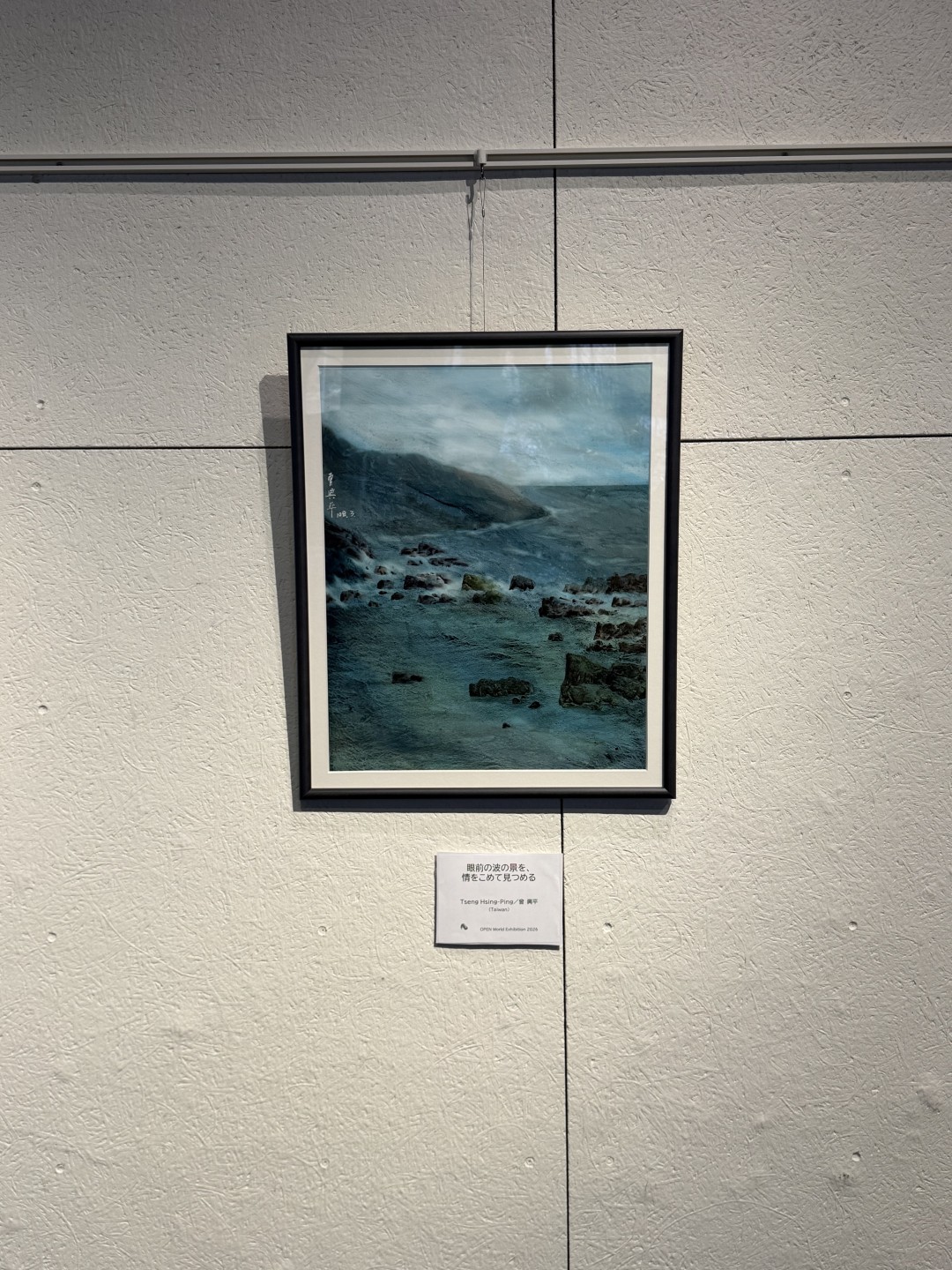
曾興平教授(生於1945年)的藝術生涯,是一部對台灣東岸自然景觀的深情紀錄史。他的參展作品《眼前波景癡情看》,其藝術高度在於對「物性」與「心境」的完美融合。
撰文:王穆提(WANG MUTI)
1. 墨彩交融的煉金術
在美術專有名詞上,曾興平的技法可被稱為「墨彩的質地拓延」。他巧妙地利用了傳統水墨的「骨架」與西方水彩的「肉身」。
- 礁石的構築:他運用乾筆(Dry Brush)與強烈的濃墨,在紙面上建立了如花崗岩般堅硬的幾何結構。這種技法不僅是寫實,更是一種關於「恆久性」的物質宣言。
- 浪花的動態肌理:在海浪與岩石交界處,他運用了特殊的「漬染法」,表現出海沫噴濺的隨機性。這種偶然發生的美學,與岩石的必然性形成了強烈的視覺張力。
2. 「癡情」作為一種現象學還原
「癡情看」不僅是感性的表露,更是一場現象學的實踐。藝術家在長期觀察太平洋的過程中,將自我消融於對象之中。這種「物我合一」的狀態,使得他的海洋不再是客觀的風景,而是具有主體意志的生命體。在東京這個遠離大海的都會核心,曾興平的作品如同一道來自南太平洋的生命之風,喚醒了城市人被屏蔽的原始感官。
相關內容:
【台日交流展】靈光、透明與流動的疆界:王穆提、林仁傑、曾興平三人聯展日本東京「Open World 2026」,後援:日本外務省國際交流基金、駐日蒙古國大使館
Tseng Hsing-Ping
(Review Committee Member for the Western Painting Exhibition of the National Taiwan Museum of Fine Arts; Preparatory Committee Member for the National Fine Arts Exhibition)
A “Passionate” Contemplation of the Will of Mountains and Sea
Written by Wang Muti
Professor Tseng Hsing-Ping (born in 1945) has built an artistic career that may be read as a deeply affectionate chronicle of the natural landscapes of Taiwan’s eastern coast. The artistic achievement of his exhibited work, Gazing Passionately at the Waves Before My Eyes, lies in its perfect fusion of “materiality” and “state of mind.”
1. The Alchemy of Ink-and-Color Interfusion
In the terminology of art criticism, Tseng Hsing-Ping’s technique may be described as an “extension of the textural field of ink and color.” He skillfully makes use of the “skeleton” of traditional ink painting and the “flesh” of Western watercolor.
- The construction of the reef: He employs dry brush and forceful, dense ink to establish on the paper a hard geometric structure resembling granite. This technique is not merely realism, but also a material declaration concerning “permanence.”
- The dynamic texture of the spray: At the boundary where the sea waves meet the rocks, he uses a special stain-wash technique to express the randomness of splashing sea foam. This aesthetics of chance forms a powerful visual tension with the inevitability of the rocks.
2. “Passionate Devotion” as a Phenomenological Reduction
“To gaze with passionate devotion” is not merely an emotional revelation, but also a phenomenological practice. Through long observation of the Pacific Ocean, the artist dissolves the self into the object. This state of “the unity of object and self” causes his sea to cease being an objective landscape and instead become a living entity endowed with subjective will.
In Tokyo, an urban core far removed from the sea, Tseng Hsing-Ping’s work is like a wind of life from the South Pacific, awakening the primal senses of city dwellers that have long been sealed off.
曾興平
(国立台湾美術館 西洋画展品評議委員、全国美術展準備委員)
山海の意志に向けられた「癡情」の観照
執筆:王穆提(WANG MUTI)
曾興平教授(1945年生まれ)の芸術人生は、台湾東岸の自然景観に対する深い愛情に満ちた記録史である。出品作 《眼前波景癡情看》 の芸術的到達点は、「物性」 と 「心境」 とを完璧に融合させた点にある。
1. 墨彩交融の錬金術
美術の専門用語で言えば、曾興平の技法は 「墨彩の質地の拡張」 と呼ぶことができる。彼は伝統水墨の 「骨格」 と、西洋水彩の 「肉身」 を巧みに活用している。
- 礁石の構築: 彼は乾筆(Dry Brush)と力強い濃墨を用いて、紙面上に花崗岩のように堅固な幾何学的構造を築き上げている。この技法は単なる写実ではなく、「恒久性」 をめぐる物質的宣言でもある。
- 波しぶきの動的肌理: 海浪と岩石の境界において、彼は特殊な 「漬染法」 を用い、海泡の飛散する偶然性を表現している。この偶発的に生じる美学は、岩石の必然性と強い視覚的緊張関係を形づくっている。
2. 「癡情」を現象学的還元として捉える
「癡情看」 は、単なる感情の表露ではなく、一つの現象学的実践でもある。芸術家は太平洋を長期にわたって観察する過程で、自己を対象の中へと溶け込ませていく。この 「物我合一」 の状態によって、彼の海はもはや客観的な風景ではなく、主体的意志を備えた生命体となる。
海から遠く離れた都市の中心である東京において、曾興平の作品は、南太平洋から吹いてきた生命の風のように、都市生活者の閉ざされていた原初的感覚を呼び覚ますのである。