未盡之物何以最能久留人心
——廖純沂〈未盡・浮境〉
撰文:王穆提(WANG MUTI)
我常覺得,人並不是特別擅長面對完成之物。凡太圓滿者,往往只令人讚歎一時;反倒是那些略有殘痕、略有退色、略有未說盡、未封口、未落定之物,最能在離開之後仍留在心裡,像一種不肯完全退出的濕意,像一段沒有結局卻故意不肯結束的天氣。也因此,我每見那些真正耐看的作品,總不是因其把世界說得多麼清楚,而是因其保留了一些不能速讀、不能佔有、不能立刻講完的部分,使人反而在其中走得更深。廖純沂這件〈未盡・浮境〉,於我眼中,正是這樣的一幅畫。它不高聲,不炫技,亦不刻意把花畫得如何逼真;然而愈看愈覺得,它真正所處理的,並不是花,而是花如何在一個尚未完成的世界裡,仍然被輕輕托住。
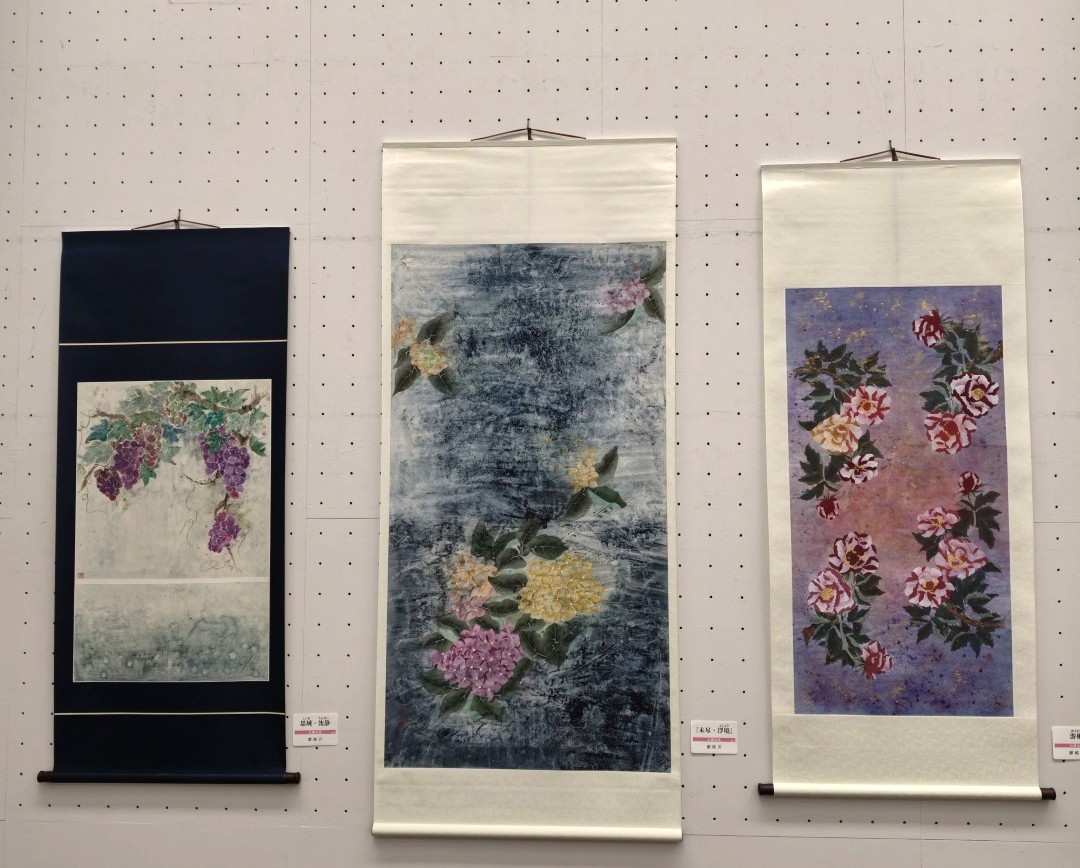
畫面之大,足以使人站在它面前時,不是「看一幅花卉」,而像被一種介於霧、水、舊牆、雲氣與底片磨痕之間的空氣慢慢包裹。那一層層灰藍、銀白、暗墨與刷洗過的痕,在熟宣上形成一種極有濕度的底。這底既非單純背景,也非自然界可指認的場景,而更像一個尚未乾透的時間。其上,幾團顏色柔和卻又決不微弱的花——粉紫、淡桃、米白、暖黃——帶著灰綠葉片,沿著畫面的中軸與偏斜方向,若即若離地浮出。它們不似被釘牢在某枝固定的植物上,也不像從地中穩穩長起,倒像在一片未凝固的空間裡暫時停泊,像被某種比重略輕於現實、略重於夢境的力量托著。這種「不完全落地」的感覺,正是此作所以難忘的第一原因。
我以為,題名中的「未盡」二字,實比「浮境」更先擊中作品的根。因為浮,不過是狀態;未盡,卻是命運。浮可以是輕,可以是漂,可以是懸,可以是介乎其間,但未盡則意味深得多:意味事情沒有完,意味時間沒有封口,意味情感尚未徹底沉下,意味記憶仍保有回返的能力。這種「未盡」,於我看來,並非缺憾,反而近乎一種高級的自制。世上的庸作往往怕觀者不懂,於是總把一切說完;而成熟的作品知道,真正能長留於心的,從來不是被說完的部分,而是那些言外之意、墨外之氣、形外之境。廖純沂深諳此理,所以她沒有把花畫成完全屬於當下的花,也沒有把背景畫成可供辨識的明確空間;她讓一切都停在將成未成、將逝未逝、將明未明之間。這不是曖昧,而是一種拒絕過早封閉的誠實。
若我要為這種感覺尋一條哲學線索,我會想起西田幾多郎。西田所說的「場所」,從來不是地理位置,而是那種使事物能夠出現、能夠相遇、能夠彼此滲透、又不至彼此吞沒的更深層場域。若以此觀〈未盡・浮境〉,便會明白:畫中的灰藍墨場並不是花的背景,而是花得以顯現的場所。它不是空白,不是裝飾性的襯托,而是一個能夠承受花之浮現、承受痕跡之停留、承受時間之黏附的深層界面。花之所以動人,不只是因其色澤柔美,而是因其從這樣的場所裡慢慢長出;不是獨自存在,而是被場所允許存在。於是,花與背景不再是主客關係,而是一種互相成就的共場:花使場所變得可感,場所又使花變得有重量。
而若說西田使我看見這件作品之所以成立的場所性,那麼班雅明則使我更清楚地感到,它何以帶著一種難以言說的時間靈光。班雅明講「靈光」時,說的不是某種神秘光圈,而是一種帶著距離與歷時性的在場方式:一件事物之所以動人,往往不在它被清楚看盡之時,而在它仍保有不可立即被耗盡的部分時。廖純沂畫中的花正具有這種性質。它們不是鮮豔到急於取悅人的花,也不是標本式地等待辨識的花,而是像隔著一層薄霧、隔著一段時間、隔著某種記憶與濕意而顯出來的花。花瓣邊緣的柔化、色層的輕暈、背景上反覆留下的沖刷痕與摩擦痕,都使整體畫面帶著一種「已經歷了什麼」的質感。這種質感極重要,因為它讓花不只屬於現在,而像帶著過去一同在場。於是,「未盡」不只是還沒完成而已,而更像是時間尚未把它們完全帶走。
若更往前一步,我甚至願意說,此作之所以動人,在於它不是畫花,而是在畫顯現本身的倫理。如今人觀看事物,常太急,太想立刻知道「那是什麼」、「這花叫什麼」、「這構圖如何安排」、「這背景又象徵什麼」;可是有些畫偏偏不讓你那樣輕易地得到答案,它們要求你慢下來,容許一切在不完全確定中仍被感知。這時我便想起梅洛-龐蒂。梅洛-龐蒂讓我們知道,可見性從來不是物件被清楚攤開,而是某物從不可見的深處慢慢走入可見。〈未盡・浮境〉中的花正是這樣:它們不是被硬生生放到畫前,而像從灰藍的濕性場裡一點點浮起,既不霸道,也不退縮。觀者真正的工作,不是辨認,而是接納——接納這些花如何慢慢來到眼前,接納它們如何仍保持著一部分未被完全捕獲的距離。也因如此,這件作品的觀看不是「佔有式」的,而近乎一種被動地承接顯現。這正是它高妙之處。
又若從巴舍拉的物質想像學來讀,此作更顯其妙。巴舍拉說,某些圖像之所以有詩性,不在它們說了什麼故事,而在它們喚醒了我們身體裡對某種物質狀態的古老感覺。〈未盡・浮境〉最強的物質感,就是「濕」。這裡的濕不只是技法上的水痕,而是一種整體感官的濕:墨未乾、記憶未乾、顏色未乾、時間未乾。熟宣、水墨、礦物與複合顏料的層層互作,使表面不平、不死、不僵,而像仍在呼吸。花因此不是乾燥地貼附在畫面上,而像栖居於一種仍會流動的氣候裡。巴舍拉若在此,大約會說:這些花不是植物學的花,而是濕性想像中的花。它們屬於雲、屬於霧、屬於記憶與流水之間那種不願完全凝固的事物。如此一來,「浮境」便不再只是畫面效果,而是一種世界觀:世界不是堅固平面,而是一個仍可讓事物漂浮、讓痕跡停留、讓顏色以低聲慢慢說話的液態界面。
不過,若只是如此,此作還不足以令人長久駐足。它真正讓我一再回望的,還在於它有一種近乎阿岡本式的潛能感。阿岡本談潛能時,總提醒人:真正的潛能,不只是已經能完成什麼,而是仍保有「尚未被耗盡」「尚未被終止」的能力。未完成,不一定是缺陷;有時反倒是更高的生命狀態。〈未盡・浮境〉的美,正來自這種潛能。若花被畫得太滿、太實、太穩,它反而會失去呼吸;若背景被處理得太明確、太封閉,那漂浮的感覺便立刻死去。廖純沂懂得停在最恰當的地方:花已經出現,卻尚有回旋;背景已經構成,卻仍留空隙;顯現已經發生,卻不把自己交代完畢。這使整件作品有一種極其稀有的氣質:它不是結論,而是仍在進行的狀態。觀者之所以願意停留,正因作品沒有把最後一句話說死——它還留著一口氣,一層霧,一小段未乾的邊緣,讓你覺得這些花還可能再浮一次,再退一次,再現一次。
我甚至願意從這件畫裡讀出一種關於情感的深層寓言。因為凡真正要緊的東西,很少以「完成」的樣子留在心裡;它多半總以未盡的樣子存在。我們記得一個人,不因曾完整擁有,而因仍有某句話未說完;我們懷念一段時光,不因它完滿,而因它在記憶裡始終帶著一點濕、一點霧、一點不肯封存的光。花於是也不只是花了。它成了某種尚在持續的東西:像一個想法還未定形,一段情緒尚未沉底,一個內在場景總在夜深時又浮上來。於是,畫裡的一切不再只屬於自然,也屬於心。正如那一團團粉紫與暖黃的花,不只安放在畫面裡,也像安放在某個「還來不及告別」的時間裡。
所以,我看〈未盡・浮境〉,最終並不只是看到幾枝花,而是看到存在本身如何在尚未結束時最為動人。人常以為完成是美,圓滿是美,完整是美;可這件作品像在安靜地說,真正深的美,往往存於那些沒有被完全封口的事物中。花之所以美,不僅因其開放,也因其仍帶著將散未散、將沉未沉、將遠未遠的氣息。正因它未盡,所以它不只是形象,而有了靈魂;正因它浮,所以它不只是物,而成了境。
若要用一句話收束此文,我會這樣說:
廖純沂〈未盡・浮境〉所畫的,並不是花漂在背景上,而是世界本身仍未完成地,輕輕把花托住。
廖純沂〈未盡・浮境〉以熟宣、水墨、礦物與複合顏料形塑出一個具有濕性、漂浮感與時間殘跡的深層場域。畫中的灰藍墨場並非花卉的背景,而更接近西田幾多郎所謂承載顯現的「場所」;花團則如從未乾透的時間裡慢慢浮出,使「未盡」不再是未完成的缺憾,而是班雅明意義上仍保有靈光的在場。若從巴舍拉的物質想像學來看,作品最迷人的,是其整體的濕性與漂浮感,讓花不屬於堅硬現實,而屬於霧、記憶與流動世界的暫棲之物。整體而言,〈未盡・浮境〉所觸及的,不只是花的顯現,而是存在如何在未完成之中,仍持續保持呼吸與亮度。
其他相關內容:
【現場直擊】【台日交流展】東京都美術館開館100周年記念《第14回東京現展》展場:日本國立東京都美術館
台灣參展藝術家作品藝術評論
東京都美術館開館100周年記念【14回東京現展】廖純沂〈未盡・浮境〉未盡之物何以最能久留人心
東京都美術館開館100周年記念【14回東京現展】廖純沂〈游相〉花何以不止於花,與形相如何在漂游中成立
東京都美術館開館100周年記念【14回東京現展】廖純沂〈思域・沉靜〉沉靜何以不是空,與垂掛之物何以最像思念
東京都美術館開館100周年記念【14回東京現展】王詮富〈八月閑步一色秋〉的季節哲學、門徑意識與水墨的開敞性 在黑暗中閑步:秋色如何不是顏色,而是一種存在的轉身
東京都美術館開館100周年記念【14回東京現展】 王詮富〈一念菩提開翠微〉的開顯、同體、綿延與空性 一念未起,萬根已動
東京都美術館開館100周年記念【14回東京現展】蔡梅芳〈戀戀紫藤〉的痕跡、綿延與生成 花影之遲遲不散,與記憶如何在解構之後重返
東京都美術館開館100周年記念【14回東京現展】 王穆提《聖境・阿里山》蒼翠的紀念碑
東京都美術館開館100周年記念【14回東京現展】王穆提《中道之光》裂隙中的永恆
東京都美術館開館100周年記念【14回東京現展】吳心荷〈散落骨骼(一)〉散落之骨,與人之未能完全集成於自身
東京都美術館開館100周年記念【14回東京現展】陳福祺〈咖啡心音〉的存在寓言 沸點、晶化與心之熔爐
東京都美術館開館100周年記念【14回東京現展】張素蘭〈一棵開花的樹〉的場所哲學、過程生命與靜默中的新生
東京都美術館開館100周年記念【14回東京現展】吳亞倫〈藍與黑的交響詩(雙併)〉論藍何以不只為藍,黑何以不只為黑
東京都美術館開館100周年記念【14回東京現展】張碧鄉〈艷冠群芳〉的器物哲學、生成美學與過剩的顯現
東京都美術館開館100周年記念【14回東京現展】趙玉燕〈熾烈〉論火中的身體,與人何以不能只是自己
東京都美術館開館100周年記念【14回東京現展】許秀珠〈403地震後的太魯閣〉山川之裂,與人如何在震後重新學會自身的位置
東京都美術館開館100周年記念【14回東京現展】江麗香〈秋聲賦〉彩墨中的時間書寫 水痕與秋聲
東京都美術館開館100周年記念【14回東京現展】江麗香〈流轉的歲月〉水之無言,而歲月常藉其形以自見
東京都美術館開館100周年記念【14回東京現展】謝文倩〈驚夢〉的夢之碎片、感覺邏輯與夜的顯現
東京都美術館開館100周年記念【第14回東京現展】黃淑卿〈群鷗處處來(台灣澎湖)〉群鷗之所以來,與人終於學會不把世界全算作自己
東京都美術館開館100周年記念【14回東京現展】黃淑卿〈燕尾與戴勝(台灣金門)〉論屋脊、禽鳥與地方何以不只是地理
東京都美術館開館100周年記念【14回東京現展】謝正瑜〈蓮池映相〉的感知哲學與靈性空間
東京都美術館開館100周年記念【14回東京現展】周若梅〈流光之舞〉,光何以有身,與人如何在流動中暫時成形
Why the Unfinished Lingers Longest in the Heart
—Liao Chun-Yi’s Unexhausted · Floating Realm
By: WANG MUTI
I often feel that humans are not particularly adept at facing completed things. Things that are too perfect often only elicit momentary admiration; conversely, it is those things with slight traces of damage, slight fading, the unsaid, the unsealed, and the unsettled that manage to remain in the heart long after they are gone. It is like a dampness that refuses to fully recede, like weather without a conclusion that deliberately refuses to end. Therefore, whenever I see truly enduring works of art, it is never because they explain the world with absolute clarity, but because they retain parts that cannot be speed-read, possessed, or immediately exhausted, allowing the viewer to walk deeper into them. Liao Chun-Yi’s Unexhausted · Floating Realm, in my eyes, is exactly such a painting. It does not speak loudly, does not show off technique, nor does it deliberately paint flowers realistically; yet, the more one looks, the more one feels that what it truly addresses is not flowers, but how flowers are gently held up in a world that is not yet complete.
The scale of the painting is large enough that when standing before it, one is not "looking at a floral painting," but rather feels slowly enveloped by an atmosphere somewhere between fog, water, old walls, clouds, and film scratches. Layers of grayish-blue, silver-white, dark ink, and washed traces form an extremely humid base on the sized Xuan paper. This base is neither a mere background nor a recognizable scene in nature, but more like a time that has not yet completely dried. Upon it, several clusters of softly colored yet decisively present flowers—pinkish-purple, pale peach, cream, and warm yellow—accompanied by grayish-green leaves, emerge ambiguously along the central axis and diagonal directions of the canvas. They do not seem firmly pinned to a specific plant branch, nor do they appear to grow steadily from the earth; rather, they seem temporarily anchored in an uncongealed space, held by a force slightly lighter than reality and slightly heavier than a dream. This sensation of "not fully landing" is the primary reason this work is so unforgettable.
I believe the word "Unexhausted" (未盡) in the title strikes the root of the work even before "Floating Realm" (浮境). To float is merely a state; to be unexhausted is a destiny. Floating can mean being light, drifting, suspending, or lingering in between; but being unexhausted implies much more: it implies the matter is not over, time has not been sealed, emotions have not entirely settled, and memory retains the capacity to return. This "unexhausted" nature, in my view, is not a flaw, but akin to a high level of self-restraint. Mediocre works in this world often fear the viewer will not understand, so they tell everything; mature works know that what truly remains in the heart is never the part that is fully spoken, but the meaning beyond words, the spirit beyond ink, the realm beyond form. Liao Chun-Yi understands this profoundly, which is why she does not paint flowers that belong entirely to the present, nor does she paint a background that provides a recognizable, definite space; she lets everything pause in a state between becoming and un-becoming, fading and un-fading, clear and unclear. This is not ambiguity, but an honest refusal of premature closure.
If I were to seek a philosophical thread for this feeling, I would think of Kitaro Nishida. The "Basho" (place/locus) Nishida speaks of is never a geographical location, but a deeper field that allows things to appear, encounter, and permeate each other without swallowing one another. Viewing Unexhausted · Floating Realm through this lens, one understands: the grayish-blue ink field in the painting is not the background of the flowers, but the locus where the flowers can manifest. It is not a blank space, nor a decorative foil, but a deep interface capable of bearing the emergence of flowers, the lingering of traces, and the adhesion of time. The reason the flowers are moving is not just because of their soft, beautiful colors, but because they slowly grow out of such a locus; they do not exist alone, but are permitted to exist by the locus. Thus, the flower and the background are no longer in a subject-object relationship, but in a mutually fulfilling co-presence: the flower makes the locus perceptible, and the locus gives the flower weight.
If Nishida helps me see the locus that establishes this work, Walter Benjamin makes me feel more clearly why it carries an unspeakable temporal aura. When Benjamin speaks of "Aura", he does not mean a mystical halo, but a mode of presence imbued with distance and diachronicity: an object is often moving not when it is clearly seen through, but when it retains a part that cannot be immediately exhausted. The flowers in Liao Chun-Yi's painting possess exactly this quality. They are not flowers so vibrant they are eager to please, nor are they specimen-like flowers awaiting identification; rather, they are flowers that emerge through a thin veil of mist, a period of time, a certain memory, and dampness. The softened edges of the petals, the light halation of the color layers, and the repeated washing and friction marks left on the background all imbue the overall image with a texture of "having experienced something." This texture is crucial, as it makes the flowers belong not just to the present, but seem to be present alongside the past. Therefore, "unexhausted" is not merely unfinished; it is more like time has not yet completely taken them away.
Taking a step further, I would even say that the reason this work is so moving is that it does not paint flowers, but the ethics of manifestation itself. Today, when people view things, they are often too anxious, wanting to immediately know "what is that," "what is this flower called," "how is this composition arranged," or "what does this background symbolize." But some paintings deliberately refuse to give you answers so easily; they demand that you slow down and allow everything to be perceived while remaining in incomplete certainty. Here I am reminded of Maurice Merleau-Ponty. Merleau-Ponty taught us that visibility is never an object being clearly laid out, but something slowly stepping into the visible from the depths of the invisible. The flowers in Unexhausted · Floating Realm are exactly like this: they are not forcefully placed at the forefront of the painting, but seem to float up little by little from the grayish-blue damp field, neither domineering nor retreating. The viewer's true task is not to identify, but to receive—to receive how these flowers slowly arrive before the eyes, and to receive how they still maintain a distance that is not entirely captured. Because of this, viewing this work is not a "possessive" act, but closer to a passive reception of manifestation. This is its brilliance.
Read through Gaston Bachelard's material imagination, this work reveals even more of its wonder. Bachelard said that the poetic nature of certain images lies not in the story they tell, but in how they awaken an ancient physical sensation of a certain material state within us. The strongest material sensation in Unexhausted · Floating Realm is "wetness." The wetness here is not just technical watermarks, but a wetness of the entire sensorium: the ink is not dry, the memory is not dry, the color is not dry, the time is not dry. The layered interactions of sized Xuan paper, ink, mineral pigments, and mixed media make the surface uneven, alive, and un-rigid, as if it is still breathing. Therefore, the flowers are not dryly attached to the canvas, but seem to dwell in a climate that is still flowing. Were Bachelard here, he would probably say: these are not botanical flowers, but flowers of the wet imagination. They belong to clouds, fog, memory, and flowing water—things that refuse to fully solidify. Thus, the "Floating Realm" is no longer just a visual effect, but a worldview: the world is not a solid plane, but a liquid interface that still allows things to float, traces to remain, and colors to speak slowly in low voices.
However, if it were only this, the work would not be enough to make one linger for so long. What truly makes me look back again and again is that it possesses a sense of potentiality akin to Giorgio Agamben. When Agamben speaks of potentiality, he always reminds us: true potentiality is not just what has already been completed, but retaining the capacity to be "not yet exhausted," "not yet terminated." Being unfinished is not necessarily a defect; sometimes, it is a higher state of life. The beauty of Unexhausted · Floating Realm comes from this potentiality. If the flowers were painted too fully, too solidly, too stably, they would lose their breath; if the background were treated too explicitly, too enclosed, that floating sensation would immediately die. Liao Chun-Yi knows how to stop at exactly the right place: the flowers have appeared, yet there is still room to maneuver; the background is formed, yet leaves gaps; the manifestation has occurred, but it has not fully concluded itself. This gives the entire work an extremely rare temperament: it is not a conclusion, but an ongoing state. The reason viewers are willing to stay is precisely because the work has not spoken its final word to death—it still holds a breath, a layer of fog, a short, undried edge, making you feel that these flowers could float once more, recede once more, manifest once more.
I am even willing to read a deep allegory of emotion from this painting. Because the things that truly matter rarely remain in our hearts in a "completed" form; they mostly exist in an unexhausted state. We remember someone not because we fully possessed them, but because a certain sentence remains unsaid; we long for a period of time not because it was perfect, but because in memory, it always carries a bit of dampness, a bit of fog, a bit of light that refuses to be sealed away. Thus, the flowers are no longer just flowers. They become something that is still ongoing: like an idea not yet shaped, an emotion not yet settled, an inner scene that always floats up again in the dead of night. Therefore, everything in the painting belongs not only to nature, but also to the heart. Just like those clusters of pinkish-purple and warm yellow flowers, they are not only placed on the canvas, but also seem placed in a time of "not having had the chance to say goodbye."
So, when I look at Unexhausted · Floating Realm, ultimately I do not just see a few flowers, but I see how existence itself is most moving when it is not yet finished. People often think completion is beauty, perfection is beauty, wholeness is beauty; yet this work seems to quietly say that truly profound beauty often resides in those things that have not been fully sealed. The reason the flower is beautiful is not only because it blooms, but also because it carries an air of being about to scatter yet not scattering, about to sink yet not sinking, about to fade yet not fading. Precisely because it is unexhausted, it is not merely an image, but gains a soul; precisely because it floats, it is not merely an object, but becomes a realm.
If I were to sum up this piece in a single sentence, I would say:
What Liao Chun-Yi’s Unexhausted · Floating Realm paints is not flowers floating on a background, but the world itself, still unfinished, gently holding the flowers up.
Summary
Liao Chun-Yi's Unexhausted · Floating Realm shapes a deep field possessing wetness, a floating sensation, and the remnants of time, using sized Xuan paper, ink, mineral, and composite pigments. The grayish-blue ink field in the painting is not a background for the flowers, but closer to what Kitaro Nishida called a "basho" (locus) that bears manifestation; the clusters of flowers seem to slowly float up from an undried time, making "unexhausted" no longer a regret of incompletion, but a presence that retains its aura in the Benjaminian sense. Viewed through Gaston Bachelard's material imagination, the most fascinating aspect of the work is its overall wetness and floating sensation, placing the flowers not in a hard reality, but as temporary dwellers of fog, memory, and a flowing world. Overall, what Unexhausted · Floating Realm touches upon is not just the manifestation of flowers, but how existence continues to maintain breath and luminosity within the unfinished.
未尽(未だ尽きざる)の事物は、なぜ最も長く人の心に留まるのか
——廖純沂(リャオ・チュンイー)〈未尽・浮境〉
文:王穆提(WANG MUTI)
私は常々、人は完成されたものと向き合うのがそれほど得意ではないと感じている。あまりにも円満すぎるものは、往々にして一時的な感嘆を呼び起こすに過ぎない。むしろ、少しばかりの傷跡、わずかな色褪せ、語り尽くされていない部分、封じられていないもの、定まっていないものこそが、去った後も心に留まり続ける。それは完全に引き下がることを拒む湿り気のようなものであり、結末を持たないにもかかわらず、意図的に終わらせようとしない天気のようなものである。だからこそ、私が本当に飽きのこない作品に出会う時、それは世界をどれほど明確に説明しているかによるのではなく、速読できず、占有できず、即座に語り終えることのできない部分を残しているからこそ、かえって人はその中へと深く歩みを進めることができるのだ。私の目に映る廖純沂の〈未尽・浮境〉は、まさにそのような絵である。声を荒げることもなく、技巧をひけらかすこともなく、花を意図的に写実的に描こうともしていない。しかし、見れば見るほど、この作品が本当に扱っているのは花ではなく、未だ完成していない世界の中で、花がいかにしてそっと下から支えられているか、ということだと感じさせられる。
画面の大きさは、その前に立った時、「花の絵を見ている」というよりも、霧、水、古い壁、雲気、フィルムの擦り傷の間にある空気にゆっくりと包まれているような錯覚を抱かせるほどである。灰青、銀白、暗い墨、そして洗い流された痕跡の層が、熟宣(にじみ止めの加工を施した画仙紙)の上に極めて湿度の高い下地を形成している。この下地は単なる背景でもなく、自然界で認識可能な風景でもなく、まだ完全には乾ききっていない時間に近い。その上に、淡い紫、薄い桃色、生成り色、暖かな黄色といった、柔らかくも決して弱々しくない色の花の塊が、灰緑色の葉を伴い、画面の中心軸と斜めの方向に沿って、つかず離れず浮び上がっている。それらは特定の植物の枝にしっかりと固定されているようにも見えず、大地からしっかりと生えているようにも見えない。むしろ、まだ凝固していない空間に一時的に停泊し、現実より少し軽く、夢より少し重い力によって支えられているかのようだ。この「完全には着地していない」感覚こそが、この作品を忘れがたいものにしている第一の理由である。
タイトルにある「未尽(未だ尽きず)」という言葉は、「浮境」よりも先に作品の根幹を突いていると私は考える。なぜなら、「浮(浮遊)」は状態に過ぎないが、「未尽」は運命だからである。浮遊は軽さであり、漂いであり、宙吊りであり、あるいはその間にある状態を指すかもしれないが、未尽が意味するところははるかに深い。それは物事が終わっていないことを意味し、時間が封じられていないことを意味し、感情がまだ完全に沈殿していないことを意味し、記憶がまだ回帰する能力を保っていることを意味する。私から見れば、この「未尽」は欠陥などではなく、むしろ極めて高度な自制に近い。世の凡庸な作品は往々にして、鑑賞者が理解できないことを恐れるあまり、すべてを語り尽くそうとする。しかし成熟した作品は、真に心に長く残るものが、語り尽くされた部分ではなく、言葉の外にある意味、墨の外にある気、形の外にある境界(境地)であることを知っている。廖純沂はこの理を深く理解しているからこそ、花を完全に「今」に属する花として描かず、背景を識別可能な明確な空間として描かなかったのだ。彼女はすべてを、まさに成ろうとしてまだ成らず、消えようとしてまだ消えず、明るくなろうとしてまだ明るくならない、その狭間に留めている。これは曖昧さではなく、早すぎる自己完結を拒否する誠実さである。
もしこの感覚に哲学的な手がかりを求めるとすれば、西田幾多郎を思い出す。西田の言う「場所」とは、決して地理的な位置ではなく、事物が現れ、出会い、互いに浸透し合いながらも、決して飲み込まれることのない、より深い次元の場(フィールド)のことである。この観点から〈未尽・浮境〉を見れば理解できるだろう。絵の中の灰青色の墨場は花の背景ではなく、花が顕現し得る場所なのだ。それは余白でも装飾的な引き立て役でもなく、花の浮上を支え、痕跡の停留を支え、時間の付着を支えることのできる深層のインターフェースである。花が人の心を打つのは、その色合いが柔和で美しいからだけでなく、このような場所からゆっくりと生え出ているからである。単独で存在しているのではなく、場所に存在することを許されているのだ。こうして、花と背景はもはや主客の関係ではなく、互いを成就させ合う「共なる場」となる。花は場所を感知できるものにし、場所は花に重みを与えるのである。
もし西田が、この作品を成立させている「場所性」を私に気づかせてくれたとすれば、ヴァルター・ベンヤミンは、なぜこの作品が言葉にしがたい時間の「アウラ(霊光)」を帯びているのかをよりはっきりと感じさせてくれる。ベンヤミンが「アウラ」について語る時、それはある種の神秘的な光の輪を指しているのではなく、距離と通時性を伴う「いま・ここ」の在り方を指している。ある事物が人の心を打つのは、往々にしてそれがはっきりと見尽くされた時ではなく、即座には消費し尽くせない部分を未だ保っている時である。廖純沂の絵の中の花は、まさにこの性質を備えている。それらは人を喜ばせようと急ぐほど鮮やかな花でもなく、標本のように識別されるのを待っている花でもない。薄い霧を隔て、ある時間を隔て、ある種の記憶と湿り気を隔てて現れてきた花なのだ。花びらの輪郭の柔和さ、色層の軽い暈し、背景に繰り返し残された洗い流しの跡や摩擦の跡は、画面全体に「何かを経験してきた」という質感を与えている。この質感は極めて重要だ。なぜなら、それは花が単に現在に属しているだけでなく、過去を伴って共にその場に在るかのように見せるからだ。したがって、「未尽」とは単にまだ完成していないということにとどまらず、時間がまだそれらを完全に連れ去っていない状態に近いのである。
さらに一歩踏み込むなら、この作品が人の心を打つのは、花を描いているからではなく、顕現そのものの倫理を描いているからだとさえ言いたい。今日、人が物事を見る時、あまりにも急ぎすぎている。「あれは何だ」「この花の名前は」「この構図はどうなっている」「この背景は何を象徴しているのか」と、すぐに答えを知りたがる。しかし、いくつかの絵はあえてそのように簡単に答えを与えない。それらはあなたにゆっくりと歩むことを要求し、完全な確実性がない中でもすべてが感知されることを許容するよう求める。ここで私はモーリス・メルロ=ポンティを思い出す。メルロ=ポンティは、可視性とは決して対象が明確に広げられることではなく、何かが不可視の深淵からゆっくりと可視の領域へと歩み入ることであると教えてくれた。〈未尽・浮境〉の中の花はまさにそうだ。それらは強引に画面の前に置かれたのではなく、灰青色の湿った場から少しずつ浮かび上がってきたかのようであり、横暴でもなく、かといって退縮もしていない。鑑賞者の真の仕事は、識別することではなく、受け入れることである。これらの花がいかにしてゆっくりと目の前にやってくるのかを受け入れ、それらがいかにして完全に捕らえきれない距離を保ち続けているのかを受け入れることだ。だからこそ、この作品の鑑賞は「占有式」ではなく、顕現を能動的に受け止める(受動的に承接する)ことに近い。これこそが、この作品の非常に優れている点である。
また、ガストン・バシュラールの物質的想像力から読み解けば、この作品の妙はより一層際立つ。バシュラールは、ある種の図像が詩性を持つのは、それがどんな物語を語っているかではなく、私たちの身体の奥底にある、ある物質の状態に対する古い感覚を呼び覚ますからだと言う。〈未尽・浮境〉における最も強い物質感は「湿り気」である。ここでの湿り気とは、単なる技法上の水痕ではなく、感覚全体の湿り気である。墨が乾かず、記憶が乾かず、色が乾かず、時間が乾いていない。熟宣、水墨、岩絵具、そして混合顔料が層を成して相互に作用することで、表面は平らではなく、死んでおらず、硬直しておらず、まるでまだ呼吸しているかのようである。ゆえに花は乾燥した状態で画面に貼り付いているのではなく、未だ流動し得る気候の中に棲まうかのように存在している。もしバシュラールがここにいたなら、およそこう言うだろう。「これらの花は植物学的な花ではなく、湿り気の想像力の中にある花である。それらは雲に属し、霧に属し、記憶と流水の間にある、完全に凝固することを拒む事物に属している」と。こうなれば、「浮境」もはや単なる画面効果ではなく、一つの世界観となる。世界は堅固な平面ではなく、事物を漂わせ、痕跡を留まらせ、色が低い声でゆっくりと語ることを許す、液状のインターフェースなのである。
しかし、もしそれだけであったなら、この作品は人が長く足を止めるには十分ではない。私が何度も振り返ってしまう本当の理由は、そこにある種、ジョルジョ・アガンベン的な「潜勢力(ポテンシャル)」に近い感覚があるからだ。アガンベンが潜勢力について語る時、彼は常にこう念を押す。真の潜勢力とは、単に何かがすでに完成できる能力のことではなく、「未だ消費し尽くされていない」「未だ終了していない」能力を保持していることである、と。未完成であることは必ずしも欠陥ではなく、時にそれはより高い生命状態である。〈未尽・浮境〉の美しさは、まさにこの潜勢力から来ている。もし花が描かれすぎ、実体が強すぎ、安定しすぎていれば、逆呼吸を失ってしまうだろう。もし背景が明確すぎ、閉鎖的に処理されすぎていれば、あの浮遊感は即座に死んでしまう。廖純沂は、最も適切な場所で止めることを知っている。花はすでに現れているが、まだ旋回する余地がある。背景はすでに構成されているが、まだ隙間が残っている。顕現はすでに起きているが、自らを完全に説明しきってはいない。これが作品全体に極めて稀有な気品を与えている。それは結論ではなく、未だ進行中の状態なのだ。鑑賞者が喜んでそこに留まるのは、作品が最後の言葉を言い切って(死なせて)いないからに他ならない。それはまだ一息の呼吸、一層の霧、乾ききっていない短い境界線を残しており、これらの花がもう一度浮上し、もう一度退き、もう一度顕現するかもしれないと感じさせるのである。
私はさらに、この絵から感情に関する深層の寓話を読み取りたいとすら思っている。なぜなら、本当に大切なものは、「完成」した姿で心に残ることは滅多になく、その多くは常に「未尽」の姿で存在するからだ。私たちが誰かを覚えているのは、完全に所有していたからではなく、まだ言い終わっていない言葉があるからである。ある時代を懐かしむのは、それが円満だったからではなく、記憶の中でそれが常に少しの湿り気、少しの霧、そして封じ込められることを拒む光を帯びているからである。したがって、花もまた単なる花ではなくなる。それは未だ継続している何事かになるのだ。形を成していない思考、沈殿していない感情、夜更けになるたびに再び浮かび上がってくる内面の風景のように。ゆえに、絵の中のすべてはもはや自然に属するだけでなく、心にも属している。あの淡い紫や暖かな黄色の花の塊が、画面の中に安置されているだけでなく、「まだ別れを告げる暇もなかった」時間の中に安置されているように見えるのと同じように。
したがって、私が〈未尽・浮境〉を見る時、最終的に見ているのは数本の花ではなく、存在そのものが「未だ終わらざる時」にいかに最も人の心を打つか、である。人は往々にして完成こそが美であり、円満こそが美であり、完全こそが美であると思い込んでいる。しかしこの作品は、本当に深い美しさは、完全に封じられていない事物の中にこそ存在すると静かに語りかけているようだ。花が美しいのは、それが咲いているからだけでなく、散ろうとしてまだ散らず、沈もうとしてまだ沈まず、遠ざかろうとしてまだ遠ざからない気配を帯びているからでもある。未尽であるがゆえに、それは単なるイメージにとどまらず魂を持ち、浮遊しているがゆえに、単なる物体にとどまらず境界(境地)となるのである。
この文章を一言で締めくくるとするなら、私はこう言うだろう。
廖純沂の〈未尽・浮境〉が描いているのは、背景の上に漂う花ではなく、世界そのものが未完のまま、花をそっと下から支えている姿なのだ。
要約:
廖純沂の〈未尽・浮境〉は、熟宣(にじみ止め加工の画仙紙)、水墨、岩絵具、そして混合顔料を用いて、湿り気、浮遊感、そして時間の残滓を伴う深層の場を形成している。絵の中の灰青色の墨場は花の背景ではなく、西田幾多郎が言うところの、顕現を支える「場所」に近い。花の塊は完全に乾ききっていない時間の中からゆっくりと浮び上がるかのようであり、これにより「未尽」は未完成という欠落ではなく、ベンヤミン的な意味でのアウラを保持した現前となる。バシュラールの物質的想像力の観点から見れば、作品の最も魅力的な部分は、その全体的な湿り気と浮遊感であり、花を硬質な現実に属するものとしてではなく、霧、記憶、そして流動する世界に一時的に棲まう事物としている。全体として〈未尽・浮境〉が触れているのは、単なる花の顕現ではなく、存在がいかにして未完成の中にあって、なおも呼吸と輝きを保ち続けるかということである。