Jiang Jinling
Subtropical Life Force, Impasto Color, and Erotic Ecology in Emotional Journey in the Lotus Pond and Shell Ginger in Full Bloom Attracts Birds
I. The Artist’s Position: A Peak of Sensuous Color Released within the Taiwanese Portrait
Among the portraits of Taiwanese artists in the 82nd Japan “Genten” Exhibition, Jiang Jinling’s works present an extremely vivid sensuous force. If Tsai Mei-Fang’s Lingering Wisteria expresses natural sublimity through color-ink storms and emotional attachment, and Liau Chun-Yi’s Unfinished・Floating Realm presents the rootless state of modern people through cool-toned suspension and psychological topology, then Jiang Jinling’s Emotional Journey in the Lotus Pond and Shell Ginger in Full Bloom Attracts Birds lead viewing into a subtropical field full of color, plants, bodily sensation, and life impulse. Jiang Jinling’s works are a “sensuous uprising that completely shatters the iron cage of rationality and releases the life impulse at the cellular depths,” and it is noted that, with highly saturated hues and heavy texture, she opens a refuge of erotic ecology within the white-cube space of Roppongi.
The key to Jiang Jinling’s work does not lie in her depiction of figurative subjects such as lotus flowers, shell ginger, birds, or lovers, but in how she frees these subjects from the frameworks of traditional bird-and-flower painting, literati lotus imagery, or pastoral lyricism. The plants in her paintings are not objects to be appreciated, but subjects with strong expansiveness, invasiveness, and life energy. Her colors are also not used to represent nature, but to push the heat, desire, and growth impulse inside nature directly to the surface of the image.
Therefore, Jiang Jinling’s position in this special topic is not merely that of a “nature-themed artist” or “flower painter,” but that of a creator who reconstructs the relationships between nature, body, and emotion through subtropical plants and highly saturated color. Her work offers a path in Taiwanese contemporary art with extremely dense sensoriality: it does not win through calm analysis, but through the mutual generation of color, texture, plants, and eros, allowing viewers to feel anew the primal force of life.
II. The Dual-Work Structure: The Complementary Relationship between Emotional Journey in the Lotus Pond and Shell Ginger in Full Bloom Attracts Birds
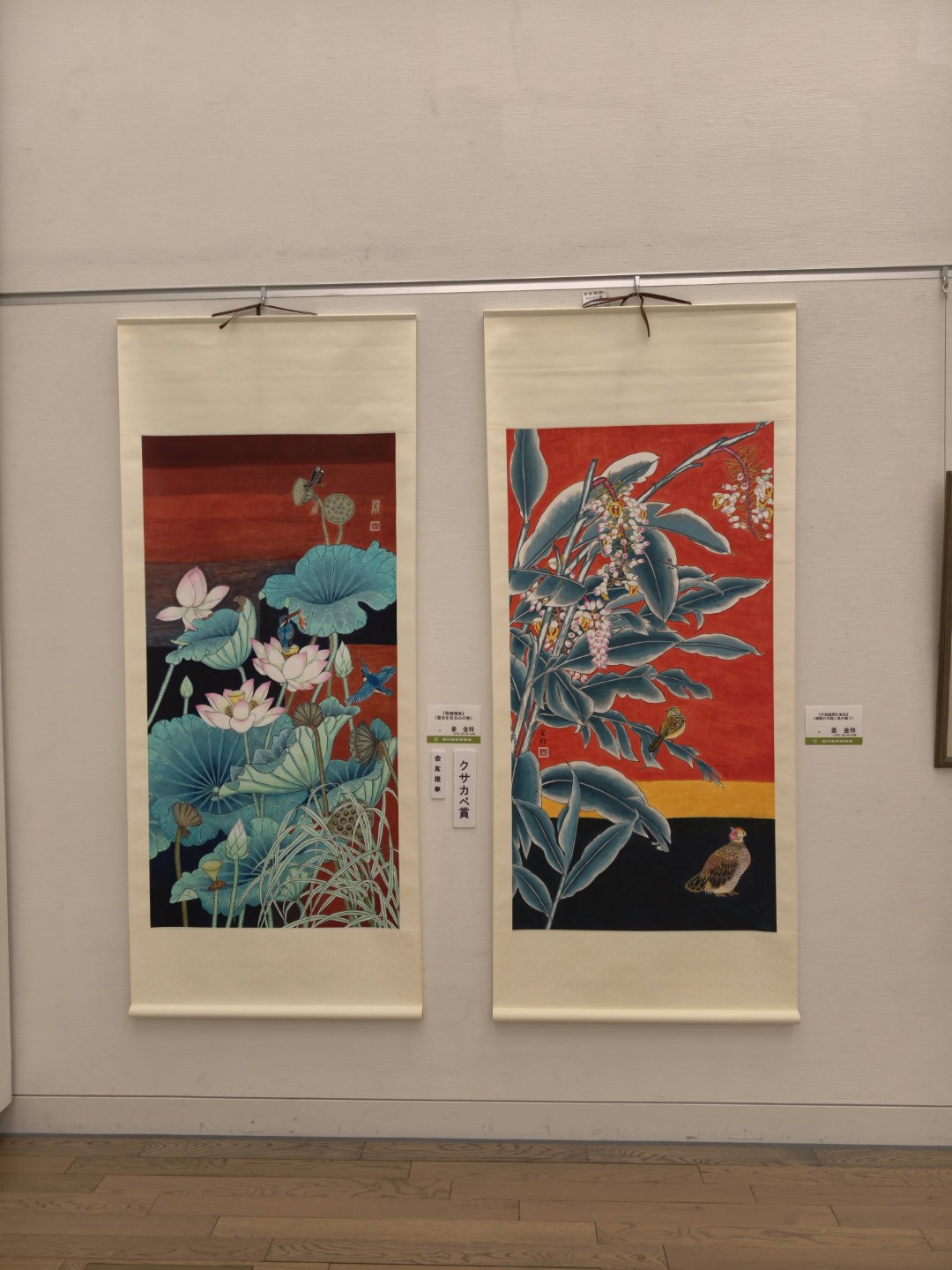
The two works by Jiang Jinling discussed here—Emotional Journey in the Lotus Pond and Shell Ginger in Full Bloom Attracts Birds—may be regarded as a mutually resonant dual structure. The former emphasizes emotion, journey, intimate relationship, and inner refuge; the latter emphasizes botanical abundance, the attraction of birds, natural expansion, and the outward release of a life field. Shell Ginger in Full Bloom Attracts Birds displays the storm of nature itself, while Emotional Journey in the Lotus Pond gently gathers that storm-like energy into the emotional experience of human individuals.
This dual-work structure is quite important. If one looks only at Shell Ginger in Full Bloom Attracts Birds, one sees how Jiang Jinling treats subtropical plants as high-intensity life events: shell ginger is no longer merely a plant, but seems like a natural will expanding outward. If one looks only at Emotional Journey in the Lotus Pond, one sees how nature becomes a refuge for emotion and eros: the lotus pond is not a background, but a sensuous field that receives human intimacy.
The two works together constitute a visual system that moves from outside to inside, from nature to emotion, from botanical expansion to human leaning-together. Shell Ginger in Full Bloom Attracts Birds is an eruption of natural vitality, while Emotional Journey in the Lotus Pond is the gathering of vitality within emotional space; the former approaches a declaration of life itself, while the latter approaches a poetics of love and refuge. Precisely because of this, Jiang Jinling’s works cannot be simply classified as flower paintings, but should be understood as a contemporary color-ink practice in which “life ecology” and “emotional ecology” are interwoven.
III. Shell Ginger in Full Bloom Attracts Birds: The Expansive Life of Subtropical Plants
The title Shell Ginger in Full Bloom Attracts Birds itself possesses narrativity and dynamism. “Shell ginger in full bloom” points to vegetal flourishing and the state of flowers blooming at their peak; “attracts birds” suggests that the plant is not merely a static existence, but has the ability to attract, summon, and draw others toward it. In other words, shell ginger is not an isolated plant, but the center of an entire ecological relationship.
In Shell Ginger in Full Bloom Attracts Birds, Jiang Jinling abandons the restraint of traditional ink wash, adopts impasto textures with Fauvist qualities, and uses highly saturated colors such as burning magenta, dazzling gold, and deep Prussian blue to completely shatter the inherent colors of plants. This shows that she does not seek botanically accurate representation, but presents the internal intensity of plant life through subjective color.
Shell ginger has distinctive local and sensory characteristics within Taiwan’s subtropical environment. Its leaves are broad, its inflorescences full, and it is often associated with humid heat, forest margins, folk uses of plants, and island experiences of nature. Jiang Jinling does not treat shell ginger as a symbol of local color, but further transforms it into a life force with subjectivity. The shell ginger in the work seems to stretch outward, swell, glow, and even possess an almost aggressive will to grow.
This gives Shell Ginger in Full Bloom Attracts Birds a strong subtropical quality. The subtropical here is not tourist-like scenery, nor folkloric local color, but a humid, intense, and difficult-to-rationally-frame state of life. Through color and texture, Jiang Jinling makes viewers feel that nature does not meekly wait to be viewed, but actively grows outward, attracts, surrounds, and transforms the viewer.
IV. Impasto and Heavy Color: Medium as the Surface of Life Force
One of the most recognizable features of Jiang Jinling’s work is its heavy and high-energy chromatic surface. Her paintings possess qualities of “impasto” and “the subjective liberation of color”; the image is formed through large brushstrokes and layers of intense pigment, making the canvas or paper surface itself become an organism undergoing a thermodynamic reaction.
Impasto here is not merely a technique, but part of the meaning of the work. When pigment is no longer merely a thin covering on the surface, but forms physical thickness through layering, squeezing, covering, and collision, the image acquires an almost bodily presence. Viewers not only “see” color, but also sense its weight, temperature, and tactility.
This material treatment is highly consistent with Jiang Jinling’s theme. If what she wants to express is the expansion of plant life and sensuous eruption, then thin, transparent, restrained material treatment is insufficient to carry this force. Impasto makes plants no longer images being depicted, but as if they were growing out of the surface of the picture. Color is not merely a visual effect, but becomes a trace of life impulse.
Therefore, Jiang Jinling’s impasto heavy color may be understood as a “materialized vitality.” It transforms invisible growth, desire, attraction, reproduction, and energy into visible, sensible, almost touchable surfaces. This is precisely what distinguishes her work from traditional bird-and-flower painting: traditional bird-and-flower painting often expresses vital resonance through line and void, while Jiang Jinling expresses the heat of life through the thickness of pigment and the collision of color.
V. Fauvist Color and Subjective Nature
The colors in Jiang Jinling’s work are not naturalistic. She does not depict shell ginger or lotus ponds according to their inherent colors, but uses highly subjective, highly saturated, and strongly contrasting colors to transform nature from recognizable objects into fields of emotion and energy. The magenta, gold, and Prussian blue in Shell Ginger in Full Bloom Attracts Birds completely shatter the inherent colors of plants and present a liberation of color close to Fauvism.
The core of Fauvist color does not lie in brightness itself, but in the fact that color no longer obeys natural representation, but obeys the artist’s feeling and inner intensity. Jiang Jinling’s color has precisely this quality. She does not ask, “What color is shell ginger originally?” but asks, “How should the inner vitality of shell ginger be seen?” Thus, color becomes the language of vitality rather than the outer garment of objects.
This subjective view of nature gives Jiang Jinling’s plants strong emotionality. Shell ginger is not merely shell ginger, but seems like the burning of life itself; the lotus pond is not merely water, flowers, and leaves, but a field where emotion, memory, and bodily sensation are interwoven. Color here is no longer subordinate to form, but co-generates the spiritual state of the work together with form.
Therefore, Jiang Jinling’s work may be regarded as a kind of “emotionalized nature.” Nature is not calmly observed, but felt by the body; it is not rationally classified, but reignited through color.
VI. Spinozist Conatus: Nature Is Not Background, but Subject
We may understand Jiang Jinling’s work through Spinoza’s “conatus,” pointing out that her highly saturated colors are a visual proof of the inner life impulse of all things. This theoretical perspective helps explain the subjectivity of nature in Jiang Jinling’s work.
Conatus may be briefly understood as the internal force by which every being maintains itself, expands itself, and continues to exist. If viewed from this perspective, the shell ginger in Shell Ginger in Full Bloom Attracts Birds is not a passive plant, but a life subject displaying the intensity of its own existence. It blooms, extends, attracts birds, and transforms the surrounding space into part of its own life field.
This also explains why the plants in the work carry a certain oppressive quality. Viewers do not observe the plants from a safe distance, but seem to be surrounded by their color, leaves, flowers, and energy. Nature is no longer scenery under the human gaze, but an existence with a reverse gaze and active generative capacity.
Here, Jiang Jinling overturns the human-centered perspective commonly found in traditional nature painting. The nature she paints is not an object waiting for human interpretation, but a force of self-expansion, self-affirmation, and self-manifestation. This view of nature also resonates with contemporary ecological consciousness: human beings no longer occupy the center of the world, but must re-sense the shared web of life composed of plants, animals, climate, and environment.
VII. Emotional Journey in the Lotus Pond: From Natural Storm to Emotional Refuge
Compared with the outward release and expansion of Shell Ginger in Full Bloom Attracts Birds, Emotional Journey in the Lotus Pond leans more toward inwardness, emotion, and refuge. The “lotus pond” in the title points to water, plants, and natural space; “emotional journey” gives the work meanings of journey, emotion, companionship, and psychological movement—namely, “a spiritual journey through the lotus pond”—showing that the work does not simply depict the scenery of a lotus pond, but transforms the lotus pond into a space of emotional and spiritual journey.
In Emotional Journey in the Lotus Pond, nature is no longer merely an eruption of vitality, but becomes a place where human emotion can be temporarily placed. A pair of extremely small lovers lean together among lotus flowers as vast as a supernova explosion and deep blue water waves; this imbalance of scale makes human individuals appear small, yet precisely because of this smallness, their gesture of leaning together becomes more meaningful.
The lotus pond here is not an otherworldly symbol in traditional literati painting, nor simply an image of purity. It is more like a maternal space that enfolds emotion and receives body and memory. The lovers in the lotus pond do not look at nature, but are surrounded by nature; they do not stand above nature, but merge into it. This gives Emotional Journey in the Lotus Pond an obvious quality of erotic ecology: love is not an isolated interpersonal event, but occurs within a living environment jointly constituted by water, flowers, leaves, color, and space.
VIII. The Transformation of the Lotus-Pond Image: From Symbol of Purity to Erotic Ecology
The lotus has a deep tradition in East Asian art and is often regarded as a symbol of purity, emerging unstained from the mud, elegance, Chan/Zen meaning, and literati character. However, Jiang Jinling does not repeat this traditional interpretation. Her lotus pond is not calm, distant, or otherworldly, but full of color, texture, eros, and bodily sensation.
This transformation is highly significant. Traditional lotus images often emphasize “purity” and “distance,” with the artist and viewer maintaining a spiritually detached distance; Jiang Jinling’s lotus pond emphasizes “nearness” and “entry,” as if the viewer were brought into intense color and water waves. The lotus is no longer merely a moral symbol, but becomes part of sensuous life.
In Emotional Journey in the Lotus Pond, Jiang Jinling blurs the contour lines between the lovers and the surrounding lotus pond, presenting the dissolution of self-boundaries and allowing eros to transcend worldly calculation and enter a state of fusion with the cosmic maternal body. This may be understood as Jiang Jinling’s contemporary rewriting of the lotus tradition: purity is not produced by leaving the human world behind, but is regenerated within the most intense experiences of life.
Therefore, Emotional Journey in the Lotus Pond is not an otherworldly lotus pond, but a worldly one; it does not reject the body, but lets body, emotion, and nature penetrate one another. Jiang Jinling shifts the lotus pond from literati appreciation toward sensuous refuge, and from moral symbol toward a community of life.
IX. The Image of Lovers: The Proportional Dialectic between Tiny Figures and Vast Nature
If there is a pair of lovers in Emotional Journey in the Lotus Pond, their importance lies not in narrative plot, but in proportional relationship. In the image, the lovers are extremely small, leaning together among enormous lotus flowers and deep blue water waves, forming a strong imbalance of scale.
This imbalance of scale means that human beings are no longer the dominant center of the picture. Traditional figure painting or narrative painting often takes figures as the visual focus, with nature becoming the background; but in Jiang Jinling’s work, nature is vast and human beings are small. This does not belittle people, but readjusts the relationship between humans and nature. Human emotion does not exist apart from the environment, but finds a brief and precious place within a vast field of life.
The leaning-together posture of the lovers makes love in the work not merely a personal emotion, but a mode of existence. When two tiny figures are placed within a vast natural color field, their mutual dependence carries the meaning of resisting isolation. Similar to the emotional anchor of mandarin ducks in Tsai Mei-Fang’s Lingering Wisteria, Jiang Jinling’s lovers also symbolize closeness between lives; however, the atmosphere differs. Tsai Mei-Fang confirms attachment within a cosmic storm, while Jiang Jinling allows eros and life to merge within an intense natural maternal body.
Therefore, the figures in Emotional Journey in the Lotus Pond are not narrative protagonists, but condensations of emotional density. They make the entire lotus pond no longer merely a botanical space, but a place capable of containing love, body, and spiritual journey.
X. Color as the Language of Eros
Jiang Jinling’s color in Emotional Journey in the Lotus Pond is not only natural color, but also a language of eros. If the color of Shell Ginger in Full Bloom Attracts Birds tends toward expansion, burning, and summoning, then the color of Emotional Journey in the Lotus Pond tends more toward enveloping, penetration, and fusion. Purple-red, deep blue, ink tones, and bright leaves together form a color field between dream and bodily sensation.
Eros here is not expressed as a concrete plot, but is transformed into spatial atmosphere. The intensity of color makes the lotus pond no longer transparent; the deep blue of the water waves gives emotion depth; the expansion of flowers and leaves surrounds the figures with nature. What the viewer feels is not an external event, but the spread of emotion within space.
This treatment allows Emotional Journey in the Lotus Pond to avoid straightforward narration. Jiang Jinling does not need to depict a clear story in order for viewers to sense intimacy, leaning together, immersion, and refuge. She replaces narrative with color and psychological description with color fields, making eros the sensory structure of the entire image.
XI. Dissolving Boundaries: The Mutual Penetration of Figures, Plants, and Water
The most noteworthy aspect of Emotional Journey in the Lotus Pond is the dissolution of boundaries. The artist blurs the contour lines between the lovers and the surrounding lotus pond; the deep blue water waves and magenta lotus halos seem to invade the bodies of the figures, loosening the boundaries of the self.
This dissolution of boundaries is an important aesthetic feature of Jiang Jinling’s work. She does not keep figures and background clearly separate, but lets figures, plants, water, and color mutually penetrate one another. This means that the individual is not closed, but co-generated with environment, emotion, and nature.
In contemporary society, individuals are often cut into isolated units by institutions, technology, and social division of labor; Jiang Jinling’s image proposes another imagination of life: human beings need no longer oppose nature, nor must love be regarded as a purely private event, but may regain wholeness through fusion with the environment.
Therefore, the dissolution of boundaries in Emotional Journey in the Lotus Pond is not merely formal blurring, but the core of the work’s thought. It makes human beings and nature no longer relate as subject and object, but jointly participate in an emotional ecological field.
XII. Difference from the Traditional Literati Lotus
If Jiang Jinling’s lotus pond is compared with the traditional literati lotus, the difference becomes very clear. Traditional literati lotus paintings often value restraint of line, elegant ink tones, voids, and spiritual character; the image usually pursues a plain, distant, and transcendental beauty. Jiang Jinling proceeds in exactly the opposite direction. Her lotus pond is not plain, but intense; not distant, but immersive; not focused on transcendence, but on entering the world; not pursuing self-purification, but the fusion of emotion and life.
Comparing the traditional literati lotus with Jiang Jinling’s modern color ink, the former tends toward raw xuan paper and voids, otherworldly Chan contemplation, and study-room seclusion, while the latter tends toward processed xuan or mixed-media impasto, Spinozist conatus, and sensuous breakthrough within the liquid space of Roppongi.
This difference shows that Jiang Jinling is not continuing the lotus subject, but re-embodying and contemporizing the lotus. She makes the lotus no longer belong only to the spiritual fastidiousness of literati, but return to a mixed state of mud, water, body, eros, and color. She reminds viewers that true life does not lie in distancing itself from muddiness, but in being able to absorb nutrients from muddiness and bloom.
This perspective gives Jiang Jinling’s work strong contemporary significance. She does not deny tradition, but refuses to be restricted by its paradigm of elegance. She makes the lotus moist, passionate, worldly, and alive once again.
XIII. Relationship with Taiwan’s Subtropical Experience
The strong plant quality and sense of color in Jiang Jinling’s work may also be understood within Taiwan’s subtropical environment. Taiwan’s climate is humid and its vegetation abundant; mountains, forests, rivers, wetlands, and rural margins are often full of dense natural life. This environmental experience differs from dry, cold, or highly artificial natural landscapes, and also differs from the seasonal restraint, mono no aware, and yūgen often emphasized in traditional Japanese aesthetics.
Through intense color and heavy texture, Jiang Jinling brings the humid heat, density, and sense of growth of Taiwan’s subtropical nature into The National Art Center, Tokyo, in Roppongi. This is not a simple display of “Taiwanese scenery,” but the transformation of a life feeling derived from an island environment into contemporary artistic language.
When translating Jiang Jinling’s Shell Ginger in Full Bloom Attracts Birds, Japanese viewers should be made to feel that this Fauvist color differs from the sentimental and passive aesthetics of decay associated with traditional Japanese mono no aware, and is instead a subtropical energy with expansiveness and aggressiveness.
This point is very important. Nature in Jiang Jinling’s work is not sorrowful, nor does it take withering as beauty; it is blooming, expanding, attracting, surrounding, and burning. This view of nature allows Taiwanese art to present a clear difference within the Japanese exhibition site: it is not viewed as exoticism, but encounters Japanese viewers through intense vitality and sensory energy.
XIV. Relationship with the Field of The National Art Center, Tokyo: A Riot of Color in the White Cube
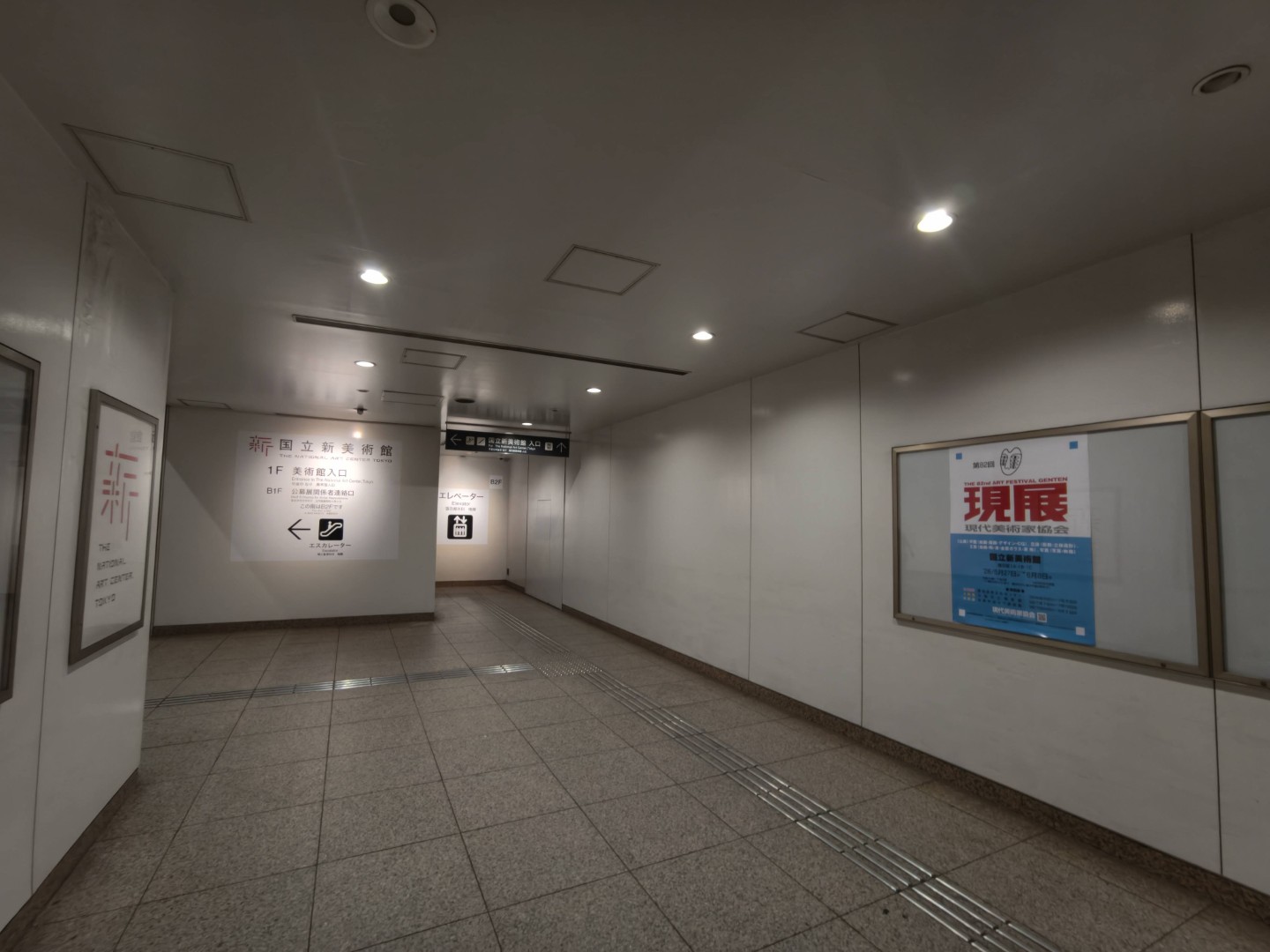
As the main venue of the 82nd Genten Exhibition, The National Art Center, Tokyo, possesses large-scale exhibition spaces, a modern architectural scale, and the characteristics of the white cube. The museum has no permanent collection and takes large-scale exhibition spaces, diverse exhibitions, and public access to art information as its primary functions. In such a field, the color and texture of Jiang Jinling’s works inevitably produce strong spatial effects.
The white-cube exhibition space is often regarded as neutral, rational, and decontextualized; Jiang Jinling’s images, however, are full of humidity, heat, plant life, and bodily sensation. When her Emotional Journey in the Lotus Pond and Shell Ginger in Full Bloom Attracts Birds enter The National Art Center, Tokyo, in Roppongi, the works themselves seem like a surge of subtropical life energy breaking into the calm space of the modern exhibition system.
This contrast strengthens the presence of the works. Standing before the white walls of a modern art museum, viewers are not merely looking at a plant painting, but encountering a chromatic life that is difficult for the white cube to fully domesticate. Jiang Jinling’s images seem to refuse to hang quietly on the wall; instead, they spread outward, attempting to reoccupy the viewing space through color and texture.
Therefore, a dialectical relationship forms between Jiang Jinling’s works and the field of The National Art Center, Tokyo: the museum provides institutionality and publicness, while the works challenge the rational order of space through sensuous color. This is precisely her importance within this Taiwanese portrait—she makes Taiwanese art not only incorporated into the Japanese exhibition site, but also emit a powerful sensory voice within it.
XV. Relationship with Hanging-Scroll Display: The Expansion of Life on a Flexible Support
Many Taiwanese participating works in this exhibition are displayed in hanging-scroll form, and Jiang Jinling’s works may also be reunderstood in this context. The hanging scroll has flexibility, verticality, and mobility; it originates in East Asian calligraphy and painting traditions and also responds to the practical needs of transnational transportation and the display of large-scale works.
If Jiang Jinling’s color and impasto are placed within the hanging-scroll format, they produce a special tension. The hanging scroll itself is a soft, storable, and pendant support; Jiang Jinling’s images, however, are full of swelling, expansion, and chromatic weight. The contrast between flexible support and intense content makes the work seem to carry excessive vitality within a light form.
This contrast also makes the viewing experience more dynamic. When facing a hanging scroll, the viewer’s gaze naturally moves vertically; Jiang Jinling’s plants and colors, however, continually expand outward in all directions, forming a pull between vertical viewing and horizontal spreading. This pull corresponds very closely to the life theme of her work: plants are not restricted by boundaries, and color refuses to be framed, but continues to grow within the flexible space of the hanging scroll.
XVI. Feminine Sensibility and the Biopolitics of Jiang Jinling’s Work
The sensuous force in Jiang Jinling’s work may also be understood through the bodily perspective of a woman creator. What is meant here by feminine sensibility is not to reduce the work to gender essence, but to point out that her treatment of plants, emotion, body, and spaces of refuge carries a biopolitics different from cold rationality or heroic narrative.
Her works do not aim to conquer nature, nor to control the image through abstract order, but allow nature and emotion to expand together. She does not exclude eros from art, nor suppress color into pure form; rather, she lets eros, plants, color, and bodily sensation jointly form the center of the work. This creative method gives her work a certain resistance: it resists the suppression of body, sensibility, and nature in modern society.
The leaning-together lovers in Emotional Journey in the Lotus Pond and the botanical summoning in Shell Ginger in Full Bloom Attracts Birds both point toward a relational view of life. Life is not an isolated unit, but exists through attraction, closeness, refuge, penetration, and symbiosis. This relationality is the deepest ethical meaning of Jiang Jinling’s work.
XVII. Professional Critical Perspective: The Fourfold Value of Jiang Jinling’s Work
In summary, Jiang Jinling’s Emotional Journey in the Lotus Pond and Shell Ginger in Full Bloom Attracts Birds possess the following fourfold value in this special report.
First, Material Value
Through impasto, heavy color, and highly saturated color, Jiang Jinling breaks through the restrained aesthetics of traditional bird-and-flower painting and literati lotus imagery. She makes pigment thickness, brushstroke traces, and color conflict become visible forms of vitality.
Second, Botanical Value
Shell ginger and the lotus pond are no longer natural backgrounds in her painting, but life fields with subjectivity. Plants are not merely viewed, but bloom, attract, surround, and transform the viewer.
Third, Emotional Value
Emotional Journey in the Lotus Pond transforms nature into a refuge of eros and emotion. The lovers lean together within the vast lotus pond, making love no longer merely an interpersonal event, but a life relationship occurring within natural ecology.
Fourth, Cross-Cultural Value
Jiang Jinling brings the humid heat, abundance, and chromatic energy of Taiwan’s subtropical environment into the field of Japan’s Genten Exhibition, forming a difference from the more restrained and sentimental view of nature in traditional Japanese aesthetics. This gives her work clear recognizability within Taiwan–Japan art exchange.
XVIII. Chapter Summary: Rebuilding a Community of Life through Intense Color
Jiang Jinling’s Emotional Journey in the Lotus Pond and Shell Ginger in Full Bloom Attracts Birds are not simply works with natural subjects, but use subtropical plants as an entry point to reconstruct the relationships among nature, body, emotion, and life impulse. Shell Ginger in Full Bloom Attracts Birds displays nature’s power of outward expansion, self-affirmation, and summoning others; Emotional Journey in the Lotus Pond transforms this power into a space of eros, refuge, and emotional fusion.
Her works resist overly rationalized viewing through impasto and heavy color, release repressed sensuous life through highly saturated color, and reaffirm the mutual dependence between lives through the dissolution of boundaries between plants and figures. Different from Tsai Mei-Fang’s dynamic sublimity and Liau Chun-Yi’s psychological suspension, Jiang Jinling brings an artistic language that is intense, humid, burning, and ecological.
Within the portraits of Taiwanese artists in the 82nd Genten Exhibition, Jiang Jinling’s importance lies in the fact that she allows the subtropical vitality of Taiwanese contemporary art to enter a national-level exhibition venue in Roppongi, Tokyo, with an undeniable intensity of color. Her works remind viewers that life is not always calm, elegant, rational, or controllable; life may also be blooming, spreading, attracting, immersing, and fusing. True artistic power often comes precisely from this sensuous excess that cannot be fully domesticated.