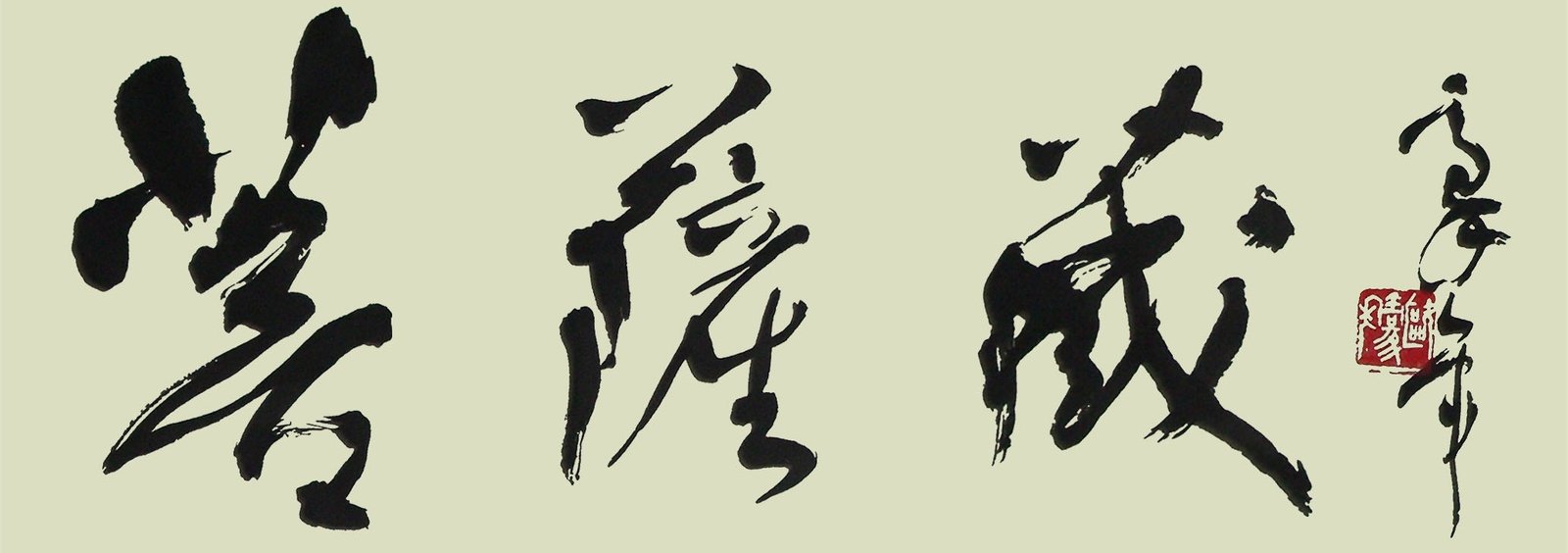
WANG CHUAN FU
Ink-Wash Void, Phenomenological Reduction, and Spiritual Clarity in One Thought of Bodhi Opens the Verdant Mist
I. The Artist’s Position: A Contemplative Viewer in an Age of Visual Overload
Among the portraits of Taiwanese artists in the 82nd Japan “Genten” Exhibition, Wang Chuan Fu’s work offers a mode of viewing that is extremely quiet yet deeply powerful. If Tsai Mei-Fang’s Lingering Wisteria responds to natural sublimity through color-ink storms, Liau Chun-Yi’s Unfinished・Floating Realm presents modern psychological suspension through weightless flowers, Jiang Jinling releases subtropical life force through Emotional Journey in the Lotus Pond and Shell Ginger in Full Bloom Attracts Birds, and Chen Fu-Chi translates Zhuangzi’s proposition into digital simulacra through The Pleasure of Fish, then Wang Chuan Fu’s One Thought of Bodhi Opens the Verdant Mist represents a completely different artistic path: through ink wash, voids, small birds, and concise composition, he establishes a spiritual pause within the noisy contemporary exhibition site.
Wang Chuan Fu’s expressive ink-wash work appears, in the exhibition field of the 82nd Genten Exhibition filled with strong visual impact and diverse media, like a crisp rest note; through an extreme visual subtraction, it approaches the essence of existence. His One Thought of Bodhi Opens the Verdant Mist especially uses splashed ink, voids, and bird imagery to provide viewers with a spiritual anchor that transcends time and rests in the present moment.
Therefore, Wang Chuan Fu’s position in this special topic is not to compete for visual attention through intense color or new-media language, but rather to oppose “more” with “less,” “agitation” with “stillness,” and “fullness” with “emptiness.” His work reminds us that the power of contemporary art does not necessarily come from the expansion of media and the increase of visual stimulation; it may also come from restraint of the desire to view and the slow summoning of spiritual depth.
II. The Titular Structure of One Thought of Bodhi Opens the Verdant Mist: Time, Awakening, and Mountain Atmosphere
The title One Thought of Bodhi Opens the Verdant Mist possesses a high degree of poetic and philosophical quality. “One thought” refers to an extremely brief instant of mind, and may also be understood as the smallest unit of consciousness arising, turning, or becoming aware; “bodhi” means awakening, awareness, or enlightenment; “opens the verdant mist” brings into the title the realms of mountain forest, greenness, cloud vapor, and subtle depth. The entire title does not describe an external landscape, but combines psychology, Buddhist thought, and natural imagery into a spiritual event.
If the title is broken down, “one thought” is temporal; “bodhi” is spiritual; and “verdant mist” is spatial and natural. The intersection of the three means that the work does not merely depict mountain forests and birds, but depicts an instant in which a thought opens awakening within nature and emptiness.
This title also suggests the way the work should be viewed. Viewers should not understand the picture as an ordinary landscape, bird-and-flower painting, or bird study, but should regard it as a spiritual process: from chaos to clarity, from flow to resting, from external scenery to inner awareness. The small bird in the work pierces through anxiety within “one thought,” fully accords with the present moment, and becomes a spiritual anchor for modern viewers to rest in the now.
Therefore, the title One Thought of Bodhi Opens the Verdant Mist has already set an important direction: the work is not concerned with natural objects themselves, but with whether viewers can enter a clearer, more stable, and more awakened state of viewing through natural imagery.
III. The Contemporaneity of Expressive Ink Wash: Not Retro, but Subtraction
Wang Chuan Fu’s use of expressive ink wash easily calls to mind traditional literati painting or classical landscape and bird-and-flower painting. However, his work is not simply retro, nor does it use traditional form to oppose the contemporary. Instead, it allows the voids, ink tones, brush momentum, and spirituality within ink wash to respond anew to the visual fatigue and psychological anxiety of modern people.
Contemporary society is a highly visualized society. Screens, images, advertisements, social platforms, and short videos continually increase the intensity of visual stimulation, and viewers’ attention is rapidly consumed. Art exhibition sites often face similar problems: works become larger and larger, colors more and more intense, media increasingly complex, and viewing sometimes no longer remains contemplation but becomes sensory competition.
Against this background, Wang Chuan Fu’s choice of the “subtraction” of ink wash has contemporary critical significance. He does not occupy the retina with full-field color, nor does he pile up information through complex images; instead, he allows the picture to retain blankness, breathing, and pause. His work is connected to Husserl’s “phenomenological reduction,” indicating that he brackets color and worldly noise and guides viewers to look directly at the truth of things.
This “subtraction” is not simplification, nor impoverishment, but an active choice. Wang Chuan Fu removes unnecessary visual noise and allows ink, white, bird, and vital resonance to become the core elements of the work. This subtraction gives the work a counter-force within the contemporary exhibition site: it does not follow the logic of visual overload, but asks viewers to slow down and learn to view again.
IV. The Topology of the Void: Emptiness Is Not Absence, but an Energy Field
One of the most important formal languages in One Thought of Bodhi Opens the Verdant Mist is the void. The void has a long tradition in East Asian ink wash, but in Wang Chuan Fu’s work, it is not a formal habit; it is the core of the work’s spirituality.
In Western classical painting, the canvas is often understood as a space that needs to be filled; too much blankness may be regarded as unfinished. In East Asian ink wash, however, white is not merely absence, but cloud vapor, water vapor, time, light, emptiness, and imaginative space. Wang Chuan Fu’s use of voids breaks the obsession with “fear of empty space” in Western classical painting, making the paper surface untouched by brush and ink become a “nothingness” full of life potential.
This point is especially important for One Thought of Bodhi Opens the Verdant Mist. The void in the picture is not a background, but part of the subject. Where ink is present, it provides form; where the void is present, it provides qi. Ink is visible; white is invisible yet sensible. In the white, viewers sense air, distance, silence, and the unfolding of mind.
Therefore, the void may be understood as a kind of topological space. It is not a flat “nothing,” but a field that allows the various elements to enter into relationship. The bird appears solitary yet settled because of the void; ink gains flow and weight because of the void; viewers also gain a spiritual space for entering the work because of the void.
Wang Chuan Fu’s void reminds us that art does not need to fill everything. Truly profound viewing sometimes comes precisely from what has not been fully spoken, not fully painted, and not fully occupied.
V. Splashed Ink and Chaos: Another Presentation of Natural Force
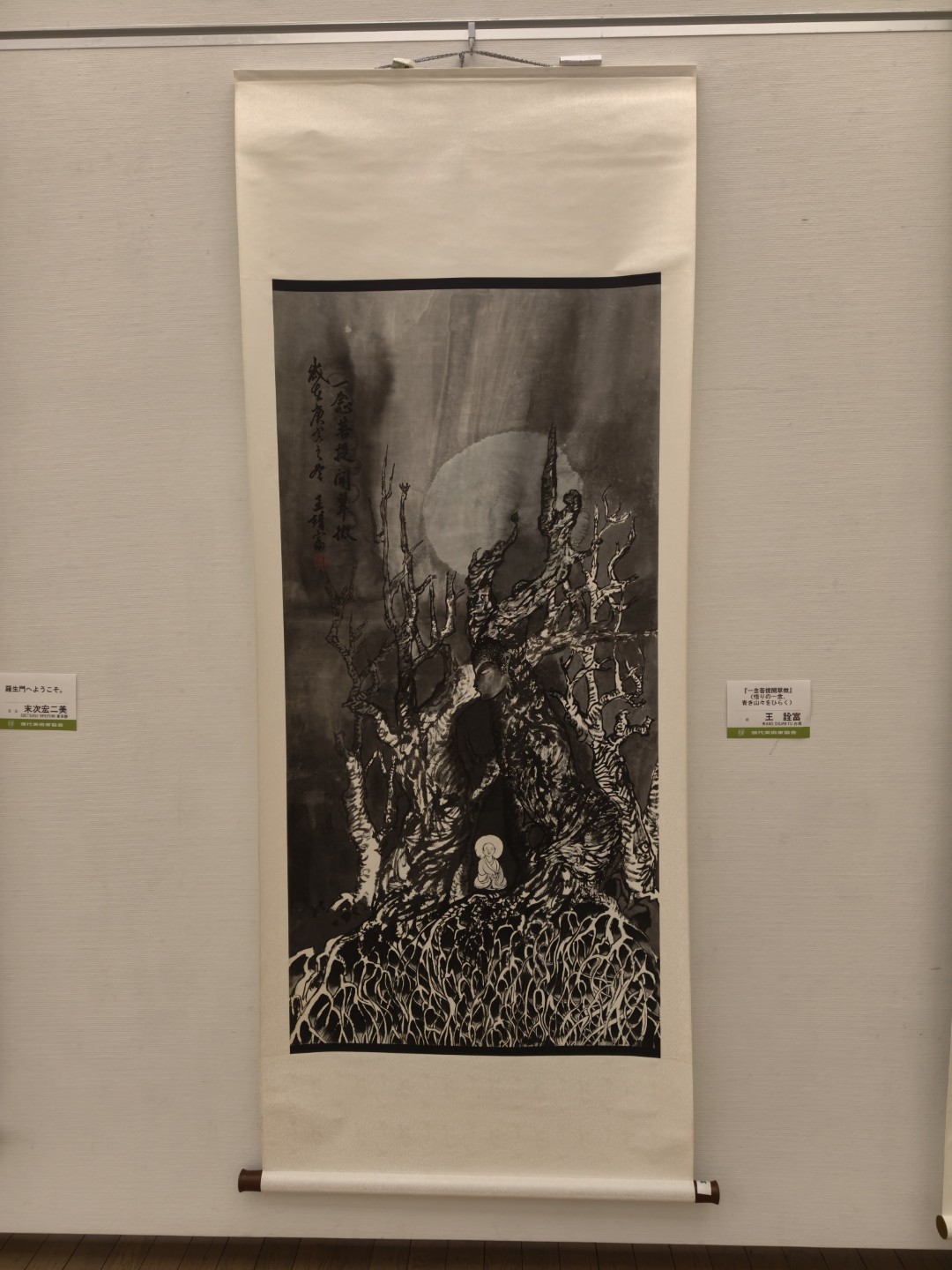
Although Wang Chuan Fu’s work as a whole gives an impression of quietness, One Thought of Bodhi Opens the Verdant Mist is not completely peaceful. The picture still contains splashed ink, broken ink, or relatively heavy ink blocks, forming a sense of primordial chaos. In this work, wild splashed ink and broken ink appear on the left side or lower part of the picture, surging like giant waves, resembling the primordial chaos of the universe or the unpredictable torrent of fate in modern society.
This prevents the work from falling into mere elegance. Wang Chuan Fu does not depict a completely carefree world, but establishes stillness at the edge of chaos. The tension between dense ink and void allows the picture to contain both unease and resting; splashed ink provides movement, birds provide fixed points; ink represents the uncontrollable external world, while the bird and one thought represent the awareness found by the subject within it.
This structure gives the work profound modernity. The condition of contemporary people is not completely stable, but involves facing information torrents, social changes, emotional uncertainty, and existential anxiety. Wang Chuan Fu does not deny these forms of chaos, but transforms them into the surging of ink. The real focus is not to eliminate chaos, but to find one thought of clarity at the edge of chaos.
Therefore, the splashed ink in One Thought of Bodhi Opens the Verdant Mist is not pure technique, nor decorative ink resonance, but a necessary part of the work’s spiritual dialectic. Without chaos, bodhi would lose its meaning; without dense ink, the void would not be so clear.
VI. Bird Imagery: The Spiritual Anchor of a Small Existence
In One Thought of Bodhi Opens the Verdant Mist, the small bird is the key to the picture. Wang Chuan Fu places a bird lowering its head in concentration at the edge of the chaotic sea of ink; this bird is small yet clear, becoming a spiritual anchor for the modern wanderer to rest in the present moment.
Birds in East Asian painting often have multiple meanings. They may be natural lives, seasonal markers, or symbols of solitude, leisure, freedom, or contemplation. The bird under Wang Chuan Fu’s brush is not a bird in flight, but a bird lowering its head, concentrating, and resting in one place. This posture is extremely important: it is not escape, but staying; not intense action, but inner settling.
Compositionally, the smallness of the bird creates a proportional difference with the large voids and dense ink. It seems like a small life cast into a vast world, yet it does not appear frightened. On the contrary, its head-lowered posture presents a kind of self-sufficiency and awareness. This makes it not merely a natural object, but a projection of the human subject.
When viewers see this bird, they also see themselves: small, finite, and fragile within a vast world, yet still able to find a place to rest through one thought of awareness. This is precisely the most moving aspect of Wang Chuan Fu’s work. He does not comfort viewers with grand narrative, but uses a small bird to suggest that true stability may come from the smallest turning of thought.
VII. Phenomenological Reduction: Bringing Viewing Back to the Things Themselves
We use Husserl’s “phenomenological reduction” to understand Wang Chuan Fu’s work, pointing out that through chromatic subtraction and the void, he allows viewers to bracket worldly noise and look directly at the truth of things.
If this perspective is applied to One Thought of Bodhi Opens the Verdant Mist, one may say that Wang Chuan Fu’s image carries out a visual reduction. Reduction here does not mean making things simple, but temporarily setting aside external attachments, allowing things to appear in a more primordial manner.
In the work, mountain forest, bird, air, ink tone, and paper surface are all highly simplified. Viewers do not see complex scenery, nor are they distracted by narrative details, but directly face several basic elements: ink, white, bird, and qi. These elements appear simple, yet are sufficient to establish a complete spiritual field.
This reduction also requires viewers to change their mode of viewing. When facing intense colors or narrative works, viewers often enter the work through identifying images and interpreting stories; when facing Wang Chuan Fu, however, viewers must enter a slower, more meditative mode of viewing. They must feel the breathing of ink, the depth of white, the pause of the bird, and the quietness of the overall space.
Therefore, Wang Chuan Fu’s work does not merely paint stillness, but trains viewers to enter stillness. This is precisely where its artistic value lies.
VIII. “One Thought” as the Smallest Turning of Time
In One Thought of Bodhi Opens the Verdant Mist, “one thought” is the most central concept of time in the work. One thought is extremely brief, yet it can change the entire spiritual direction. It is not a description of the result of long cultivation, but the instant in which awareness occurs.
Wang Chuan Fu expresses one thought through ink wash not by painting a concrete event, but by establishing a sense of instantaneous concentration. The bird in the picture lowers its head in concentration, dense ink pauses at the edge, and the void opens like qi; the entire image seems to pause at a threshold of imminent or already accomplished awakening.
This kind of time differs from narrative time. Narrative time has causes and consequences, development and conclusion; Wang Chuan Fu’s time is condensed, present, and internal. Within one thought, the disturbances of the past and anxieties about the future are temporarily set aside, leaving only awareness of the present.
This is also an important reminder the work offers to modern people. Modern life is often dominated by accelerated time: schedules, notifications, messages, efficiency, and anxiety constantly push us forward. Wang Chuan Fu uses “one thought” to pause time and bring viewers back to the present. Bodhi is not a distant other shore, but may occur between one thought.
IX. The Visualization of “Bodhi”: Awakening Is Not Religious Imagery, but a State of Viewing
The term “bodhi” carries Buddhist meaning, but Wang Chuan Fu does not express awakening through religious imagery or explicit symbols. There are no Buddha images, scriptures, or ritual implements in the picture, but only ink, white, and birds. This prevents “bodhi” from being concretized into a religious sign and transforms it into a state of viewing.
This is a mature treatment. If the work directly depicted religious symbols, viewers might quickly classify it as religious art; but Wang Chuan Fu allows bodhi to exist in the atmosphere, void, and settled quality of the picture, making awakening a state that can be felt but not fully spoken.
Here, bodhi is not an object being seen, but the transformation of viewing itself. When viewers slow down before the picture, when the gaze moves from dense ink into the void, and when the mind follows the bird and stops, the work opens its bodhi meaning within the process of viewing.
Therefore, One Thought of Bodhi Opens the Verdant Mist does not “paint awakening,” but “brings viewers close to a state of awakening.” This kind of work is not preaching, but guidance; not explanation, but opening.
X. The Natural Poetics of “Verdant Mist”: Mountain Atmosphere, Green Color, and a Realm of Subtle Depth
The “verdant mist” in the title allows the work to retain the atmosphere of landscape poetics. Verdant mist may refer to green mountain colors, faintness among mountains, or the deep realm where distant mountains and cloud vapor meet. It is not a clearly measurable geographical location, but a natural atmosphere between the visible and the invisible.
In the work, verdant mist may not necessarily be concretely depicted as green mountains and forests, but may be suggested through ink tone, void, and spatial resonance. This treatment is closer to the spirit of ink wash than directly painting mountains: mountains do not need to be fully visible; mountain atmosphere can emerge through the relationship between ink and white.
“Opening the verdant mist” also implies opening. One thought of bodhi opens verdant mist, or a clear mind reveals subtle mountain atmosphere. Nature here is not external scenery, but the result of mutual opening between mind-state and world. When the mind is clear, mountain color unfolds accordingly; when viewing becomes settled, the world again reveals its subtle depth.
This makes One Thought of Bodhi Opens the Verdant Mist possess both landscapeness and Chan/Zen meaning, but its landscapeness does not lie in the depiction of scenery, but in vital resonance and spatial feeling; its Chan/Zen meaning also does not lie in religious symbols, but in the transformation of mind.
XI. Relationship with Hanging-Scroll Display: Spiritual Descent in Vertical Viewing
Many Taiwanese participating works in this exhibition are displayed in hanging-scroll form, and Wang Chuan Fu’s ink-wash work is highly compatible with the hanging-scroll format. The verticality, flexibility, and East Asian calligraphy-and-painting tradition of the hanging scroll allow Taiwanese works to form a special spatial rhetoric within The National Art Center, Tokyo.
For One Thought of Bodhi Opens the Verdant Mist, the verticality of the hanging scroll strengthens its spiritual descent and the flow of vital resonance. The viewer’s gaze moves from top to bottom across the image, wandering among void, ink tone, and bird. This mode of viewing is not rapid scanning, but more like reading a passage of breath.
The hanging scroll also allows the work to avoid the sense of closure brought by a heavy frame. Wang Chuan Fu’s void needs to breathe, and ink tone needs to penetrate the surrounding space; the flexibility and paper-based feeling of the hanging scroll allow the work to better preserve the openness of East Asian ink wash. When it hangs on the white wall of a modern art museum, the work not only presents itself, but also resonates with the space.
Therefore, for Wang Chuan Fu, the hanging scroll is not merely a mounting format, but an extension of the work’s spirituality. It prevents ink wash from being fixed as a closed object, making it resemble a spiritual experience that can be unfolded, rolled up, moved, and unfolded again.
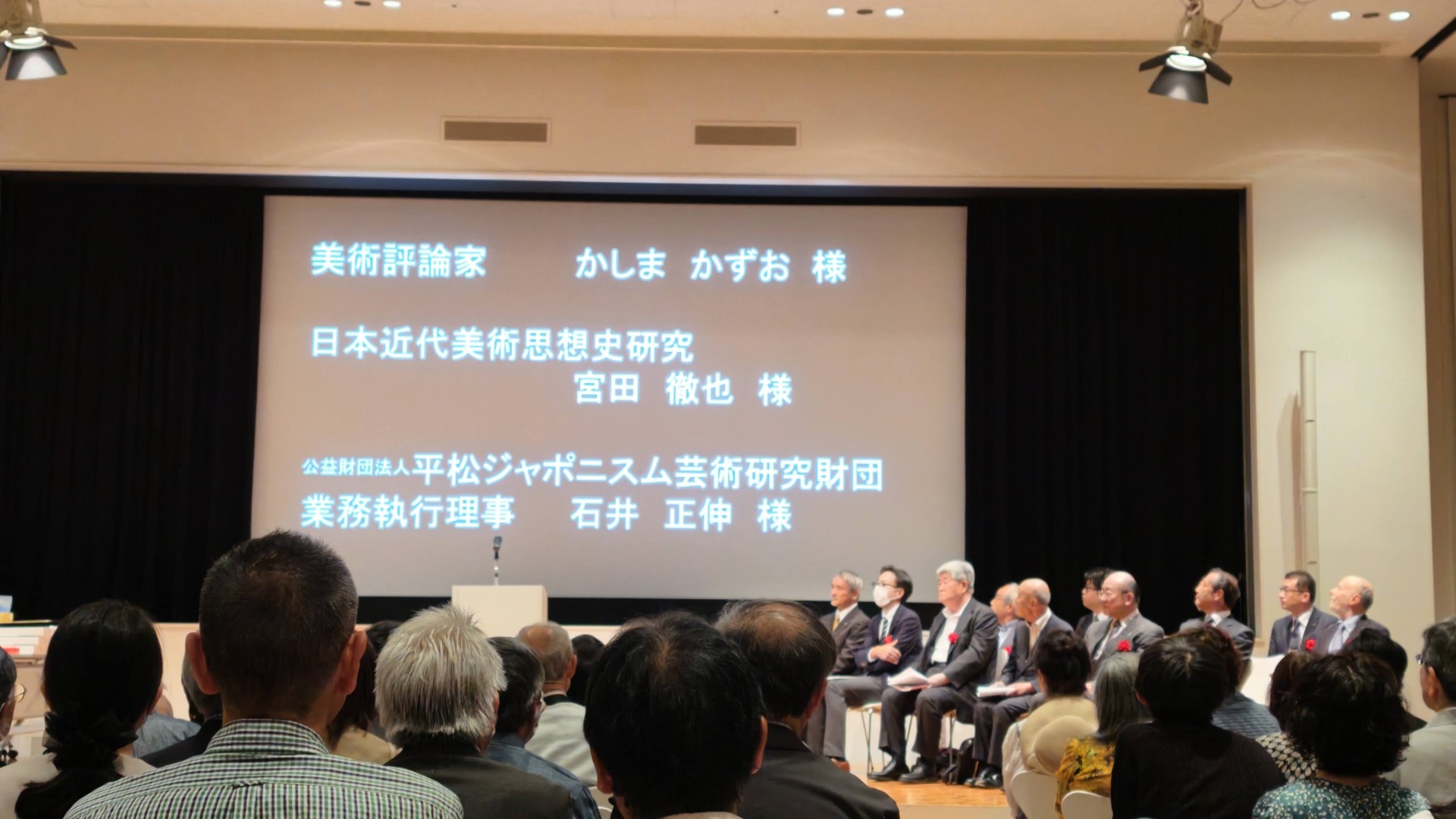
XII. Relationship with the Field of The National Art Center, Tokyo: Producing Quietness in a Large-Scale Public-Entry Exhibition
As the exhibition venue of the 82nd Genten Exhibition, The National Art Center, Tokyo, is characterized by large-scale exhibition spaces and the juxtaposition of diverse works. The museum has no permanent collection and takes large-scale exhibitions, diverse displays, and public access to art information as its main tasks.
Within such a vast public-entry exhibition environment, the quietness of Wang Chuan Fu’s work instead becomes a kind of force. Large public-entry exhibitions often include many works and complex media; viewers facing large amounts of visual information in a short time can easily become fatigued. One Thought of Bodhi Opens the Verdant Mist creates a point of pause for the exhibition site through voids and ink-wash subtraction.
This pause is not passive, but an active regulation of viewing. It allows viewers to shift from quick browsing to gazing, from external stimulation to inner feeling. If Jiang Jinling uses color to let the white-cube space be struck by subtropical vitality, and Chen Fu-Chi uses digital spectra to bring the exhibition site into posthuman perception, then Wang Chuan Fu uses ink-wash voids to open a quiet spiritual space within the exhibition site.
The function of this kind of work within the exhibition site is very precious. It proves that art does not have to win through volume; it can also establish intensity through silence.
XIII. Comparison with the Previous Artists: From Expansion to Contraction
Wang Chuan Fu’s work forms a clear contrast with the previous artists. Tsai Mei-Fang’s color ink possesses dynamic sublimity; Jiang Jinling’s heavy color possesses life expansion; Chen Fu-Chi’s digital imagery possesses spectralization and virtuality; Liau Chun-Yi establishes psychological suspension within a cool-toned floating realm. Wang Chuan Fu, however, gathers all these outward or complex forces into one thought, one bird, one field of ink, and a large amount of void.
This contraction is not retreat, but another form of intensity. Expansive art makes people feel the vastness of the world; contracted art makes people feel the depth of thought. Wang Chuan Fu does not attempt to fill the world, but allows the world to recede so that one thought may appear.
Within the portraits of Taiwanese artists, he represents one possibility for the spirit of Eastern ink wash in the contemporary exhibition site: not reviving classical style, nor imitating contemporary trends, but responding to the spiritual needs of modern people through the subtraction, emptiness, and vital resonance of ink wash.
XIV. Professional Critical Perspective: The Fourfold Value of Wang Chuan Fu’s One Thought of Bodhi Opens the Verdant Mist
In summary, Wang Chuan Fu’s One Thought of Bodhi Opens the Verdant Mist possesses the following fourfold value within the portraits of Taiwanese artists in the 82nd Genten Exhibition.
First, Material Value
The work uses expressive ink wash, splashed ink, and voids to show the spiritual possibilities of ink wash in the contemporary exhibition site. Wang Chuan Fu does not use ink wash as a nostalgic medium, but responds to the viewing predicament of the age of visual overload through its subtractive qualities.
Second, Spatial Value
The void in the work is not absence, but a space full of vital resonance and spiritual potential. Between ink and white, movement and stillness, chaos and clarity, a highly condensed spatial dialectic is formed.
Third, Symbolic Value
The small bird is the spiritual anchor of the work. It symbolizes a subject that can still rest in the present within a vast world, and also transforms “one thought of bodhi” from an abstract concept into a visible posture.
Fourth, Exhibition-Site Value
Within the large-scale public-entry exhibition environment of The National Art Center, Tokyo, the work creates a pause in viewing through quietness and voids, offering viewers the possibility of returning from visual stimulation to inner contemplation.
XV. Chapter Summary: Opening Clarity between One Thought
Wang Chuan Fu’s One Thought of Bodhi Opens the Verdant Mist is a work that addresses deep spiritual propositions through an extremely concise ink-wash language. It does not win through complex imagery, nor does it pressure viewers with intense color; instead, through voids, splashed ink, and a small bird, it establishes a visual space concerning the present, awareness, and resting.
The “one thought” in the work condenses time, “bodhi” transforms viewing, and “verdant mist” lets nature unfold subtly. Ink tone represents chaos and the unknowability of the world, the void represents emptiness and spiritual breathing, and the bird represents a life subject that can still concentrate and rest at the edge of chaos.
Within the portraits of Taiwanese artists in the 82nd Genten Exhibition, Wang Chuan Fu’s importance lies in the way he allows viewers to see another kind of contemporaneity: not the newer the more contemporary, not the fuller the more powerful, and not the more intense the more profound. True contemporaneity sometimes comes precisely from restraint toward excessive stimulation, from trust in blankness, and from allowing a small bird between ink and void to teach us again how to view, how to stop, and how to open clarity between one thought.