On-site video of the 82nd Genten Exhibition:
From Portraits of Taiwanese Artists to a Transnational Art Archive
The Overall Significance of the 82nd Japan Genten Exhibition
I. Seeing the Polyphonic Structure of Taiwanese Contemporary Art through Seven Artists
What deserves greatest emphasis in the portraits of Taiwanese artists at the 82nd Japan “Genten” Exhibition is that they do not constitute a single, neat, or easily simplified “Taiwanese style.” On the contrary, the seven artists—Tsai Mei-Fang, Liau Chun-Yi, Jiang Jinling, Chen Fu-Chi, Wang Chuan Fu, Wu Zhiyong, and Wang Muti—each use different media, subjects, formal languages, and philosophical concerns to form a polyphonic scene of Taiwanese contemporary art. This group portrait encompasses nature, plants, cities, the digital, Buddhist thought, emotion, memory, bodily sensation, and existential speculation, allowing Taiwanese art to unfold through multiple paths in the Japanese exhibition site rather than being recognized through a single symbol.
This polyphonic structure is precisely the most important cultural value of the Taiwanese participation in this exhibition. If overseas viewers use “Taiwaneseness” merely as a viewing label, they may easily expect local scenery, folk symbols, or national-cultural representation. However, the Taiwanese artists in the 82nd Genten Exhibition do not submit to such a singular path. They include color ink, heavy color, ink wash, and watercolor, as well as digital art and imitation xuan-paper output; they include flowers and birds, lotus ponds, shell ginger, birds, as well as trains, streets, geometry, the continuity of the five aggregates, and digital simulacra. These differences prevent Taiwanese art from being fixed as a certain local style, and instead present it as a creative constellation with contemporary complexity.
Therefore, the “portraits of Taiwanese artists” referred to in this special report do not unify all differences through nationality. Rather, they use the 82nd Genten Exhibition as a public platform that allows differences to be juxtaposed and illuminate one another. Tsai Mei-Fang’s color-ink sublimity forms a contrast with Wang Chuan Fu’s contemplative ink wash; Liau Chun-Yi’s psychological suspension resonates with Wu Zhiyong’s urban nostalgia; Jiang Jinling’s subtropical life force and Chen Fu-Chi’s posthuman digital free wandering unfold a span of media; Wang Muti pushes the questions of subjectivity, existence, and causality within the overall portrait into philosophical depth. Together, these works prove that the core of Taiwanese contemporary art does not lie in stylistic consistency, but in its ability to simultaneously accommodate local experience, individual life, media experimentation, and cross-cultural speculation.
II. The Spectrum of Media: From Color Ink and Ink Wash to Digital Simulacra
Viewed from the perspective of media, this group portrait of Taiwanese artists presents an extremely open spectrum. Tsai Mei-Fang uses color-ink automatism to treat wisteria, mandarin ducks, and natural sublimity; Liau Chun-Yi constructs a suspended psychological space through processed xuan paper, heavy color, scraping, and texture; Jiang Jinling releases the life force of subtropical plants through impasto and highly saturated color; Chen Fu-Chi reinterprets Zhuangzi’s “pleasure of fish” through digital art, imitation xuan paper, and spectral imagery; Wang Chuan Fu establishes spiritual clarity through ink-wash voids; Wu Zhiyong dissolves urban contours through watercolor wet-on-wet technique; and Wang Muti constructs a Buddhist visual topology through ink wash, natural dyes, geometric boundaries, and the materiality of xuan paper. This span of media means that the Taiwanese participating works can no longer be placed into a single traditional or contemporary category.
This media spectrum also responds to the definition of “modern art.” As a public-entry modern art exhibition, the 82nd Genten Exhibition allows abstraction and figuration to coexist and includes diverse media such as painting, printmaking, sculpture, craft, photography, CG, and video. The works of Taiwanese artists respond precisely to this institutional openness. Color ink, ink wash, and hanging-scroll formats are not treated as outdated traditions, nor are digital giclée and imitation xuan paper treated as purely technological display. Together, within the same exhibition site, they constitute multiple faces of the “contemporary.”
More importantly, these media are not merely technical differences, but differences of thought. Tsai Mei-Fang’s color ink makes material flow into a visible form of natural force; Liau Chun-Yi’s processed xuan heavy color allows surface texture to carry psychological suspension; Jiang Jinling’s impasto gives material thickness to life impulse; Chen Fu-Chi’s digital simulacra bring classical philosophy into posthuman perception; Wang Chuan Fu’s voids return viewing to emptiness and one thought; Wu Zhiyong’s watercolor turns the city into a liquid field of memory; and Wang Muti’s ink-wash geometry makes causality and no-self into structures that can be viewed. Here, medium is not an external shell of form, but the very mode through which thought operates.
On-site video of the 82nd Genten Exhibition:
III. The Genten System: From Overseas Participation to Transnational Symbolic Capital
The participation of Taiwanese artists in the 82nd Genten Exhibition should not be understood merely as artists sending works to Japan for display. It is also an institutional event: the Modern Art Association of Japan, founded in 1948, has established an institutional platform through mechanisms such as open submission, review, recommendation, awards, and traveling exhibitions, allowing artists to continuously accumulate résumés and positions. When Taiwanese artists enter this platform, it means that their works must undergo evaluation by the Japanese modern art system, while also gaining the opportunity to form transnational artistic résumés through statuses such as selection, awards, associate friend, and associate member.
This institutional context makes the statuses of Tsai Mei-Fang, Jiang Jinling, and Wang Muti especially representative. Tsai Mei-Fang became a Genten associate friend in 2025; Jiang Jinling became a Genten associate friend in 2026 and at the same time received Japan’s “Kusakabe Award”; Wang Muti is a Genten associate member and has records of being recommended after only two participations and being selected for the Young Talented Artists Exhibition and other awards. These statuses are not merely titles, but the result of artists being recognized, evaluated, and recorded within the Japanese public-entry exhibition system. For Taiwanese artists, such institutional positions are more meaningful in the long term than a single overseas exhibition, because they can be transformed into accumulative assets for future exhibitions, research, curating, and international exchange.
For this reason, the 82nd Genten Exhibition offers not merely exhibition walls, but an institutional pathway. Through the Taiwan liaison office, work review, transportation specifications, Japanese translation, on-site exhibition, critical writing, and digital publication, Taiwanese artists gradually complete the transition from local creation to Japan’s exhibition system. This transformation means that “overseas participation” is no longer merely a slogan of cultural exchange, but a complete project involving administration, language, logistics, criticism, and archival preservation.
IV. The National Art Center, Tokyo: Presentness in a Collectionless Field
The main exhibition of the 82nd Genten Exhibition was held at The National Art Center, Tokyo, in Roppongi, Tokyo, and this field holds crucial significance for the works of Taiwanese artists. Opened in 2007, The National Art Center, Tokyo has no permanent collection, but takes large-scale exhibition spaces, diverse exhibitions, public access to art information, and educational outreach as its main missions. This collectionless character makes it especially suitable for hosting large-scale public-entry exhibitions and the juxtaposition of diverse creations.
The absence of a collection does not mean a lack of artistic quality. On the contrary, it makes The National Art Center, Tokyo a public platform centered on the “exhibition event of the present.” Traditional collection-based museums often establish historical authority through their collections, and when new works enter them, they can easily be framed by existing art-historical narratives. The National Art Center, Tokyo, however, constitutes its life through constantly changing exhibitions, making each exhibition a temporary yet intense public event. When Taiwanese artists’ works enter such a field, they need not submit to fixed collection narratives, but are directly juxtaposed with Japanese and overseas creators within the exhibition of the present.
This field condition amplifies the works of the seven artists in different ways. Tsai Mei-Fang’s color-ink storm becomes more oppressive and sublime in the white-cube space; Liau Chun-Yi’s cool-toned floating realm becomes a psychological pause within the large exhibition site; Jiang Jinling’s impasto color and subtropical plant quality collide with the modern exhibition wall; Chen Fu-Chi’s digital simulacra highlight a turn in media within a modern art field; Wang Chuan Fu’s ink-wash voids create quietness within a large exhibition; Wu Zhiyong’s urban watercolor reflects viewers’ everyday experience in the Tokyo exhibition site; and Wang Muti’s ink-wash geometry raises philosophical propositions of no-self and continuity within a collectionless field.
V. Hanging-Scroll Display: Transportation Strategy, East Asian Tradition, and Contemporary Curating
The Taiwanese participating works in this exhibition generally adopt the hanging-scroll mode of display, an arrangement with threefold significance in exhibition management, form, and curating. From the standpoint of exhibition management, hanging scrolls are convenient for transportation, packaging, and overseas display, especially for large paper-based works such as four-foot full sheets, six-foot full sheets, or even works approaching four meters. This allows Taiwanese artists to maintain the scale of their works under transnational exhibition conditions while reducing the transportation difficulties of large hard-framed works.
From the formal perspective, the hanging scroll possesses the verticality, flexibility, mobility, and paper-based texture of East Asian calligraphy and painting traditions. When Taiwanese contemporary works enter Japan’s Genten Exhibition in hanging-scroll form, they respond on the one hand to the demands of transportation and display, and on the other hand connect with East Asian scroll, calligraphy-and-painting, and hanging-viewing traditions. This means that the works are not merely placed on walls, but unfolded in a form carrying cultural memory.
From the curatorial perspective, the hanging scroll allows Taiwanese works of different media to form a shared visual grammar. Tsai Mei-Fang’s color ink, Wang Chuan Fu’s ink wash, Wang Muti’s geometric ink wash, Wu Zhiyong’s watercolor, and even other paper-based or paper-like works all acquire a kind of group recognizability through the vertical unfolding of the hanging scroll. This does not erase individual differences, but allows Taiwanese participating works to form a “vertical topology” within the Japanese exhibition site: soft yet powerful, traditional yet contemporary, mobile yet able to carry large-scale visual narratives.
VI. Criticism and Translation: The Second Site of the Work
One important characteristic of the Taiwanese participation in the 82nd Genten Exhibition is the establishment of an “Art Criticism for Taiwanese Participants” section, combined with Japanese translation, on-site interpretation, online publication, and individual artist pages. This means that the works are not only hung in the exhibition site, but also incorporated into critical texts that can be read, circulated, and cited again.
Art criticism here may be understood as the “second site” of the work. The first site is the exhibition venue: viewers face the work and experience scale, color, material, and space. The second site is text: criticism establishes material, formal, cultural, and intellectual contexts for the work. Especially in a transnational exhibition, overseas viewers may not be familiar with the creative background of Taiwanese artists; without criticism and translation, works can easily be consumed only as visual impressions. Criticism allows works to move from “being seen” toward “being understood.”
Translation is not merely an administrative service, but part of cross-cultural curating. Work titles, media descriptions, philosophical concepts, and cultural contexts all require precise conversion between Chinese and Japanese. For example, Tsai Mei-Fang’s dynamic sublimity in Lingering Wisteria, Liau Chun-Yi’s psychological suspension in Unfinished・Floating Realm, the life impulse in Jiang Jinling’s works, Chen Fu-Chi’s digital simulacra in The Pleasure of Fish, the Buddhist implications in Wang Chuan Fu’s One Thought of Bodhi Opens the Verdant Mist, Wu Zhiyong’s urban nostalgia in Autumn of Nostalgia, and the continuity of the five aggregates in Wang Muti’s work cannot be fully conveyed through labels alone. These concepts must be delivered through criticism and translation in order to form effective points of entry for viewing within the Japanese context.
VII. Digital Archives: How Works Continue to Exist after the Exhibition Ends
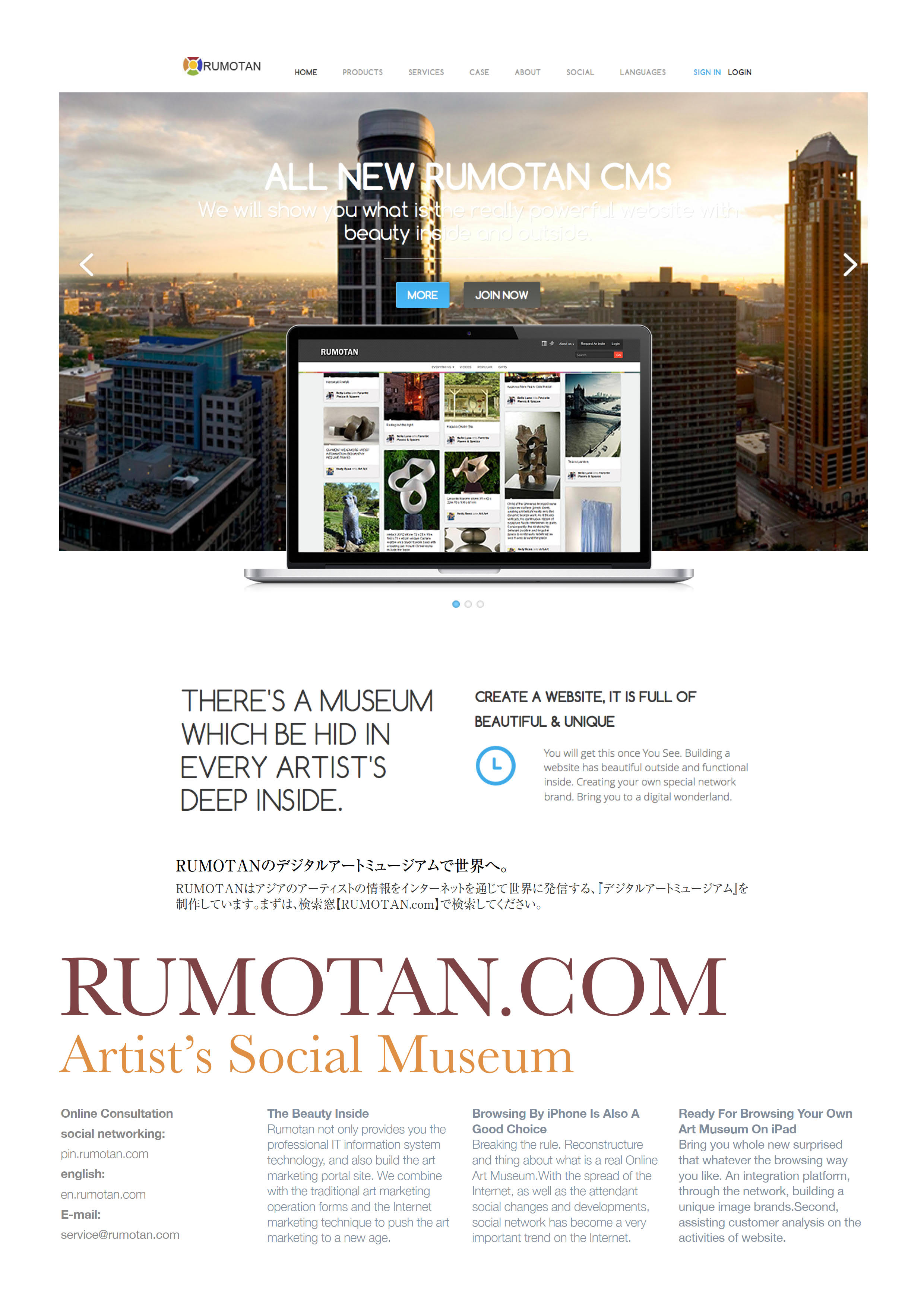
Exhibitions have clear physical time: opening, exhibition period, closing, and dismantling. However, this Taiwanese participation transforms the temporary exhibition into a preservable, searchable, and citable digital archive through the RUMOTAN database, individual artist pages, exhibition indexes, critical texts, exhibition-site images, and online news releases. This allows the works to continue being read through the internet and texts after the exhibition is dismantled.
For Taiwanese artists, digital archives have important practical significance. If many overseas exhibitions lack complete documentation, they ultimately become only a line in a résumé; but if there are work critiques, on-site images, exhibition information, individual pages, and Japanese-language materials, this participation can become foundational material for future curating, research, media reporting, and international exchange. Digital archives allow the works to exist not only in exhibition memory, but also within a searchable public data structure.
This also changes the temporality of exhibitions. In the past, exhibitions mainly occurred during the exhibition period; now, exhibitions occur simultaneously in pre-exhibition publication, on-site viewing, post-exhibition searching, and long-term citation. When the works of the seven Taiwanese artists are critiqued, translated, photographed, and entered into digital databases, they are no longer merely one-time participants, but artistic subjects that can be continuously read.
VIII. From the Level of Works to the Level of Exchange: Four Viewing Dimensions
The Taiwanese participation in the 82nd Genten Exhibition can be understood through at least four levels.
The first is the level of works. The seven artists each enter the exhibition site through medium, technique, theme, and formal language. Color ink, heavy color, digital art, ink wash, watercolor, and geometric abstraction together form a media genealogy of Taiwanese contemporary art.
The second is the institutional level. Works must pass through review, receiving, transportation, hanging-scroll specifications, translation, on-site display, and dismantling processes before entering The National Art Center, Tokyo. Institution is not merely external administration; it actually affects how works are mounted, displayed, and recorded.
The third is the critical level. Art criticism establishes frameworks of understanding for the works, allowing them not only to be seen, but also to be analyzed, translated, and placed within exhibition contexts. Criticism gives works a second life and allows Taiwanese artists to be read more accurately within the Japanese context.
The fourth is the exchange level. This participation is not one-way export, but a Taiwan–Japan art exchange case jointly constituted by Japan’s Genten system, The National Art Center, Tokyo, the Taiwan liaison office, the RUMOTAN digital platform, critical translation, and on-site display. It shows that today’s art exchange is not merely friendly visits, but a complex project involving institutions, texts, media, language, and archives.
IX. The Tokyo Main Exhibition and Regional Traveling Exhibitions: The Diffusion of Exhibition Life
The 82nd Genten Exhibition is not only a Tokyo event. In addition to the main exhibition at The National Art Center, Tokyo, there are subsequent traveling exhibitions planned in Nagoya, Osaka, Kyoto, and other places, allowing works or exhibition contexts to extend from the public platform of the capital to art spaces in different Japanese cities. This structure of a Tokyo main exhibition and regional traveling exhibitions is one of the important traditions of Japanese art association exhibitions.
The significance of traveling exhibitions lies not only in extending the exhibition period or increasing the number of viewers, but in allowing works to enter viewing contexts in different regions. Roppongi, Tokyo represents high urbanization, internationalization, and media density; Nagoya, Osaka, and Kyoto each have different cultural histories and art audiences. When Taiwanese artists’ works are placed within such a traveling structure, their meanings may also be regenerated as locations change.
This also reminds us that transnational exhibitions are not events at a single site, but mobile art networks. Through the Genten system, Taiwanese works enter not only Tokyo, but are also placed within a broader public structure of Japanese art. This means that Taiwan–Japan art exchange is not a momentary encounter, but can continue to diffuse through exhibition movement, textual preservation, and digital archives.
X. From “Being Seen” to “Being Discussed”
One of the core conclusions of this special report is that the value of Taiwanese participation in the 82nd Genten Exhibition should not stop at “being seen.” Being seen is an important first step, but for overseas artists, what is more crucial is whether they can be understood, discussed, recorded, and extended. Criticism, translation, exhibition-site images, individual pages, and digital databases transform the works of Taiwanese artists from visual displays into readable art texts.
“Being seen” tends toward exposure, while “being discussed” involves context. A work may be seen when a viewer pauses for a few seconds in the exhibition site; a work is discussed when it can trigger further thinking about medium, culture, philosophy, institution, and exchange. Tsai Mei-Fang does not merely paint wisteria, but raises questions of natural sublimity and attachment; Liau Chun-Yi does not merely paint flowers, but presents psychological suspension in liquid modernity; Jiang Jinling does not merely paint lotus ponds and shell ginger, but releases subtropical life force; Chen Fu-Chi does not merely create digital images, but rewrites Zhuangzi’s free wandering; Wang Chuan Fu does not merely paint ink-wash birds, but summons clarity within one thought; Wu Zhiyong does not merely paint street scenes, but captures urban nostalgia; Wang Muti does not merely create ink-wash geometry, but visualizes the continuity of the five aggregates and no-self speculation.
Therefore, the true achievement of Taiwanese art in Japan’s Genten Exhibition is not merely that the works arrived in Roppongi, but that through the exhibition system, critical writing, and digital archives, the works obtained the conditions for deeper discussion. This makes the 82nd Genten Exhibition an important case of Taiwan–Japan art exchange moving from formal display toward substantive dialogue.
XI. Overall Positioning of the Seven Artists
If the seven artists are rearranged within the overall structure, the following general positioning can be obtained.
Tsai Mei-Fang represents the path of color ink and natural sublimity. Through Lingering Wisteria, she pushes the bird-and-flower subject toward material flow, cosmic storm, and emotional anchors, transforming traditional natural imagery into a contemporary existential proposition.
Liau Chun-Yi represents the path of psychological topology and liquid modernity. Through Unfinished・Floating Realm, she makes flowers lose their roots and horizon, presenting the rootless anxiety of modern people in a fluid society and a life posture that still blooms.
Jiang Jinling represents the path of subtropical life force and erotic ecology. Through Emotional Journey in the Lotus Pond and Shell Ginger in Full Bloom Attracts Birds, she releases the intense energy of plants, color, emotion, and bodily sensation, making nature no longer a background but a subject of life.
Chen Fu-Chi represents the path of digital media and posthuman perception. Through The Pleasure of Fish, he translates Zhuangzi’s pleasure of fish into digital simulacra, making imitation xuan paper, spectral color, and virtual water domains jointly constitute a new field of free wandering.
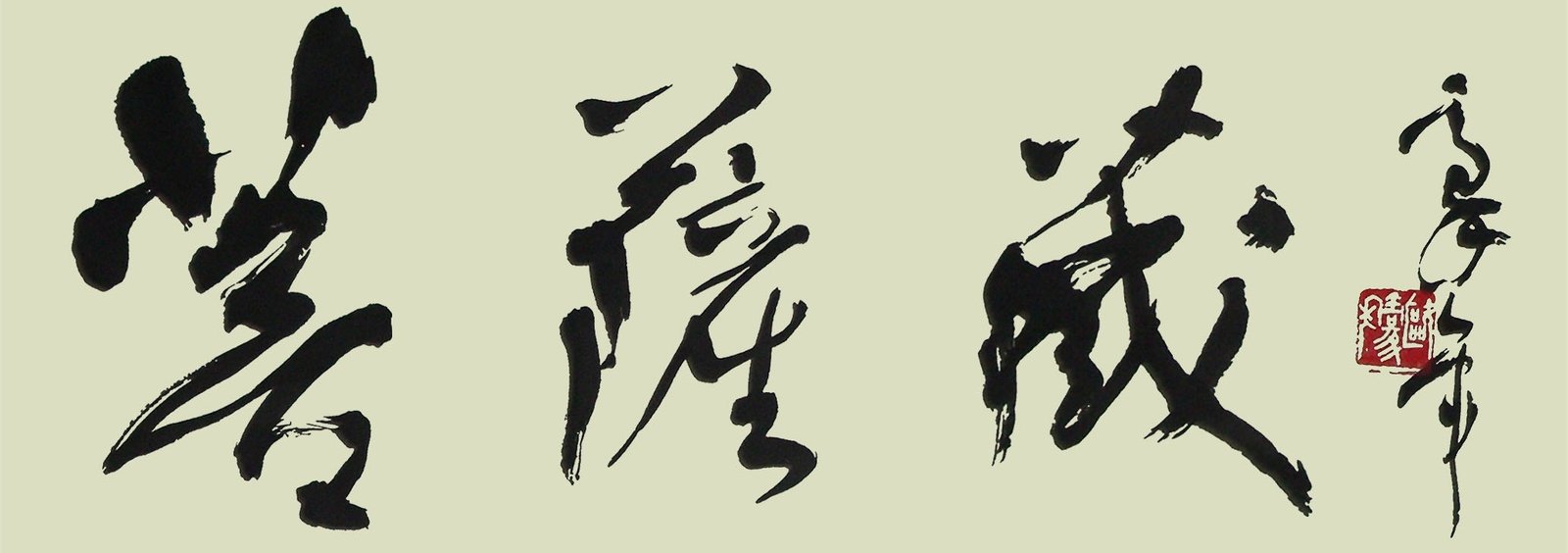
Wang Chuan Fu represents the path of ink-wash voids and spiritual clarity. Through One Thought of Bodhi Opens the Verdant Mist, he offers possibilities of subtraction, contemplation, and awareness of one thought in an age of visual overload.
Wu Zhiyong represents the path of urban memory and watercolor nostalgia. Through Autumn of Nostalgia, he transforms trains, streets, blurred human figures, and autumn light into a psychological elegy of the modern flâneur.
Wang Muti represents the path of ink-wash geometry and philosophical speculation. Through his institutional position as an associate member, as well as the continuity of the five aggregates, attachment to a nominal self, and the proposition of unboundedness in his work, he pushes Taiwanese contemporary ink wash toward a highly intellectual level.
Although the seven artists differ from one another, together they form the complete appearance of the Taiwanese portrait in the 82nd Genten Exhibition: from nature to the city, from paper to the digital, from emotion to philosophy, from media experimentation to institutional recommendation. Taiwanese art here is not a single image, but an expanding multiple field.
XII. Conclusion: The 82nd Genten Exhibition as a Public Case of Taiwan–Japan Art Exchange
The overall significance of the portraits of Taiwanese artists in the 82nd Japan “Genten” Exhibition lies in placing Taiwanese contemporary art within a transnational platform with history, institution, exhibition venue, criticism, and archival systems. The public-entry system of the Modern Art Association of Japan provides mechanisms of review and recommendation; The National Art Center, Tokyo provides a national-level public exhibition site; hanging-scroll display provides a presentation method with both practical and cultural significance; criticism and translation provide cross-language frameworks of understanding; and digital archives allow the exhibition to remain searchable, citable, and continuous after dismantling.
These factors together make this participation not merely an overseas display, but a complete transnational art case. It shows how Taiwanese artists cross institutions, language, media, transportation, and cultural contexts to enter Japan’s contemporary public art space; it also shows how Japan’s Genten system continues to face creative flows in Asia through the participation of Taiwanese artists.
From a longer-term perspective, the Taiwanese portrait in the 82nd Genten Exhibition is not merely a record of “Taiwanese art exhibited in Japan,” but an art-exchange model worthy of further study. It includes works, institutions, translation, exhibition sites, criticism, images, and digital preservation. It also includes questions of how artists accumulate symbolic capital overseas, how they are understood by audiences, and how they continue to be discussed after the exhibition. After the exhibition ends, what truly remains is not merely the fact that the works once hung on walls, but how these works are written into texts, preserved in archives, and continue to function between Taiwanese and Japanese art contexts.