Wu Zhiyong
Watercolor Flow, Liquid City, and the Flâneur’s Elegy in Autumn of Nostalgia
I. The Artist’s Position: Pre-Confirmed Selection and the Contemporaneity of Urban Watercolor
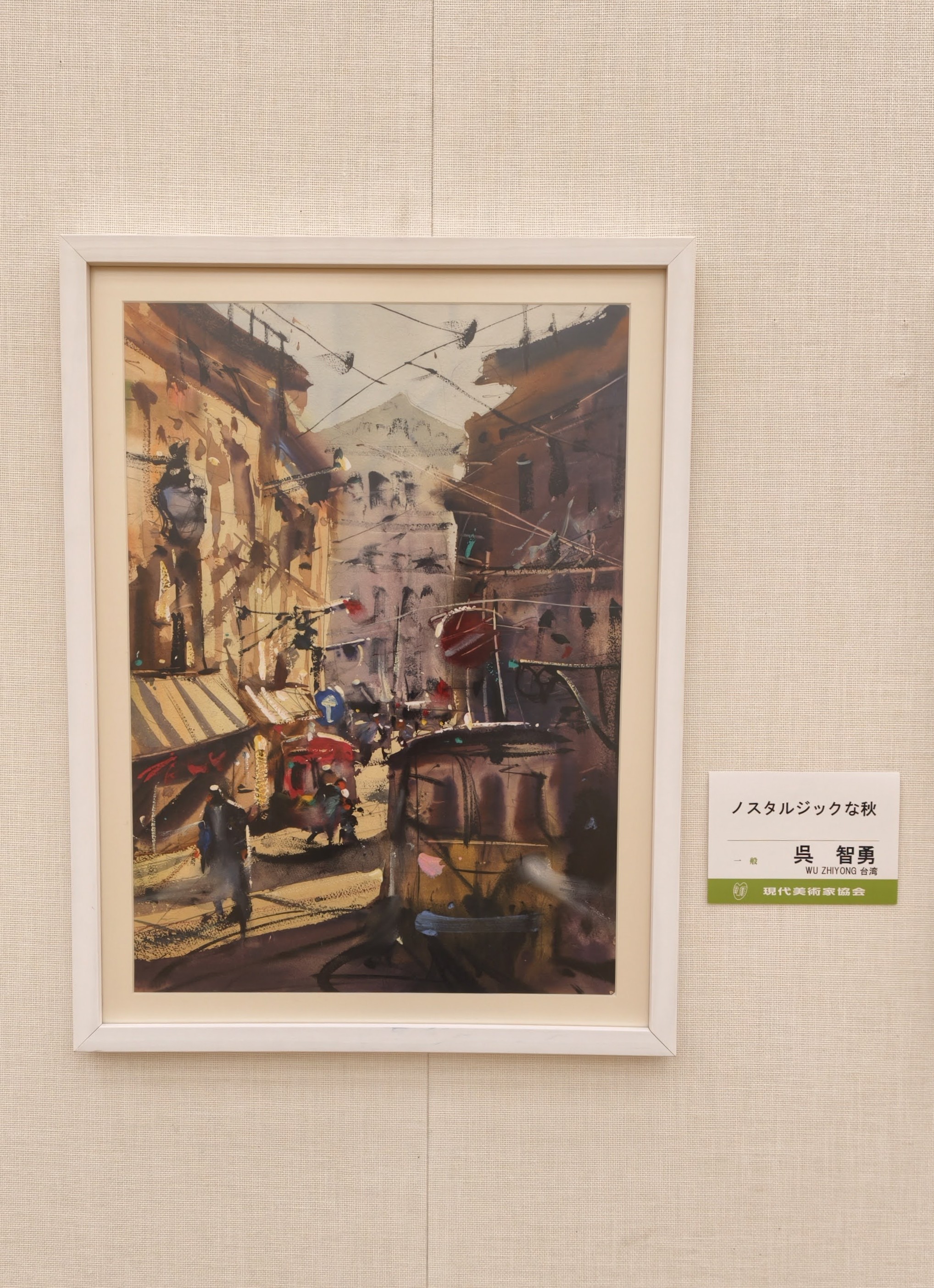
Among the portraits of Taiwanese artists in the 82nd Japan “Genten” Exhibition, Wu Zhiyong’s Autumn of Nostalgia “ノスタルジックな秋” is marked as pre-confirmed for selection. This institutional position indicates that his work had already received recognition from the review system before its formal exhibition, and also means that his watercolor language and urban narrative possess sufficient expressive power to enter the public-entry field of Japanese modern art. Wu Zhiyong’s Autumn of Nostalgia receiving pre-confirmed selection before formal exhibition shows that the combination of his watercolor technique and contemporary urban narrative precisely struck an aesthetic resonance with the Genten jury.
Compared with the preceding artists, Wu Zhiyong’s work shifts the focus of viewing within the Taiwanese artist portrait toward urban space. Tsai Mei-Fang faces natural sublimity, Liau Chun-Yi deals with psychological suspension, Jiang Jinling releases subtropical vitality, Chen Fu-Chi enters digital simulacra, and Wang Chuan Fu returns to contemplative ink wash; Wu Zhiyong, however, uses watercolor to depict movement, blurring, memory, and solitude in the modern city. His work does not win through grand philosophical symbols or intense chromatic impact, but through the transparency, moistness, and dissolving boundaries of watercolor, turning the urban landscape into a perceptible psychological state.
The reason Autumn of Nostalgia is worthy of special critical attention lies precisely in the way it transforms an apparently ordinary street scene into a metaphor for the spiritual condition of modern people. The city in the work is not a hard, cold, and definite space, but a field gradually dissolving in moisture, light, and memory. Trains, streets, buildings, light and shadow, and blurred human figures together form an autumnal psychological landscape, making “nostalgia” point not only toward one’s hometown, but toward the modern person’s longing for genuine connection in a fluid world.
II. The Title of Autumn of Nostalgia: Autumn Is Not a Season, but a Filter of Memory
The title Autumn of Nostalgia consists of two key words: “nostalgia” and “autumn.” Taken literally, it seems to point toward homesickness in autumn; yet in Wu Zhiyong’s work, this nostalgia does not necessarily refer to a clearly defined geographical hometown. The work is titled Autumn of Nostalgia, but there is no pastoral homeland in the traditional sense within the painting. Instead, it raises a deeper question: toward where, exactly, does modern nostalgia point?
This question is central to understanding the work. Traditional nostalgia is often related to hometown, home, childhood, land, or family memory. However, in modern urban experience, many people live amid movement, commuting, renting, migration, and flows of information; the hometown is no longer a stable place to which one can return. Thus, nostalgia is no longer merely “wanting to return somewhere,” but becomes “wanting to return to a certain sense of certainty”—a state in which one once believed the world possessed stable connections, the body had belonging, and memory could be placed somewhere.
“Autumn” functions in the work as an emotional filter. Autumn is not only a seasonal change; it is also often associated with the passage of time, weakening light, the settling of life, and emotional retrospection. By naming the work with autumn, Wu Zhiyong covers the urban landscape in the picture with a layer of memory and decline. Streets are not merely streets, trains are not merely means of transportation, and blurred human figures are not merely passersby; all of them are transformed by autumn into afterimages of memory.
Therefore, Autumn of Nostalgia is not simply a watercolor work depicting an autumn city, but a work about how modern people feel loss, remembrance, and the search for belonging in the city. It transforms season into psychological tonality and transforms the city into a vessel of memory.
III. The Material Characteristics of Watercolor: Transparency, Flow, and Incomplete Control
Wu Zhiyong’s choice of watercolor as a medium is highly consistent with the theme of the work. Watercolor is characterized by transparency, flow, penetration, and incomplete control. After pigment and water meet on paper, they change according to humidity, the absorbency of the paper, the speed of brushstrokes, and the passage of time; the artist can guide the water, but cannot completely dominate it. This half-controlled, half-accidental quality makes watercolor especially suitable for expressing memory, weather, mist, light, and emotion.
In Autumn of Nostalgia, Wu Zhiyong makes extensive use of the “wet-on-wet” rendering technique, blurring the boundaries of train and building contours, as if they were being dissolved by air and moisture.
This technique is not merely a watercolor skill, but part of the meaning of the work. In the wet-on-wet technique, the city loses its hard edges; buildings are no longer solid, trains are no longer sharp, and the street scene is no longer clearly layered. The entire urban landscape seems to be enveloped by humid air, post-rain light, or the moisture of recollection. This sense of dissolution transforms the city in the picture from physical space into psychological space.
The transparency of watercolor also gives the work a sense of time. Different layers of color overlap without completely concealing one another; the lower layers still faintly show through, just as past experiences in memory continue to surface in the present. Wu Zhiyong does not use watercolor merely to depict the surface of the city; rather, he allows watercolor itself to become a medium of memory sedimentation and temporal flow.
IV. Wet-on-Wet Technique: The Dissolution of Urban Contours
The most important visual effect in Autumn of Nostalgia is the dissolution of urban contours. The wet-on-wet watercolor technique loosens the boundaries of forms; the street scene is neither as precise as photography nor as rational as an architectural drawing, but presents a state softened by moisture. We understand this as a visualization of “liquid modernity”: this city of dissolved boundaries is precisely the miniature of a society that has lost its solid structure.
This point is crucial. The modern city is usually regarded as an assemblage of solidity, reinforced concrete, transportation systems, and capitalist order. Yet in Wu Zhiyong’s painting, the city is not hard. It is dissolved by watercolor, diffused by autumn light, and pushed into the distance through aerial perspective. A train may be approaching, but its outline is not sharp; buildings may stand on both sides of the street, yet resemble memories in mist; the road extends into the distance, yet offers no clear direction.
This dissolution is not simple romanticization, but a visual expression of uncertainty in modern life. In contemporary cities, people may seem to possess clear transportation routes, workplaces, and routines, yet psychologically they often remain in a state of drifting. Relationships are unstable, the sense of belonging is weak, and the rhythm of life is pulled by external systems. By dissolving the contours of the city, Wu Zhiyong presents the contradiction between external order and inner weightlessness.
Therefore, the wet-on-wet technique does not merely create beauty; it makes the city lose certainty and allows viewers to feel the liquefaction of modern life.
V. The Image of the Train: Movement, Commuting, and Modern Time
If a train appears in Autumn of Nostalgia, it carries important symbolic meaning. The train is one of the most representative devices of movement in the modern city. It connects different places and also disciplines everyday time. It carries commuting, work, waiting, missing, arriving, and departing. For many modern people, the train is not merely a means of transportation, but a framework for the rhythm of life.
In Wu Zhiyong’s watercolor, the train is not depicted as a cold, hard machine, but penetrates one another with humid air, street colors, and autumn light and shadow. This means that it is no longer merely a symbol of modernity, but becomes a carrier of memory and emotion. It may represent a journey, or it may represent daily commuting; it may point away from home, or toward a return.
The mobility of the train forms tension with the nostalgia in the title. Nostalgia usually implies looking back, staying, and wanting to return; the train implies movement, moving forward, and being continuously transported elsewhere. By placing these two within the same image, Wu Zhiyong makes the emotional condition of modern people visible: we long for stability while constantly moving, seek belonging in urban transportation, and desire a place that truly belongs to us within everyday life driven by systems.
Therefore, the train is not a background object, but a symbol of modern time. It makes Autumn of Nostalgia not merely an urban landscape, but a work about mobile life and emotional loss.
VI. Streets and Aerial Perspective: The Formation of a Passage of Memory
The streets in Wu Zhiyong’s work are not merely spatial passages, but may also be understood as passages of memory. When roads, buildings, cables, and trains gradually blur in watercolor, the street is no longer merely the physical structure of the city, but resembles a psychological corridor leading toward the past, the inner self, or an unknown direction.
The street in Autumn of Nostalgia is swallowed by aerial perspective and mist, like a psychological corridor leading into the depths of memory. This description may serve as a key understanding of the work. The street extends into the depth of the image, and the viewer’s gaze is also led into the distance; yet that distance is not clear, but is obscured by light, fog, watercolor diffusion, and layers of color. This makes viewing become an act of recollection: we see a direction, but cannot clearly see the endpoint.
This spatial treatment echoes the psychological structure of nostalgia. Nostalgia is often not the reproduction of clear memory, but the pursuit of something blurred and impossible to fully return to. The hometown or past in memory does not appear in complete form, but always carries mist, gaps, deformation, and emotional filters. The street presented by Wu Zhiyong in watercolor is precisely the visualization of this state of recollection.
VII. Blurred Human Figures: The Modern Solitude of the Benjaminian Flâneur
In Autumn of Nostalgia, blurred human figures have extremely high critical value. The blurred black figure in the picture may be understood as the “flâneur” described by Walter Benjamin, who stands in the noisy street yet maintains an aesthetic distance from the world.
The flâneur was originally an observer in the modern city. He walks among streets, crowds, and commodity spectacles; he appears to wander idly, yet in fact senses the changes of the city with a keen gaze. He is both within the city and at a distance from it; both participant and observer.
The blurred human figure in Wu Zhiyong’s painting extends precisely this characteristic of the modern urban subject. This figure may simply be a passerby on a street corner, or may be the artist himself, the viewer, or anyone wandering in the city. Its blurriness deprives it of specific identity and instead makes it a universal symbol: in the modern city, we may all be that lonely figure swallowed by moisture and light.
This figure appears without a clear face and without definite action, and is therefore more psychologically projective. Viewers may place their own experiences into it: waiting for a train, going home, leaving, passing by, missing some place, or simply standing on a street and feeling an inexpressible loss.
Therefore, the blurred figure is the emotional pivot of the work. It makes the city not merely a landscape, but a human spiritual condition; it also makes nostalgia no longer abstract, but condensed into a lonely, silent body walking or staying within the city.
VIII. Modern Nostalgia: Not Missing a Hometown, but Mourning Lost Certainty
The most contemporary aspect of Autumn of Nostalgia lies in the way it redefines nostalgia. The nostalgia in the work is not longing for a concrete homeland, but an endless mourning for the “lost genuine connections and certainty” of modern society.
This allows the work to transcend traditional nostalgia. Traditional nostalgia often points toward a certain time or place in the past; Wu Zhiyong’s nostalgia is more abstract and more universal. It points toward the spiritual gap of modern people in a highly fluid society: we live in cities, yet may not feel belonging; we pass by many people, yet may not establish real connections; we move every day, yet may not know where we are supposed to return.
Therefore, the nostalgia in Autumn of Nostalgia is an existential state. It is not a simple nostalgic emotion, but the modern subject’s desire for stability, reality, intimacy, and belonging. The work does not state this desire directly, but lets it spread through the moist boundaries of watercolor, autumn light, train tracks, and blurred human figures.
Wu Zhiyong’s subtlety lies in the fact that he does not express sadness through direct narration, but lets viewers sense a kind of soft loss through the atmosphere of the entire city. This loss is not violent, but continuous, low-voiced, surrounding people like autumn rain or thin mist.
IX. Autumn Light: A Gentle Yet Fading Sense of Time
The emotional force of Autumn of Nostalgia also comes from autumn light. Autumn light differs from the strong light of summer and from the cold light of winter; it often carries qualities of slanting, softness, gold, grayness, and temporal sedimentation. Through transparent watercolor layers, Wu Zhiyong makes the light seem diluted by moisture and dispersed among streets and buildings.
This light makes the city no longer a purely functional space, but a space of memory. Everyday street scenes appear softer and more fragile in autumn light. Buildings and transportation are no longer merely symbols of modern order, but are covered by a layer of temporality. What viewers feel is not the clarity of “the present,” but a present that is “passing away.”
Autumn light also prevents nostalgia from becoming too heavy. Wu Zhiyong’s work is not a dark and despairing critique of the city, but a gentle elegy. He does not depict the coldness and alienation of the city with a critical gaze, but uses gentle, moist watercolor brushwork to cover the concrete jungle with an autumn filter full of memory and warmth.
This is precisely the character of the work: it does not negate the city, but uses watercolor to restore emotional warmth to the city. Even if the city makes people lonely, the city can still be remembered, missed, and viewed with tenderness.
X. Liquid City: How the City Loses Its Hard Edges
We may describe Wu Zhiyong’s work with the term “liquid city,” a concept that is highly appropriate. Liquid city does not mean that the city literally becomes liquid, but that the city no longer provides stable belonging in modern life. Its spaces, relationships, and identities are all in a state of flow.
In Autumn of Nostalgia, liquidity first appears in the watercolor technique: pigment flows, boundaries diffuse, and forms loosen. Second, it appears in the urban structure: trains move, streets extend, and human figures are unstable. Finally, it appears at the emotional level: nostalgia has no clear object, memory has no clear contour, and belonging cannot be fixed.
These three levels together constitute the liquid aesthetics of the work. Wu Zhiyong does not explain modernity through theory, but allows the city to lose its hard edges on paper, making viewers physically sense the state of liquid modernity.
This treatment gives the work a strong contemporaneity. It does not rely on technological subjects or social slogans, but transforms the fluidity, weightlessness, and uncertainty of modern life into visual experience through the medium of watercolor itself.
XI. Comparison with Wang Chuan Fu: Contemplation and Wandering
If Wu Zhiyong is compared with Wang Chuan Fu from the previous section, we can see that both respond to modern anxiety in relatively quiet ways, though in different directions.
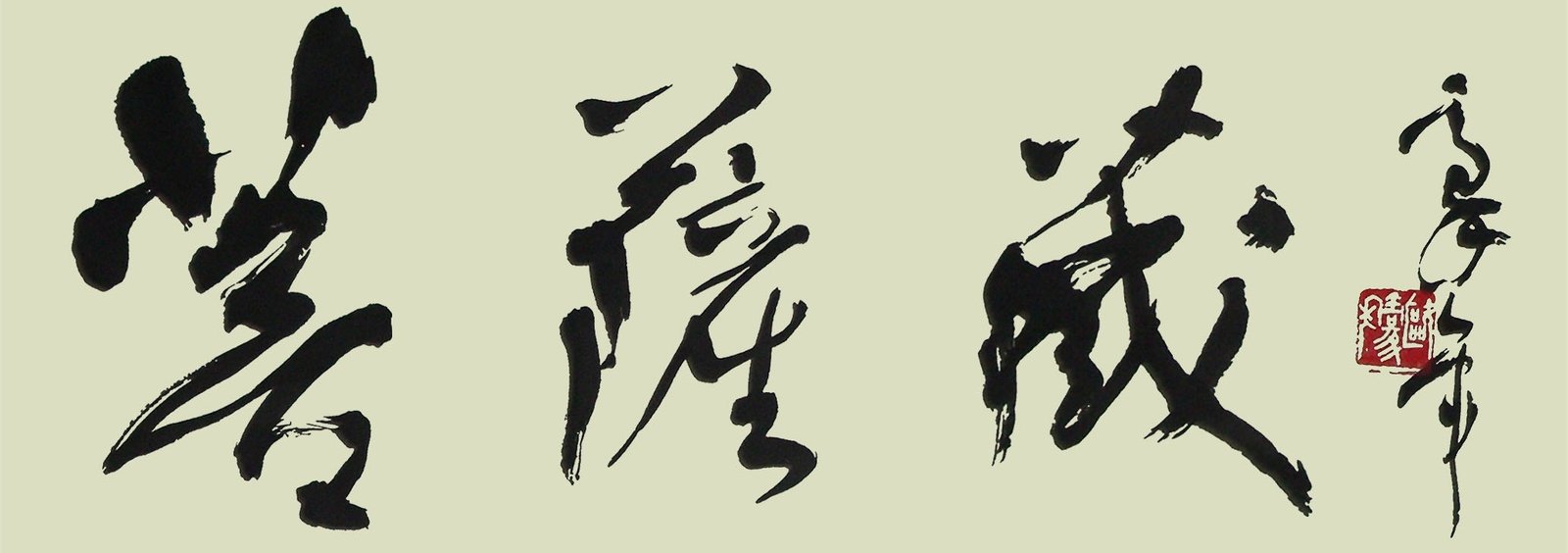
Wang Chuan Fu’s One Thought of Bodhi Opens the Verdant Mist uses ink-wash voids, birds, and one thought of awareness to guide viewers from the noise of the world back to inner clarity; Wu Zhiyong’s Autumn of Nostalgia, by contrast, does not allow viewers to leave the city, but searches within the city for soft memory and lost belonging.
Wang Chuan Fu’s bird stops, while Wu Zhiyong’s human figure wanders through the street; Wang Chuan Fu’s blankness points toward the resting of mind, while Wu Zhiyong’s watercolor diffusion points toward the dissolution of memory and city. Neither artist is a radically critical type, yet both handle the spiritual condition of contemporary people through quietness.
This contrast gives the Taiwanese portrait of the 82nd Genten Exhibition greater depth. Taiwanese artists are not limited to intense color or philosophical grand discourse; they also include delicate observations of everyday cities, lonely figures, and subtle emotions.
XII. Relationship with the Field of The National Art Center, Tokyo: Viewing Urban Nostalgia in Tokyo
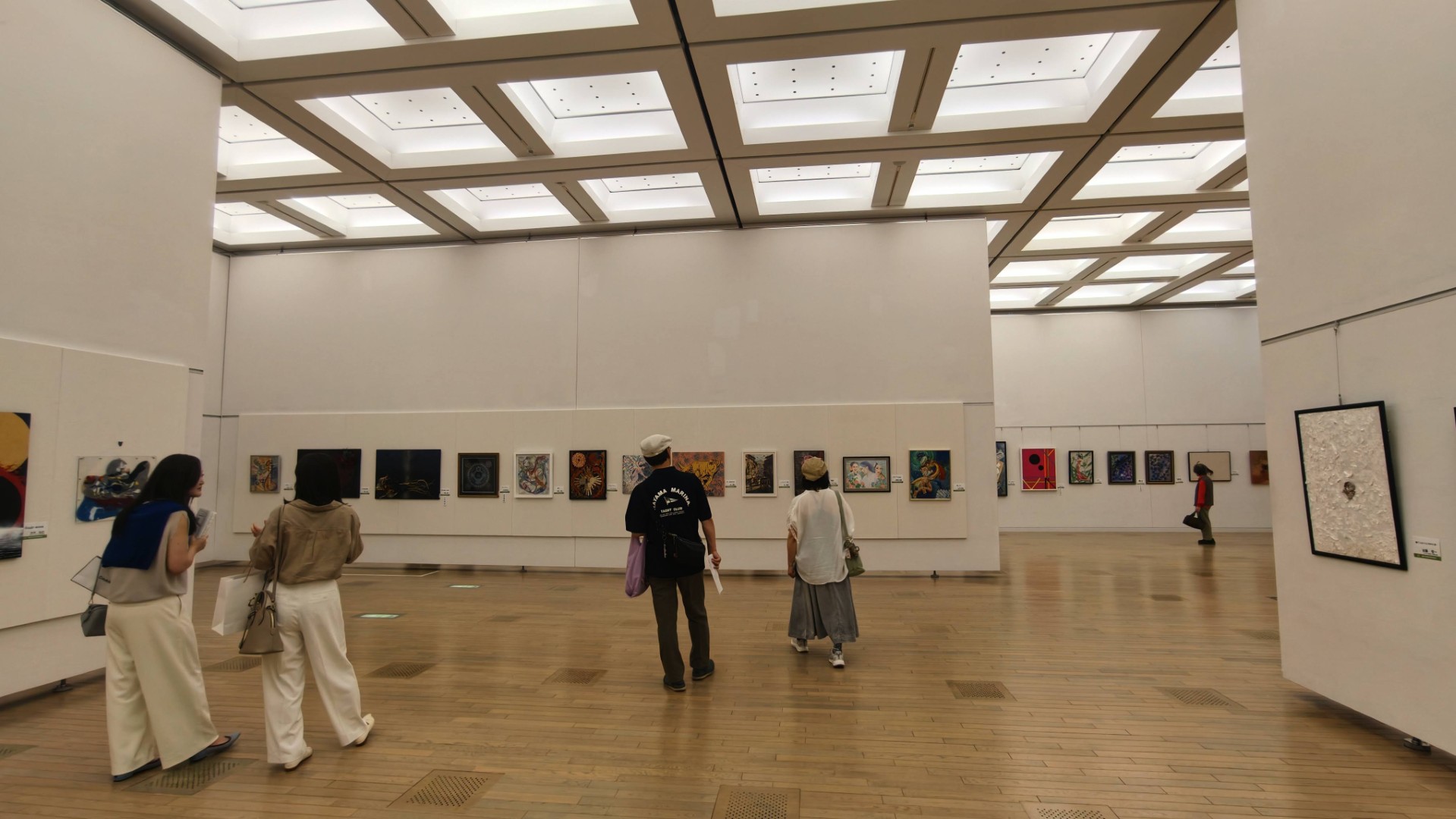
When Autumn of Nostalgia is exhibited at The National Art Center, Tokyo, in Roppongi, Tokyo, it carries special field significance. Roppongi itself is a highly urbanized, internationalized area of Tokyo dense with cultural institutions. When a watercolor work depicting urban nostalgia enters such an exhibition site, it does not merely represent the city, but reflects on urban experience from within the core of the city.
The main exhibition of the 82nd Genten Exhibition was held at The National Art Center, Tokyo, which is located in Roppongi, Minato-ku, Tokyo, and serves as an important platform for large-scale public-entry exhibitions and diverse artistic activities. Within such a field, Wu Zhiyong’s work can directly connect with the everyday experience of Tokyo viewers. Viewers may have just arrived at the museum from subways, trains, streets, and crowds, and then see in the exhibition a work about trains, streets, and a lonely figure. The image is therefore no longer merely scenery from elsewhere, but may touch their own urban memories.
This gives Autumn of Nostalgia a cross-cultural quality different from attracting Japanese viewers through Taiwanese local scenery. It presents the shared experience of modern urban people: moving within transportation systems and street networks, being lonely among crowds, and suddenly recalling some lost connection in autumn light. This emotion crosses national boundaries and gives the work a universal readability within the Japanese exhibition site.
XIII. Relationship with Hanging-Scroll Display: The Vertical Memory of Watercolor Street Scenes
Many Taiwanese participating works in this exhibition are displayed in hanging-scroll form, and if Wu Zhiyong’s watercolor work is presented as a hanging scroll, it produces a special effect. The hanging scroll is usually associated with East Asian calligraphy and painting, landscape, and paper-based traditions; Wu Zhiyong brings urban street scenes, watercolor, and modern transportation into this form.
This combination gives the work a cross-temporal quality. Traditional hanging scrolls often allow viewers to read mountains and waters, cloud vapor, trees and rocks, and figures along a vertical direction; Wu Zhiyong may instead allow viewers to read streets, buildings, trains, and light and shadow along the vertical image. The city replaces landscape, the train replaces the boat, and the blurred figure replaces the hermit or traveler. The hanging-scroll form is thus reactivated by modern urban content.
The fluidity of watercolor and the verticality of the hanging scroll also echo each other. The downward penetration of moist color on paper forms a subtle relationship with the natural hanging of the scroll, giving the image a stronger sense of temporal flow. Viewers do not face a framed city, but a vertically suspended urban fragment that unfolds like memory.
XIV. Professional Critical Perspective: The Fourfold Value of Wu Zhiyong’s Autumn of Nostalgia
Wu Zhiyong’s Autumn of Nostalgia possesses the following fourfold value within the portraits of Taiwanese artists in the 82nd Genten Exhibition.
First, Material Value
The work fully brings out the transparent, flowing, penetrating, and incompletely controllable qualities of watercolor. The wet-on-wet technique is not merely a formal technique, but becomes a visual language of urban memory and modern uncertainty.
Second, Urban Value
The work transforms the city from hard architecture and transportation systems into a soft psychological space. Trains, streets, buildings, and light and shadow are no longer merely urban objects, but symbols of the fluidity of modern life.
Third, Emotional Value
Autumn of Nostalgia redefines nostalgia, making it no longer point only toward one’s hometown, but toward modern people’s search for genuine connection, stable belonging, and certainty.
Fourth, Cross-Cultural Value
Within the exhibition site in Roppongi, Tokyo, the work connects Taiwanese artists and Japanese viewers through urban experience. It does not rely on local symbols, but resonates through the shared solitude and sense of memory of modern urban people.
XV. Chapter Summary: Searching for Belonging in a Dissolving City
Wu Zhiyong’s Autumn of Nostalgia is a work that uses watercolor to express modern urban psychology. It appears to depict a street scene, but in fact deals with movement, memory, solitude, and nostalgia. The trains, streets, buildings, and human figures in the picture all lose their hard edges within the moist flow of watercolor, forming a liquid city that is dissolving.
In this city, nostalgia is no longer merely longing for one’s homeland, but a gentle mourning for lost certainty. The blurred figure resembles a modern flâneur wandering within light, shadow, and moisture; the autumnal filter makes the city no longer cold, but filled with the warmth of memory. Wu Zhiyong does not depict urban alienation through intense critique, but sings a low-voiced elegy for the city with soft watercolor.
Within the portraits of Taiwanese artists in the 82nd Genten Exhibition, Wu Zhiyong’s importance lies in the fact that he brings the vision of Taiwanese contemporary art into modern urban everyday life. He proves that everyday street scenes are not ordinary; as long as they are treated with precise medium and deep feeling, trains, streets, and autumn light can also become portraits of the spiritual state of modern people. His Autumn of Nostalgia ultimately lets us see that even if the city is no longer solid, and even if belonging is no longer clear, people will still search for the direction home within dissolving light and shadow.