On-site video of the 82nd Genten Exhibition:
Conclusion
How Taiwanese Contemporary Art Forms Readable Historical Traces in Japan’s Modern Art Exhibition
I. From Exhibition Event to Historical Trace
The participation of Taiwanese artists in the 82nd Japan “Genten” Exhibition is, on the surface, a transnational exhibition event. However, viewed from the perspectives of art criticism, institutional research, and cultural exchange, it is more like a historical trace in formation. The historical trace referred to here does not mean that the works have already been fixed into art history, but that the works, artists, exhibition system, critical writing, translated texts, and digital archives together leave behind a data structure that can be searched, cited, researched, and reinterpreted in the future. This Taiwanese participation includes recording mechanisms such as exhibition indexes, art criticism, individual artist pages, exhibition-site images, online news releases, and the RUMOTAN database, allowing the exhibition not only to remain within the exhibition period, but to continue its public life afterward.
The greatest limitation of traditional exhibitions lies in the brevity of their physical time. Works are viewed in the exhibition site, and after the exhibition period ends, the works are taken down, audience memory gradually fades, and the exhibition as an event can easily disappear. However, through criticism, translation, images, and digital platforms, the Taiwanese participation in the 82nd Genten Exhibition allows works to exist not only in physical form, but also in textual and data forms. This means that the overseas participation of Taiwanese artists is no longer merely “having once been exhibited,” but is transformed into “readable exhibition records.”
From this perspective, the true purpose of this special report is not merely to write work introductions for seven artists, but to place this exhibition within a longer-term context of Taiwan–Japan art exchange. The works of Tsai Mei-Fang, Liau Chun-Yi, Jiang Jinling, Chen Fu-Chi, Wang Chuan Fu, Wu Zhiyong, and Wang Muti enter a Japanese public exhibition site through the Genten system; through critical writing, Japanese translation, and digital archives, they are further transformed into art texts available for future discussion. This is precisely what deserves to be recorded most from this participation.
II. How Taiwanese Artists Transform from “Participants” into “Artistic Subjects”
In many overseas group exhibitions, artists are often simplified into names, nationalities, and work titles on a list of participants. In such cases, although artists “appear” in the exhibition site, they may not truly be understood. The importance of Taiwanese participation in the 82nd Genten Exhibition lies in the way art criticism, Japanese translation, individual pages, and exhibition-site records allow Taiwanese artists to be not merely participants, but artistic subjects who can be understood, discussed, and researched.
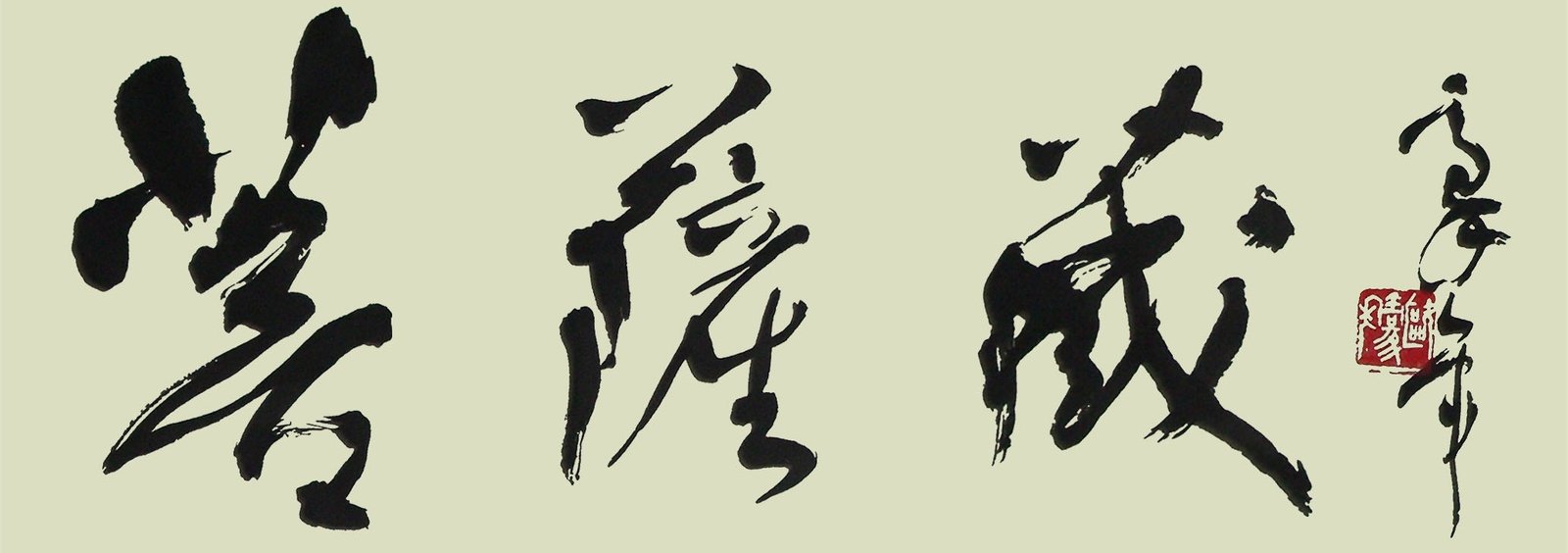
An artistic subject here does not refer only to the creator personally, but to the overall image formed by the artist within works, criticism, institution, and public context. Tsai Mei-Fang is not merely the artist who exhibits Lingering Wisteria, but forms a critical image through color ink, automatic technique, dynamic sublimity, and emotional anchors; Liau Chun-Yi is not merely the artist who exhibits Unfinished・Floating Realm, but establishes psychological topology through processed xuan heavy color, suspended flowers, and liquid modernity; Jiang Jinling does not merely paint lotus ponds and shell ginger, but presents a strong sensuous subject through subtropical color, impasto texture, and life impulse; Chen Fu-Chi is not merely a digital-art participant, but reactivates Zhuangzi’s proposition and posthuman simulacra through The Pleasure of Fish; Wang Chuan Fu is not merely an ink-wash painter, but establishes a spiritual path of void, clarity, and awareness of one thought through One Thought of Bodhi Opens the Verdant Mist; Wu Zhiyong is not merely an urban watercolor creator, but captures modern nostalgia in the liquid city through Autumn of Nostalgia; and Wang Muti is not merely a Genten associate member, but constructs a highly philosophical visual system through ink-wash geometry, the continuity of the five aggregates, and attachment to a nominal self.
This transformation means that the position of Taiwanese artists in the Japanese exhibition site is no longer merely national or representative, but individualized, contextualized, and intellectualized. Each artist obtains a readable language through criticism, and each work is placed within relationships of medium, form, culture, and philosophy. This also shows that art criticism is not supplementary writing outside the exhibition, but an important condition for artists to become public artistic subjects.
III. The Threefold Function of Criticism, Translation, and Digital Archives
The key to Taiwanese participation in the 82nd Genten Exhibition lies not only in the exhibition of works, but in the fact that the works are critiqued, translated, and preserved. These three aspects constitute the threefold extension function of the exhibition.
First, criticism allows works to be understood. In large-scale public-entry exhibitions, the number of works is large and viewers’ stopping time is limited. Without critical texts, works can easily be treated merely as visual impressions. Criticism provides media analysis, formal interpretation, cultural background, and intellectual points of entry for works, allowing viewers to move from “seeing the image” toward “understanding the work.” The Taiwan-related information for this year’s Genten Exhibition specifically includes an “Art Criticism for Taiwanese Participants” section, making Taiwanese works not only exhibition objects, but also readable critical texts.
Second, translation allows works to cross linguistic boundaries. If Taiwanese artists’ work titles, media descriptions, creative contexts, and philosophical concepts cannot be effectively translated, it is difficult for them to form deep understanding among Japanese viewers. Translation does not merely convert Chinese into Japanese, but readjusts cultural context, artistic terminology, Eastern philosophical concepts, and contemporary art vocabulary so that the work’s intellectual density can still be maintained in another language. Assistance for Taiwanese participants includes Japanese translation, on-site interpretation, and translation of related documents; these tasks are important parts of cross-language curating.
Third, digital archives extend the life of the exhibition. After an exhibition is dismantled, the works leave the walls; however, if criticism, images, individual artist pages, and exhibition information are preserved, the works can continue to be searched, cited, and circulated online. The RUMOTAN database, exhibition indexes, online news releases, and exhibition-site images transform this Taiwanese participation from a temporary event into an archive that can be summoned again in the future. This gives the exhibition a “second life”: its first life occurs in the exhibition site of The National Art Center, Tokyo; its second life occurs in texts, images, and digital databases.
IV. Institutionalized Taiwan–Japan Art Exchange: More than Friendly Display
In the past, discussions of Taiwan–Japan art exchange often remained at the level of general terms such as friendship, mutual visits, group exhibitions, and cultural goodwill. However, the Taiwanese participation in the 82nd Genten Exhibition presents a more institutionalized model of exchange. It is not simply bringing Taiwanese works to Japan, but involves the public-entry system of the Modern Art Association of Japan, the exhibition platform of The National Art Center, Tokyo, mediation by the Taiwan liaison office, exhibition-management design through hanging-scroll specifications, textual construction through art criticism, linguistic conversion through Japanese translation, documentation through on-site images, and preservation through the RUMOTAN digital database.
The importance of this institutionalized exchange lies in the fact that it allows art exchange to rely not only on personal relationships or one-time invitations, but to form a repeatable, operable, and accumulative process. Artists can enter exhibitions through review, accumulate institutional positions through recommendations, establish work contexts through criticism, cross linguistic barriers through translation, and preserve overseas participation results through digital data. This has greater long-term value than simply “sending works abroad.”
At the same time, institutionalization does not mean rigidity. On the contrary, the media openness of the Genten system allows color ink, ink wash, watercolor, heavy color, digital art, and geometric abstraction to appear on the same platform. After Taiwanese artists enter this system, they are not forced to present a single style, but can participate in the Japanese modern art field through their own creative languages. This also shows that a mature exchange system should not erase differences, but should provide the public conditions under which differences can be seen and discussed.
V. The National Art Center, Tokyo as a Stage of “Presentness”
The particularity of The National Art Center, Tokyo is an important foundation of this special report. It has no permanent collection, but centers on large-scale exhibitions, public access to art information, educational outreach, and diverse exhibitions. This means that it does not establish authority through a permanent collection, but constitutes its publicness through constantly changing exhibition events. We may call it a “collectionless heterotopia,” emphasizing its presentness as a temporary exhibition container.
For Taiwanese artists, such a field is highly significant. The works do not need to compete with fixed collections, nor do they need to be placed under the shadow of existing narratives of Japanese art history. Instead, they are directly juxtaposed with Japanese and other creators in the exhibition of the present. This juxtaposition amplifies the contemporaneity of the works: Tsai Mei-Fang’s color-ink storm is no longer merely a variant of Eastern bird-and-flower painting, but becomes dynamic sublimity within the exhibition site; Liau Chun-Yi’s suspended flowers are no longer still lifes, but psychological images of liquid modernity; Jiang Jinling’s impasto plants are no longer merely natural subjects, but a sensuous impact of subtropical vitality against the white-cube space; Chen Fu-Chi’s digital fish are no longer merely technological images, but media translations of posthuman free wandering; Wang Chuan Fu’s void is no longer merely traditional ink wash, but a spiritual pause in an age of visual overload; Wu Zhiyong’s watercolor street scene is no longer merely urban sketching, but a liquid portrait of modern nostalgia; and Wang Muti’s ink-wash geometry is no longer merely abstract composition, but a philosophical field of no-self and continuity.
Therefore, The National Art Center, Tokyo is not merely the background of the exhibition, but one of the conditions for the generation of meaning in the works. Its collectionless character, publicness, and large-scale exhibition space allow Taiwanese artists to be viewed anew within the present event of Japan’s modern art system.
VI. Hanging Scrolls as the Shared Exhibition-Site Grammar of Taiwanese Works
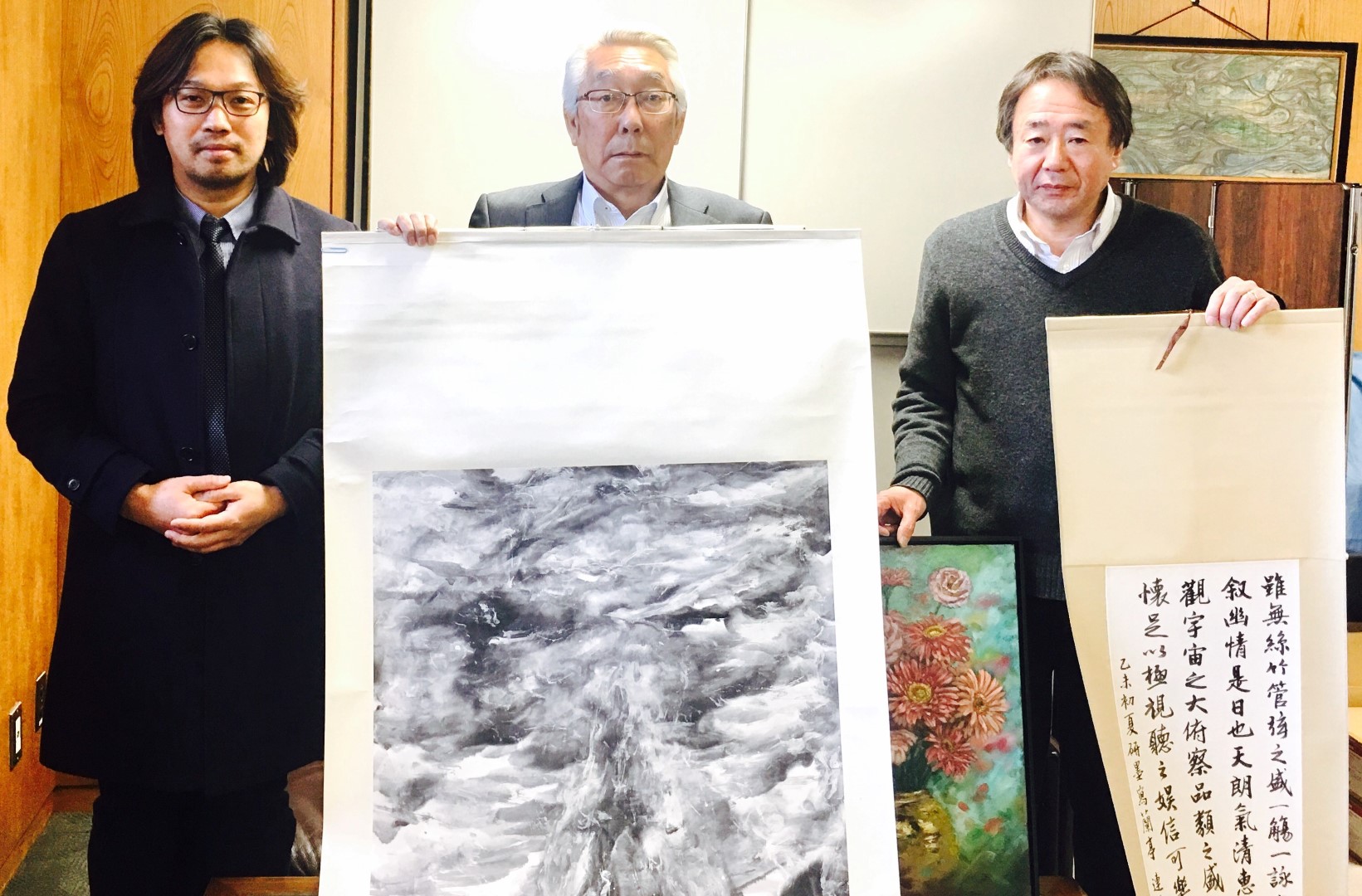
This Taiwanese participation generally adopts the hanging-scroll mode of display, a point that appears repeatedly throughout this report because it is not merely a mounting format, but an exhibition-site grammar. The hanging scroll first solves transnational exhibition-management issues: large paper-based works require workable specifications for transportation, packaging, display, and dismantling, and the hanging scroll allows four-foot full sheets, six-foot full sheets, and even works approaching four meters to enter overseas exhibition sites more effectively.
Yet the deeper meaning of the hanging scroll lies in bringing East Asian calligraphy and painting traditions into the contemporary art exhibition site. The hanging scroll is characterized by vertical unfolding, flexible suspension, rollability, mobility, paper-based texture, and temporal viewing. When Taiwanese contemporary works enter Japan’s Genten Exhibition in hanging-scroll form, they adapt to exhibition-management needs on the one hand, and on the other hand enter into a subtle dialogue with the East Asian calligraphy-and-painting viewing tradition familiar to Japanese audiences.
More importantly, the hanging scroll allows the seven artists to form a shared exhibition rhythm. Even though the styles of the works differ greatly, the verticality of the hanging scroll still makes them form a recognizable group of Taiwanese works in the exhibition site. Wang Chuan Fu’s voids unfold as vital resonance in the hanging scroll; Wang Muti’s ink-wash geometry presents causal sedimentation within vertical scale; Tsai Mei-Fang’s color-ink flow shows greater materiality on a flexible support; and Wu Zhiyong’s watercolor street scene gains an unfolding quality like a scroll of memory. This shows that exhibition form is not merely the packaging of works, but actively participates in the generation of their meaning.
VII. Three Main Lines of Taiwanese Contemporary Art
After the preceding case analyses and overall summary, the Taiwanese artist portrait in the 82nd Genten Exhibition can be summarized into three main lines.
The first is the line of nature and life. Tsai Mei-Fang, Jiang Jinling, and part of Liau Chun-Yi’s work all take flowers, plants, birds, or natural fields as points of entry, but each moves in a different direction. Tsai Mei-Fang deals with the fragility of life and attachment through natural sublimity and emotional dependence; Jiang Jinling expresses life force and erotic ecology through impasto color and subtropical plants; Liau Chun-Yi makes flowers lose their roots, transforming them into symbols of modern psychological suspension. Nature here is not background, but existential state, life energy, and psychological structure.
The second is the line of modern perception and media. Chen Fu-Chi and Wu Zhiyong represent two different forms of modern perception: the former enters digital simulacra, imitation xuan paper, and spectralized life; the latter presents urban nostalgia through watercolor flow, trains, and street scenes. Both no longer limit art to traditional views of nature, but face the question of how perception is reshaped in the digital age and the urban age.
The third is the line of spirit and philosophy. Wang Chuan Fu and Wang Muti respectively use ink-wash voids and ink-wash geometry to deal with the possibilities of Eastern thought in the contemporary exhibition site. Wang Chuan Fu enters a state of clarity through one thought, bodhi, voids, and birds; Wang Muti enters no-self causality through the continuity of the five aggregates, attachment to a nominal self, geometric boundaries, and ink sedimentation. Together, they prove that Eastern philosophy need not function only as traditional symbols, but can be transformed into contemporary visual structures.
VIII. From Individual Creation to Asian Art Networks
Another layer of significance in the Taiwanese portrait of the 82nd Genten Exhibition lies in placing the creations of individual artists within a larger Asian art network. Although these works arise from the personal life experiences and media experiments of Taiwanese artists, once they enter Japan’s Genten Exhibition, The National Art Center, Tokyo, Japanese criticism, and digital databases, they are no longer merely individual creations, but become part of Taiwan–Japan and even Asian contemporary art exchange.
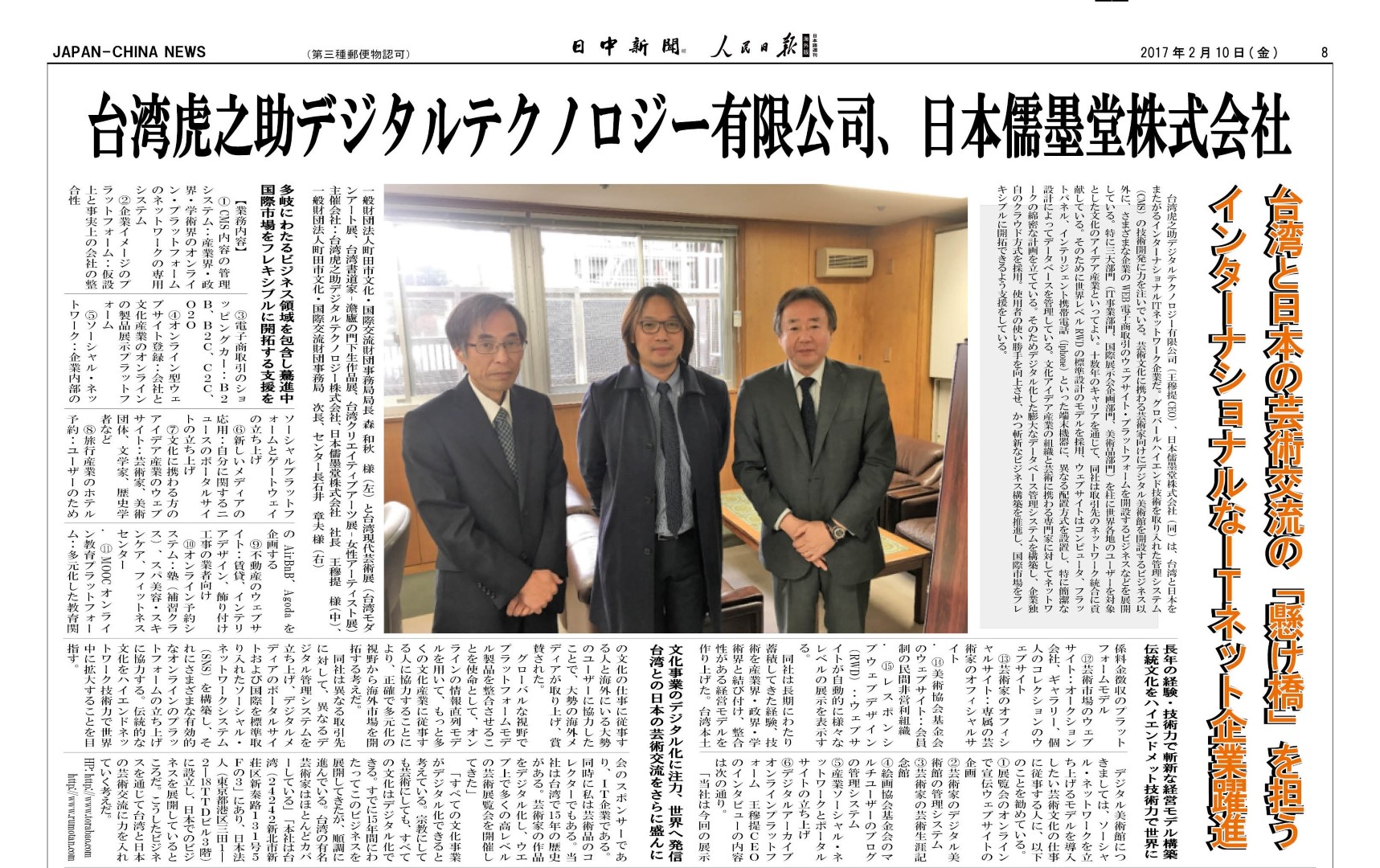
This network is not an abstract concept, but is formed by concrete links: the Modern Art Association of Japan provides the exhibition system; The National Art Center, Tokyo provides the venue; the Taiwan liaison office assists works in entering the process; critics provide texts; translators convert language; photography and video preserve the site; platforms such as RUMOTAN extend the data; and audiences, curators, media, and researchers may reread these materials in the future.
Therefore, the overseas participation of Taiwanese artists should not be measured only by “whether there were awards” or “whether there was exhibition,” but by whether it enters a network in which relationships can continue to occur. The value of this Taiwanese portrait lies precisely in the fact that, through institutions, texts, and archives, the works have the opportunity to continue being discussed after the exhibition ends.
IX. The Cultural Significance of the Taiwanese Portrait in the 82nd Genten Exhibition
To summarize the entire text, the cultural significance of the portraits of Taiwanese artists in the 82nd Japan “Genten” Exhibition can be summarized in five points.
First, it demonstrates the diverse media capacities of Taiwanese contemporary art. From color ink, processed xuan heavy color, impasto, ink wash, watercolor, to digital art and geometric abstraction, the seven artists together present the openness of Taiwanese creation, which is not defined by a single medium or style.
Second, it proves that Taiwanese artists can enter Japan’s public-entry exhibition system and obtain accumulative institutional positions. The associate-friend statuses of Tsai Mei-Fang and Jiang Jinling, and Wang Muti’s associate-member status, show that Taiwanese artists are not merely short-term participants, but may obtain long-term evaluation within the Genten system.
Third, it makes the collectionless field of The National Art Center, Tokyo a stage where Taiwanese works occur in the present. The works are not restricted by fixed collection narratives, but directly demonstrate their contemporaneity within a large-scale public exhibition.
Fourth, through hanging-scroll display, critical translation, and digital archives, it establishes a method of transnational curating and post-exhibition preservation. This method allows works not only to be hung, but also to be read, translated, photographed, indexed, and preserved.
Fifth, it pushes Taiwan–Japan art exchange from friendly display toward institutionalization, textualization, and archivalization. This makes the participation not merely a cultural activity, but a public case available for future research.
On-site video of the 82nd Genten Exhibition:
X. From the Exhibition Walls of Roppongi to Future Artistic Memory
When the exhibition period of the 82nd Genten Exhibition ends, the works will eventually leave the walls of The National Art Center, Tokyo, in Roppongi. However, the significance of the exhibition will not end there. The works have been displayed, the criticism has been written, the translations have been completed, the images have been preserved, and the data have been entered into digital platforms. Together, these traces will constitute part of future artistic memory.
For Taiwanese artists, this is a transnational exhibition participation and also an establishment of self-discourse. For Japan’s Genten Exhibition, it is a case of a postwar public-entry system continuing to face the flow of Asian creation. For Taiwan–Japan art exchange, it is an important practice moving from the export of works toward institutional collaboration, critical construction, and archival preservation.
Therefore, the ultimate significance of the portraits of Taiwanese artists in the 82nd Genten Exhibition does not lie in presenting a single conclusion, but in opening a pathway: allowing Taiwanese artists to depart from local creative scenes, enter a national-level museum platform in Japan, be viewed through the exhibition system, be understood through criticism and translation, be preserved through digital archives, and continue to be reread in future art discussions.
This pathway means that “participation” is no longer merely a temporary exhibition act, but a cultural process that continues to generate. It is in this sense that the portraits of Taiwanese artists in the 82nd Japan “Genten” Exhibition are no longer merely an exhibition record, but a Taiwan–Japan contemporary art exchange archive in formation.
Other Art Criticism:
Fu & Light: Jingxiang Friends’ Calligraphy Exhibition---Written and Critiqued by Wang Muti